Abigail turned and walked toward the staff entrance. She paused and looked over her shoulder. “Enjoy your restaurant. You have exactly one month until I repossess it.
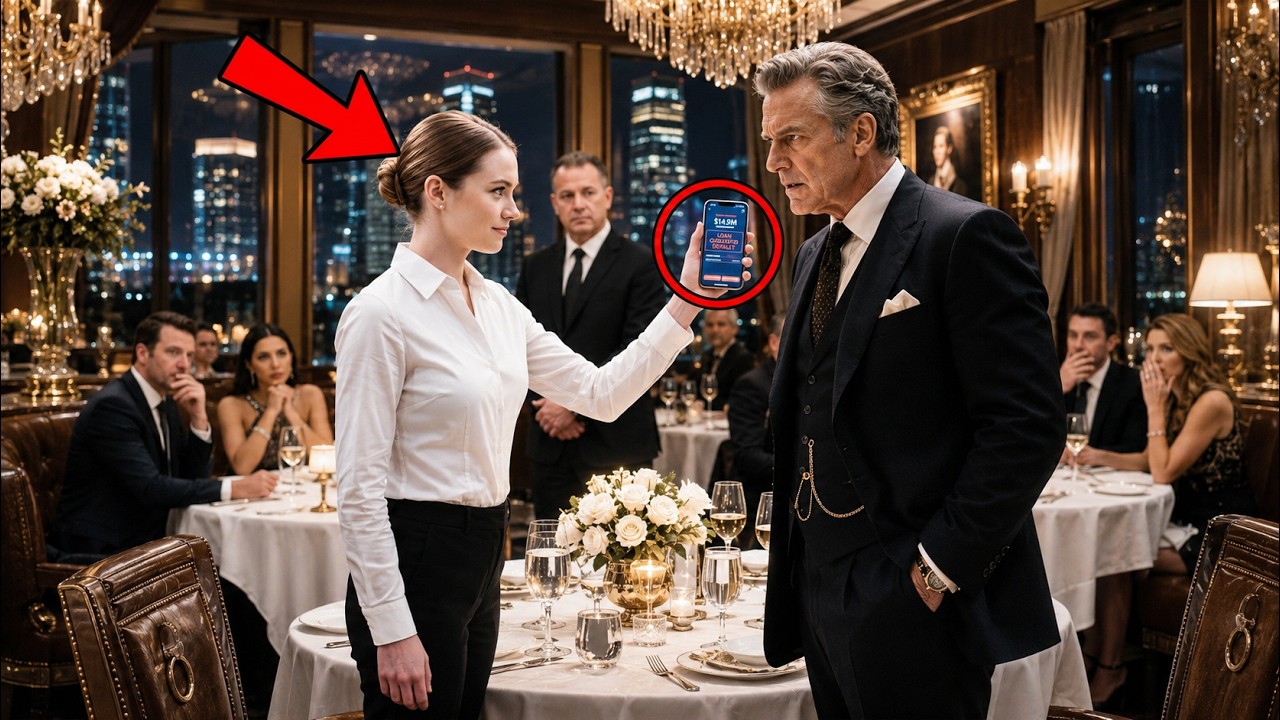
”
The next morning, Conrad’s lead attorney told him the truth: Goldman Sachs passed, Carlyle passed. The banking world was a small club. Theodore Fischer was a legend, and his granddaughter had signaled she was just as ruthless. No one would step in front of a moving freight train to save a developer who defaulted over a bruised ego.
In the penthouse offices of First Liberty Continental, Abigail sat behind a desk carved from solid oak. Her chief operating officer reported that Conrad was trying to liquidate personal assets—the Hamptons estate, the private jet. “The Hamptons estate is cross-collateralized against his commercial mezzanine debt,” Abigail said. “And the jet is leased through a subsidiary we finance.
Freeze them both. He doesn’t get to sell the furniture to save the burning house. ”
She also instructed him to contact the London investors who had pulled out after the restaurant scene. “Inform them we will acquire Hudson Yards through foreclosure.
Tell them we would love to bring them in as equity partners once toxic management is excised. ”
Over three weeks, Conrad’s empire unraveled. Construction sites ground to a halt. Contractors walked off.
The financial press dubbed it “the billion-dollar busboy blunder. ”
On day twenty-six, Conrad found a lifeline: a mid-tier private equity firm in Chicago offering a predatory bailout loan. He arrived at their temporary Manhattan office ready to sign away majority control. The contract slid across the table.
Conrad grabbed the pen. The office door clicked open. Abigail walked in, flanked by her COO and two security officers. “What are you doing here?
”
The managing partner pulled the contract back. “I apologize, Mr. Hayes. But it seems your due diligence team is as incompetent as your etiquette.
”
Abigail stepped forward, placing her hands flat on the table. “The Belmont Group was acquired by a subsidiary holding company three days ago. A holding company entirely owned by First Liberty Continental. I own this firm, Conrad.
There is no bailout. The game is over. ”
The pen slipped from his fingers and clattered on the floor. The thirtieth day arrived with cold, sterile corporate efficiency.
At exactly 9:00 a. m. , receivers appointed by the bank walked into Hayes International’s lobby. By noon, the locks were changed.
By 2:00, the company was placed into receivership. Conrad Hayes was left with nothing but his heavily mortgaged home and a stack of legal bills. That evening, rain fell over Manhattan. Conrad walked into L’Orchidée alone.
He wore a rumpled, rain-soaked trench coat. His eyes were hollow. He wasn’t there to cause a scene. He just needed to look at the catalyst of his destruction one last time.
He found Abigail sitting at a corner table in a charcoal evening gown. Across from her, laughing over a plate of prime rib, was Tommy the busboy. Henri intercepted Conrad. “Mr.
Hayes, do you have a reservation? ”
Conrad ignored him and locked eyes with Abigail. She excused herself and walked over. “Ms.
Fisher,” he croaked, “you took it all. The towers, the companies, my legacy. You burned everything to the ground. ”
“I didn’t burn anything.
I foreclosed on legally binding debts you chose to default on. I executed the terms of the contracts you signed. ”
Conrad looked around the bustling restaurant. “What happens to this place now?
Do you sell it? ”
“No. I am a banker, not a restaurateur. This afternoon, First Liberty legally transferred the deed into a corporate trust.
Henri is now the majority owner. The remaining equity has been distributed as stock options to the staff—from the head chef all the way down to Tommy. ”
Conrad stared. “You gave a $12 million asset to the staff.
”
“They built its value. Unlike you, they understand that true wealth is built on mutual respect and protecting the people who work for you. You learned quite expensively that you were wrong. ”
He opened his mouth to speak.
Nothing came out. “Henri,” Abigail said softly, “Mr. Hayes is ready to leave now. Please show him the door.
”
Henri opened the heavy mahogany door. Cold wind swept in. “Good evening, Mr. Hayes.
Do not ever return to my restaurant. ”
Conrad stepped backward into the rain. The door clicked shut. Inside, the warmth and clinking of glasses carried on like a celebration.
Abigail returned to her table and prepared to enjoy a dinner she had well and truly earned.