I have learned where the loose floorboards are. I have learned the clock is four minutes slow. I have learned the difference between being underestimated and being unseen. I have been the first.
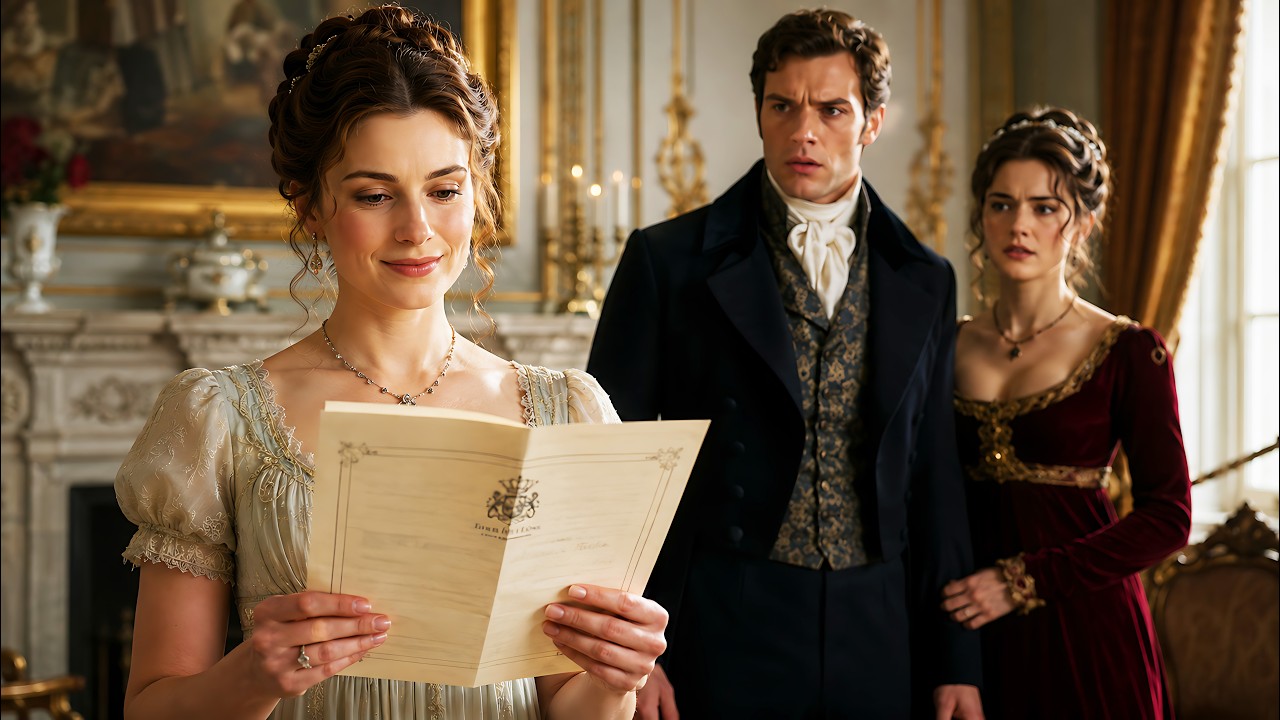
I have not been the second, although you have arranged your life as if I were. ”
“I did not know about Wycombe. ”
“You signed the settlement yourself the morning after our wedding. ”
“I did not know about the pearls.
”
“Your mother told you in my hearing the week before she died. You were standing at that window. She said, ‘Henry, the pearls go with Beatrice when she leaves this house, whether in a carriage or a coffin. ’ You laughed.
”
His hand tightened on the pen. “The drainage,” he said. “I did intend it. I intend it still.
”
“Then perhaps you will undertake it from your own purse. I cannot advise you on which purse. I do not know your purses as well as I might. ”
Henry set the pen down.
“You are not going to sign. ”
“I am not going to sign that. I am willing to sign another document. One that allows us both to leave this room with what is ours.
Mr. Hallworth can draft it by the end of the week. I am prepared to be generous where I am able. I am not prepared to be foolish.
”
Henry pinched out the wick of a smoking candle. A brief sharp ache of memory: the first year, when he did that for her every evening while she wrote letters, and brought her barley water without being asked. “There is one further matter,” she said. “The child will be born in the third week of January.
I have known since Michaelmas. The document on the desk makes no provision for an heir. ”
Henry’s hand came up to his mouth. He looked at her as a man looks at a country he has been told is barren and finds a river.
“You are certain? ”
“I am certain. ”
He sat back. He passed his hand over his face.
“I did not know. ”
“I had not given you occasion to know. You have been much in town. ”
He flushed.
The first honest color his face had taken all afternoon. “The document was drawn upon the understanding that there was no issue. ”
“Then let us revise. ”
He stood slowly.
He walked to the window and looked out at the elms. After a long while he said, “What would you have me do? ”
“I would have you withdraw the papers and instruct Mr. Hallworth to draft a deed of separation that recognizes Wycombe as mine, the pearls as mine, the child as yours and as heir, and provides maintenance proportionate to your means.
I would have you settle privately with the lady in the morning room out of your own funds and not mine. And I would have you do so somewhere other than this house, where your mother taught me to keep the linens and count the rooks. ”
He did not turn. “And Wycombe?
”
“I propose to remove there in the spring after the child is born. I will take Mrs. Penhaligon and the nurse. I will leave the house in good order.
I will write to you of the child’s health. I will receive you there if you wish. I will not receive anyone else. ”
He turned.
His face was tired. “The pen is not for signing today. ”
“The pen is for writing to Mr. Hallworth.
I have prepared a note in the drawer of my writing desk in the morning room. You will find the language is clear. ”
He looked at her a long moment. “You are a remarkable woman, Beatrice.
”
She inclined her head. She had been told that once before by his mother, the night before the wedding. She did not believe it then. She received the words courteously, without unwrapping them.
He picked up the pen. He folded the papers and tucked them inside his coat. At the door he paused. “Will you dine?
”
“I will dine. At seven, as we have done. ”
He nodded and went out. Beatrice sat alone in the library.
The nine candles burned. The bronze clock ticked four minutes slow. Inside her, the small unknown person of January turned like a sleeper at the sound of a door closing in a distant part of the house, and was still. She did not weep.
She sat very still and let herself feel each thing she had been holding at a distance. The absence of the marriage as it had been described to her—the barley water, the laughter, the pearls. The presence of the child. The strange clean cold of having said aloud things she had carried in silence for a year.
Mrs. Penhaligon knocked and came in. “She has gone. His Grace has ridden out.
To the home farm, to inspect the drainage. ”
Beatrice’s mouth moved in something almost a smile. She rose slowly and crossed to the window. The rooks were a single black shape.
She drew the curtain against the dark. Then she opened the small glass door of the bronze clock and with the tip of one finger advanced the minute hand four minutes, so that it told, for the first time in seven years, the true time. Mrs. Penhaligon watched and said nothing.
Beatrice closed the glass door. She offered the older woman her arm, an old joke from a winter she had sprained an ankle. Mrs. Penhaligon took it, and they went out together, leaving the candles to burn down in the empty room.
Dinner was quiet. Henry returned, ate little, spoke less. Beatrice spoke of small matters. After, he excused himself to write a letter to Mr.
Hallworth. She went up to her dressing room, opened the safe, looked briefly at the pearls, and closed it again. She went to bed with a glass of barley water—the first she had asked for in seven years—and slept deeply. The papers were withdrawn.
Mr. Hallworth traveled out with an under clerk and a quantity of foolscap. They sat in the library and drew a new document. It recognized Wycombe as Beatrice’s own.
It recognized the pearls. It recognized the child as heir. It provided for her removal to Wickham in the spring. The document was signed on a clear cold morning in December.
The nine candles were unlit because the sun was bright. Mrs. Penhaligon witnessed. The bronze clock told the true time.
Beatrice signed her name slowly. Henry signed. Mr. Hallworth blotted both signatures with sand and went away.
Henry stood at the window. “I shall miss you at Wickham,” he said. “You have a standing invitation. You will find it a quiet house.
It may do you good. ”
He nodded once without turning. The winter passed. The child was born in the third week of January, a boy.
Healthy. Beatrice counted his fingers. Ten. An even number.
She decided she would learn to be at peace with even numbers. They were the numbers of partnership. Henry came up from town. He sat by the bed and held the child awkwardly.
“What shall we call him? ”
“Edmund, after your father, if you do not mind. ”
He did not mind. In the spring, Beatrice removed to Wickham.
She took Mrs. Penhaligon, the nurse, a housemaid, a footman. She did not take the bronze clock. She left it on the mantel, telling the true time, where Henry kept it wound.
Edmund grew. He had his mother’s gray eyes and his father’s long hands. He learned to count rooks at her knee. Henry visited often enough that the question of frequency ceased to matter.
He came as a guest and left as a guest. Mrs. Penhaligon died in the eleventh year of Beatrice’s residence, having lived long enough to see Edmund off to school and to pronounce that he would do. The lady in the green dress married a manufacturer of buttons in the north.
She was reported to have three children and to wear green at every opportunity. Beatrice wished her well. The bronze clock in the library at Ashworth continued to tell the true time. After Henry’s death, many years later, Edmund inherited the estate.
On his first inspection as master, he opened the small glass door, found the clock accurate to the minute, closed it, and let it be. Beatrice sat by the fire at Wickham, the child grown and gone to school, the house quiet. She thought of the afternoon of the nine candles and the rooks and the four minutes given back. She thought of the pen that had not signed the wrong document.
She thought of the small unknown person of January, now a young man with his own life. She did not regret anything. She had counted her way through the long years, and the numbers had held. The rooks in her elms were an honest number.
The clock on her mantel told the true time. When she died, old and peaceful, they found her hands folded in her lap, the way she had folded them that afternoon in the library, and a half-finished letter to Edmund on the desk, telling him to count the rooks and to keep the clocks wound.