He thought of her last week at breakfast, looking at him over a porcelain cup with an expression he had not bothered to interpret. Mrs. Wenlow stopped at the inner door of the small library, tapped once, and stood aside. His Grace, she said.
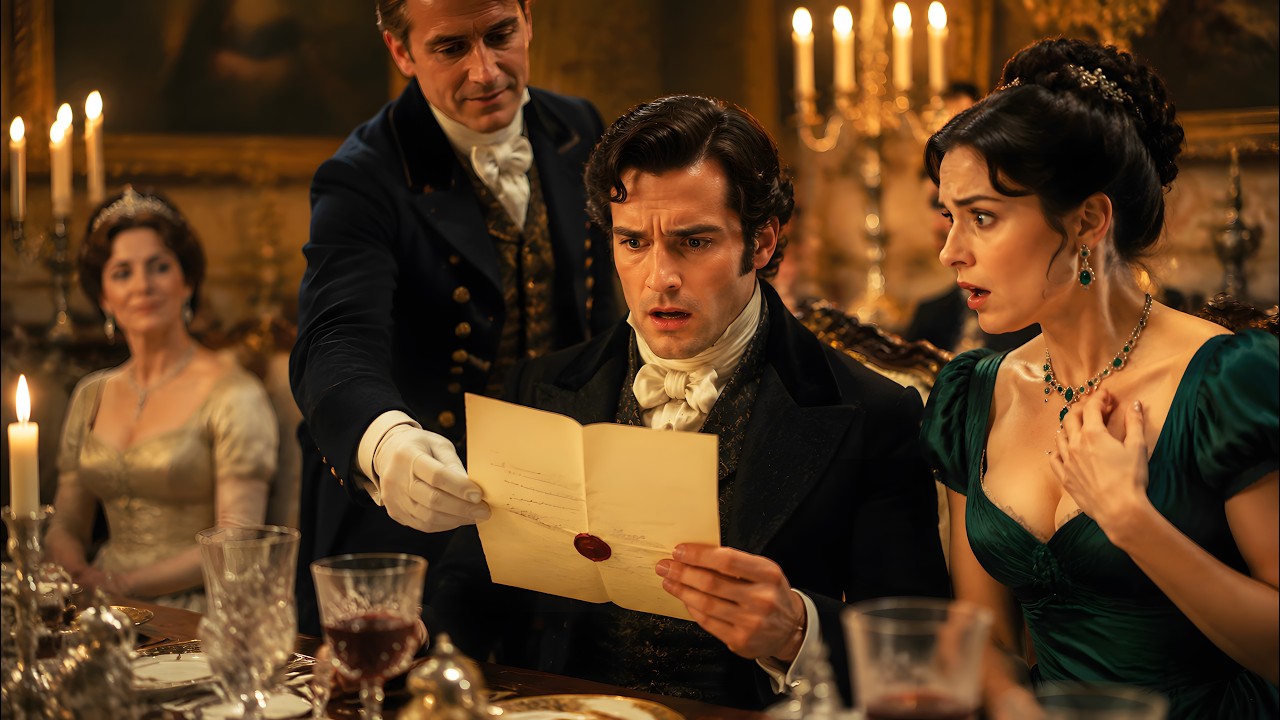
He stepped inside. Adelaide sat at a round table covered with papers, lit by a single oil lamp with a green glass shade. Mr. Tarrant sat opposite her.
She did not rise. She set down her pen neatly and said, Good evening, Edmund. Good evening. He laid the folded paper on the table between them.
I have not signed it, he said. I know, she said. Mrs. Wenlow would not have let you had you tried.
He glanced at Mrs. Wenlow, who had taken up a position near the door. Sit down, Edmund. You look tired.
He sat. He had not meant to. He set his hands on the table, palms down. Tell me, he said.
She told him. She had known about Lady Caroline Vane for eleven months. She had not minded at first. In May, while planting out the south terrace, she discovered she did mind.
I am sorry, Edmund, she said. I had hoped to be a more modern person. He looked at her properly for the first time in a great while. Her hair had grayed at the temples.
Her hands were thinner. Her eyes were tired but not angry. Why now? he asked.
Because last week I learned you took her to the house at Hare Wood Marsh. He went still. He had taken Caroline there for three days in August. He had thought no one would notice.
Mrs. Wenlow had noticed. I do not require an apology, Adelaide said. I do not require an explanation.
I have prepared the papers. I have decided I should prefer to live in a manner I can recognize as my own. She named the terms. The house at Hare Wood Marsh, the dower house, the income from her own settlements.
She did not require the principal or the title. She would take the hawks. He could not remember the last time he had asked after the hawks. Adelaide, he said.
She waited. You do not have to answer tonight, she said. I am asking you to sign. Will you give me an hour?
he asked. She considered him. I will give you until morning. An hour is too short for you when you are thinking.
He rose. He bowed. At the door he stopped. Adelaide, did you wish me to find you here tonight with the papers and Mr.
Tarrant and Mrs. Wenlow at the pavilion? Yes. Why?
Because I wished you, for once, to see the running of your own house. He went out. He walked back to the pavilion. Caroline was still seated.
Her wine glass refilled. The partridge taken away. He told her quietly. When he finished, she turned her glass on the cloth and said, She is a remarkable woman, your wife.
Yes. I had thought I understood our arrangement, Caroline said. I find I had not understood it at all. Neither had I, he said.
She looked at him. What will you do? I will sign. And then?
I do not know. That is the most honest thing you have said to me in two years, Edmund. He laughed, a single soft breath. I am sorry, Caro.
Do not be sorry to me. I have not been wronged. I have been mistaken. He walked her to the side door.
A closed carriage waited. He kissed her hand. She stepped up, drew her cloak around her, and looked at him from the dim window. Edmund.
Be kind to her. I will try. The carriage went. He stood in the rain, bareheaded, and let it land on his hair.
Then he walked back to the small library. Adelaide was alone. The lamp had been trimmed. The papers gathered in a neat stack.
She sat on the window seat with a book in her lap, not reading. He came to the table. He sat. He took the pen, read the paper through a third time, and signed his name.
The pen made a small sound of a thing being finished. He laid the pen down. He folded the paper and placed it precisely in the center of the table. May I ask you something?
he said. She closed the book. Yes. Why Mrs.
Wenlow? Adelaide came down from the window seat. She stood opposite him. Because Mrs.
Wenlow has carried my private correspondence for eleven years and never read a line I did not place before her. Because her mother kept my mother’s hawks when I was a girl. Because she found me weeping in the linen room at three in the morning when I was new to this house and very unhappy, and did not speak of it for nineteen years. Because if I had sent a footman, you would have laughed at him.
He sat with his hands flat on the table. I did not know. I know you did not know, Edmund. That is, in part, the trouble.
I am sorry, Adelaide. She looked at him. Thank you. I have wanted for some time to hear you say so.
I should have said so long ago. Yes, but you have said so now. She paused. It is a beginning of a kind.
What will you do? he asked. I will go to the dower house in the morning. I will take Mrs.
Wenlow. I will take the hawks. I will write in a month to ask after you. I will receive you if you come with civility.
I will not, Edmund, come back. He nodded. May I write to you? he asked.
Yes. Often? Not at first. Later often.
He rose. He bowed. She inclined her head. He went to the door and paused.
Adelaide, thank you. For what? For coming to find me yourself. I would have wished at the end to be found by you rather than left.
The look she gave him then, in the green shade of the lamp, was the look she had given him in the chapel sixteen years ago. He understood that he had not quite tried to be the man worth her trembling. He understood also that he intended to begin. He did not sleep that night.
He sat by the fire in the long library and watched it burn low. At first light he walked out into the wet garden. He met Mrs. Wenlow in the corridor carrying a small leather case.
She inclined her head gravely. He inclined his in return. Thank you, he said. She bowed once and went on.
By eight o’clock the carriage was at the door. Adelaide came down in a traveling dress of dark wool with her hat in her hand. He stood in the hall to see her go. She gave him her hand.
He took it, kissed it, and helped her into the carriage himself. He stood in the gravel as the wheels turned, watching the carriage move down the long avenue under the elms. When it had gone, he did not go back inside at once. He stood for some time looking at the road.
The Duke of Harewood went on to be duke for many years. Mr. Tarrant remained steward for the rest of his life and was buried at the duke’s own expense with a stone that read: He kept the accounts honestly. Mrs.
Wenlow went with Adelaide to the dower house, and after seven years to a small cottage of her own, where she kept bees and three hawks descended from the old ones. She never spoke a word of what she had carried. Lady Caroline Vane married a clever young man from the city and was, by all accounts, perfectly content. She remarked privately that contentment was a thing one only recognized after one stopped pretending to want something else.
The hedge of laurels along the east pavilion grew tall enough to hide the pavilion entirely from the great house, so that the windows of the small library could no longer see the place where on a wet autumn night a folded paper had been laid down beside a wine glass. The duke and the duchess wrote. Not at first. Later.
Often. They wrote in the slow, careful, courteous way of two people who had agreed at last to learn what they meant when nothing was required. After some years, when they had grown old enough to find each other interesting again without being married to do so, they began to take walks in the long evenings of summer on the south terrace, naming the new roses by the names she had once chosen, and laughing sometimes at small things no one else would have found funny. They did not remarry.
They had become friends. When at last the duke lay dying in the small library on a chaise drawn up by the window so he might look out at the south terrace, it was Adelaide who sat beside him in a chair brought down from her own house. Her hand, no longer trembling, was the one he held. He said near the end, Adelaide.
Yes. I have wanted for a long time to thank you. For what? For coming to find me yourself.
She did not answer. She did not need to. The look she gave him then was the same look she had given him on a wet autumn night in a room with a folded paper at its center.
He understood, as he had understood then, that he had been seen.