The difference was that he rehearsed in front of a mirror, and she rehearsed in front of the portraits. The portraits had given better advice. “To your eyes,” he said, and the glasses touched. “To the kindness of fortune that arranged for me to find them across a room I had not wished to enter.
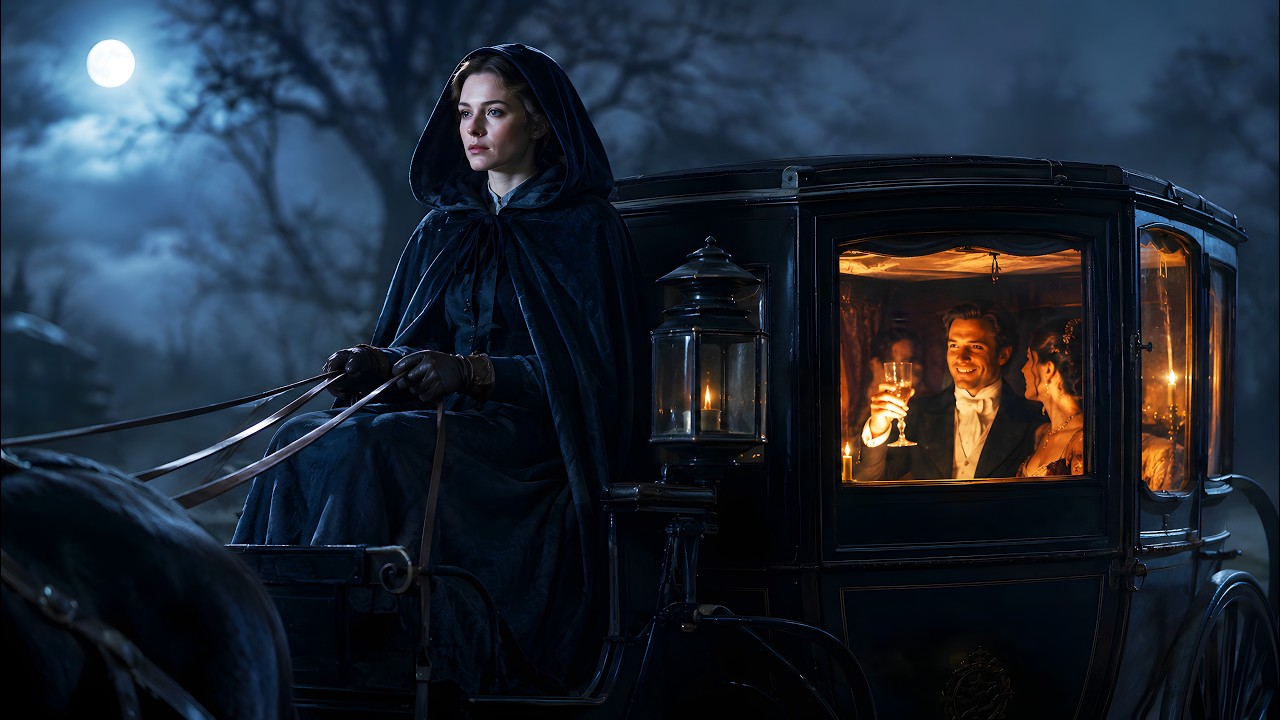
”
She remembered that room. A card party at a house she did not like. She stood by the fire because it was the only honest thing in the room. She watched him cross three times to fetch wine he did not drink.
She understood he was crossing for a particular pair of eyes. She thought it beneath her to look. She regretted that now. The woman said something she could not catch.
The Duke laughed his sincere laugh. Then he said, “My wife, you understand, is a very good woman. ” A pause. The Duchess waited for the rest.
“A very good woman,” he continued, “and yet not a woman of any particular weather. She is a fair day in a country with no seasons. One does not complain of a fair day, but one does not write poems about it. ”
The Duchess held the reins.
She was not angry. She was interested. She was the fair day driving them both down a dark road with a hand that did not tremble. She had never minded fair days.
Bread was baked on fair days, roofs mended, children taught to ride. Storms mostly broke things. He told the woman about a house. A small one, very pretty, with a garden, in a village he was unlikely to be seen in.
He named the village. The Duchess knew it. It was a house her own grandmother had lived in as a girl. She had visited twice.
She remembered the kitchen garden, the deep well, the small parlor with a clock that struck the hour with a soft apologetic note. She had loved that clock. She had not known the house was for sale, or that her husband had bought it for this purpose. She filed each fact away calmly.
There would be time later to take everything out and look at it in daylight. The road forked. She took the longer way without hesitation. This carriage would drive until she chose to stop.
Inside, a lull. Then the woman asked something, and the Duke answered with a long considered silence. He said, “You must not think me unkind. I have never raised my voice to her.
I have never struck her. I have never denied her any pleasure she has thought to ask for. The trouble is that she has never thought to ask. ”
The woman said quietly, “Perhaps she has asked, your grace, and you have not heard her.
”
The Duchess almost dropped the reins. Something inside her, held so long she had forgotten she was holding it, loosened a single notch. The Duke did not like the sentence. “You must not trouble yourself with the inner life of duchesses.
It is a very thin volume. ” He laughed. The woman did not. He spoke of her by name.
“Eleanor is the daughter of a very respectable house. A very respectable house, my dear, is like a very respectable wine. One serves it at dinners one wishes to seem proper. One does not take it to a picnic.
”
“You speak of your wife as if she were a bottle,” the woman said. “I speak of everyone as if they were a bottle. It is the only honest way to take stock of a cellar. ”
The Duchess, on the box with the moon laying silver along the river, said to herself calmly: Very well, your grace.
I am a bottle. Let us see what is in me. She clicked her tongue. The horses lifted their pace.
They knew her. They had always known her. She turned down a side lane that did not appear on any map he would consult, toward an open meadow above a low cliff where the river turned in a lazy curve. She had picnicked there as a child.
A governess told her it was a place where one could think clearly. The lane was rough. The carriage jolted. Inside, the Duke rapped his stick against the roof.
“Driver! What road is this? ”
She did not answer. He rapped again, harder.
“Driver! ”
She pulled the horses to a walk but did not stop. She let the silence do its work. He could not hold a silence.
He opened the small forward window himself. “I asked you a question. Where are we? ”
She answered in the flat, musicless voice.
“Your grace, the shortcut by the upper meadow. We shall rejoin the post road past the mill. ”
He hesitated. She felt the hesitation.
Then he said, “Very well, but mind the ruts,” and closed the window. She drove on. The lane narrowed. The hedgerow gave way to a long low wall, and beyond it the meadow opened silver under the moon.
She brought the horses to a halt, set the brake, and sat for a moment with the reins in her hands. She allowed herself one of the breaths she had earlier forbidden. A long shaking one that emptied her chest. She climbed down from the box—hand to rail, foot to step, weight kept over the wheel—the way the head groom taught her at seven.
She landed in wet grass. She walked to the carriage door and paused. Inside, the Duke was telling a story about a horse he had not owned. The woman made small polite sounds.
The Duchess took off the hat. She folded the heavy cloak over her arm. She smoothed her hair. She took the letter from the lining and held it.
She knocked once on the carriage door. Inside, the story stopped. The Duke said, “What is it now? ”
She opened the door.
She stood in the doorway with the moon behind her, her face in shadow. The woman saw her first, did not gasp, did not exclaim—simply set down her glass and folded her hands. The Duchess approved. The Duke turned.
His face passed through three expressions: irritation, puzzled recognition, then a flicker of a boy caught with a hand in a jar. He mastered it quickly. “Eleanor,” he said. “What in the name of heaven are you doing here?
”
“I was driving,” she said. He looked past her at the empty box, the folded cloak, the hat in her hand. The arithmetic happened in his face. “You,” he said.
“Yes. ”
“The whole way. ”
“Yes. ”
“From the inn.
”
“From the inn. ”
He sat back. He became uncertain. He looked at the woman as if she might explain.
The woman declined. “Eleanor,” he said. “This is not a scene I wish to have on a road. ”
“No.
I wish to have it in the meadow, which is why I have driven us to one. ”
He looked at the meadow, the mist, the moon. He understood this was not an accident. She held out the letter.
He recognized it. He did not take it. The woman said quietly, “Your grace, I did not know. ”
“I believe you,” the Duchess said.
The woman’s shoulders dropped. The Duke sharpened. “Eleanor, you cannot possibly—”
“I can, in fact, possibly. I can possibly a great many things.
It has been one of the most interesting discoveries of my evening. ”
He stared. “What do you want? ”
The first useful question he had asked in their marriage.
“Three things. I do not want a scene. I do not want a divorce. And I do not want, ever again, to be spoken of as a fair day.
”
He flinched. The woman gathered her cloak. “May I ask what you do want? ”
The Duchess considered.
The meadow was quiet. The horses dropped their heads to the grass. “I want to be the one who drives when there is driving to be done. I want the house in the village put in my grandmother’s name, which is also mine.
I want the key. And I want it not to be a secret. I want my husband to remember that strangers occasionally have ears. And I want to be toasted, if I am to be toasted, by my own name.
”
The Duke abandoned several speeches. The woman said, “Your grace, I think I should walk back to the inn. ”
“It is three miles, and the road is dark. ”
“I have walked further in worse company.
”
The Duchess smiled faintly. “Take the lantern from the box. Tell the boy at the inn the Duchess sent you, and that there is to be tea, and the partridges are not to be argued about further tonight. ”
The woman inclined her head, climbed down, took the lantern.
At the lane she turned. “Your grace, for what it is worth, I am sorry. ”
“I believe that, too. ”
The woman walked into the mist.
The bobbing light vanished. Then only the meadow, the moon, the Duke, the Duchess, and the horses cropping grass. They drove home by the long road, the Duchess on the box because she had not finished with the reins. The Duke sat inside in a silence new to him, like a coat he had been given by someone he did not expect a gift from.
She let him sit in it. Dawn came up without fuss, a clean gold that lay along the hedgerows and made wet leaves shine. She watched it from the box—not through glass, but with the reins in her hands and the smell of wet hedge in her nose. They reached the house as the kitchen chimneys began to smoke.
She handed the reins to the head groom. “See to them. They have done well. ”
She walked into her own house through the kitchen door because it was nearest.
The cook looked up and went on kneading bread. The Duke followed slowly. He stood in the kitchen doorway as if uncertain which house he had arrived at. “I shall have tea in the morning room.
You may join me in half an hour if you wish. ”
He bowed slightly and went away. She drank her tea alone. He came in the afternoon instead.
He sat across from her at the small table by the window. He did not try to charm her. “I have written to the village. The house will be in your grandmother’s name by the end of the month.
The key will be on the hall table by Friday. ”
She inclined her head. He said, “The thing I said about the weather. I did not know you were listening.
”
“I know. That was the difficulty. ”
He nodded. “What would you have me say instead?
”
She thought. The garden was full of small late roses. The clock on the mantel—her mother’s—struck the hour with a soft apologetic note. “I would have you say that I am a woman who can drive a carriage through the night and bring it home by the long road.
That is true, and it is not flattery, and it is the kind of thing a person can live inside. ”
He said only, “Very well. ” He stood, bowed again—this time not for court—and went out. She finished her tea.
The quiet broke then, something that had held her upright since the kitchen door banged. It broke without sound. She sat and breathed and felt, for the first time in nineteen years, that she was at home in her own house because she had arrived on her own terms. The woman in the claret cloak walked the three miles to the inn, was given tea and a private room, and in the morning took the post coach east.
She wrote a year later from a town by the sea, where she opened a school for girls who could not afford larger ones. She said she had decided to make a profession of hearing. The Duchess wrote back with a sum neither too large nor too small. The head groom lived long enough to teach the same trick—clicking the tongue softly—to the Duchess’s first daughter.
The two great bay geldings lived out their days in the home pasture and were buried under the oak. The Duke did not become a different man overnight. He became one who looked at his wife when she spoke. And on the anniversary of the night in the meadow, every year for the rest of his life, he raised a glass at his own table and said, “To my wife, who drives.
”
The first time he said it with the small dry effort of a man making amends. The last time with the simple ease of stating a fact he had grown proud of. The Duchess each year inclined her head and drank, because she had learned that the best toasts do not require an answer.