She went to the writing desk and lit a second candle, because a miniaturist works in two lights. She opened the chagrine case and drew out the small flat package wrapped in pale silk that held the likenesses of Captain Lucian Fay. She unwrapped them. There were five.
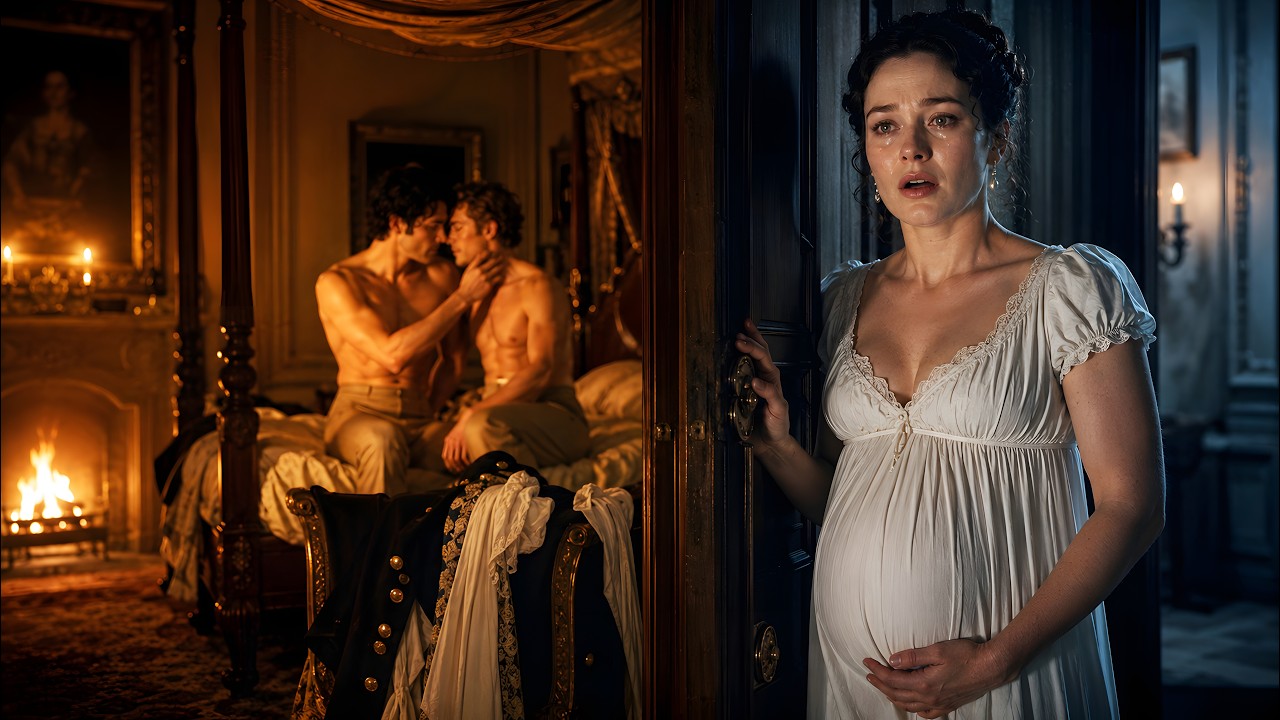
Each dated on the reverse in her own concealed cipher. Each signed with the small painted moth she used for private commissions. The likenesses were good. She had not allowed herself to consider while painting them what they were proof of.
She considered it now. Then she put them back into the false bottom of the case. She sat down and wrote in her steadiest hand to the Dowager Countess of Breed, requesting her hospitality for a brief stay. She signed her own name, Charlotte Vin, not the title.
She sanded the ink, folded the paper, and set it aside for the morning post. She did not weep. She had not wept in the dressing room, and she would not weep at the desk. There would be time later if it was needed.
For now there was only the box and the letter and the house she had been brought into as the second figure in a portrait someone else had hung. Down the corridor behind the warped door, the laugh she had not been given went on without her. And Charlotte sat with her hand on the chagrine and listened to the new sound inside her own chest, which was the sound of a woman beginning to count. She met Theodore at breakfast.
He looked up and smiled, the public smile. He had washed and shaved and dressed in the bottle green coat, and there was nothing in his face to say he had spent the night planning her removal. She came to the table, took her usual chair, lifted her tea cup and held it in both hands a moment before she drank. Are you well?
Quite well. He looked at her a fraction longer than usual, caught by something he could not name. She returned his look across the toast rack and the silver pot, and felt for the first time in three years that she could see his shoulders and what stood behind them at once. I shall go up to town tomorrow, she said.
The Dowager Countess of Breed has written for a sitting. Theodore raised an eyebrow. Breed. He did not take the name lightly.
She dictated the letter. The Dowager wrote it in her own hand, and Charlotte signed it only Charlotte. The same morning, they wrote to Theodore’s sister, Margaret. The Dowager sealed both with her own seal and sent them by the same post.
Theodore’s first letter arrived four days later. It mentioned her nerves. She handed it to the Dowager without comment. The Dowager read it and put it on the fire.
The second letter came three days after that. It mentioned a coastal house near Lyme. Charlotte held it by the window, looked out at the street, felt the small bright flicker of an anger she had not yet permitted herself. The Dowager read it and folded it carefully into the secretary drawer beside the five ovals.
Now we begin to answer. They wrote him a letter. Charlotte said she was remaining with the Dowager, that she was in excellent health, that any communication should go to her solicitor. The letter mentioned children plural.
The first time Theodore would see the word in her hand. A separate sheet in the Dowager’s hand said her grace’s painting box contains a series of likenesses dated and keyed in her own private cipher. The Dowager has examined them and finds them very fine. He came the day after next.
He sent up his card. The Dowager received him in the morning room. Charlotte came down in the dark blue gown, carrying the chagrine case. She set it on the small table by the window and sat across from her husband.
He was in the bottle green coat, his face arranged into the careful expression of a worried husband. His eyes went to her waist, then to the chagrine case. He had not considered it before. He considered it now.
She told him she was carrying twins. The midwife had confirmed it. She told him she would be remaining in town, then going to Lady Margaret’s house after the confinement. The children would be with her.
The estates would be held jointly, the income in trust for the children. He would retain use of the house. He would not retain use of her or of them. He asked what was in the box.
She said no. The Dowager spoke then, plainly. She described the miniatures, the cipher, the dates. She stated three conditions: he would sign the separation agreement without amendment, he would make no application to declare her unfit, he would not attempt to remove the children.
Do those things, and the miniatures remain in the drawer. Fail, and they leave it. Theodore went still. His face went through several arrangements.
At last he said, You are taking my heir. Charlotte answered, I am taking my children. They were never yours in the way you wanted them to be. You did not know there were two of them.
You did not know there was a cipher in the box. You did not know which feature carried my soul because you never asked. She rose, took up the chagrine case, and walked out of the morning room. She did not look back.
He signed the document four days later, without amendment. Captain Lucian Fay left the country a fortnight after that, bound for the Cape. Charlotte stayed at Breed House through the winter. She painted the Dowager’s grandson, then the Dowager herself.
She painted Lady Margaret. She painted herself, the only self-portrait she had ever made, and put it into the false bottom of the chagrine. The twins were born in late March at Breed House. A girl first, very small and very loud, and a boy after, smaller still and quieter.
She named the girl Iris for her own mother, the boy Henry for her father. She did not write to Theodore about either of them. She went to Welton in May. Lady Margaret met them at the front door, took the girl out of Charlotte’s arms, and said quietly into her ear, You have done very well, my dear.
Charlotte did not weep. It was a closer thing than it had been at the midwife’s ear in November. The chagrine case came with her. The five small ovals remained in the locked drawer at Breed House, because leverage held its weight best where it had first been placed.
Charlotte set out her ivories on the Dower House table the morning after they arrived. The light was very fine. She had three commissions waiting. She decided she would sign her work openly from now on with her own name, because a private sign was a thing one kept for the work one could not afford to claim, and she could afford to claim hers now.
She mixed her first colors. The children slept in the next room. Outside the window, the lime trees were coming into leaf. She set down the brush for a moment and laid her palm flat on the lid of the chagrine, felt the small painted moth under the wood, the empty silk wrapper in the false bottom, the brushes she trusted, the files of ground pigment.
She thought briefly of a warped door that did not latch, and of a candle that had not trembled. Then she picked up the brush again and went on.