The phone rings once and stops, an unfamiliar number left in the missed call list, practically daring a callback. For an older American living alone, that call could be the opening move in a scheme that drains a savings account, or it could be nothing at all. Every year, scammers steal billions of dollars from American seniors, and they do it not by picking locks but by phone, by mail, and by knocking politely on the front door. The people they target are often home alone and simply raised to be polite, and that politeness is exactly what the schemes are designed to exploit.
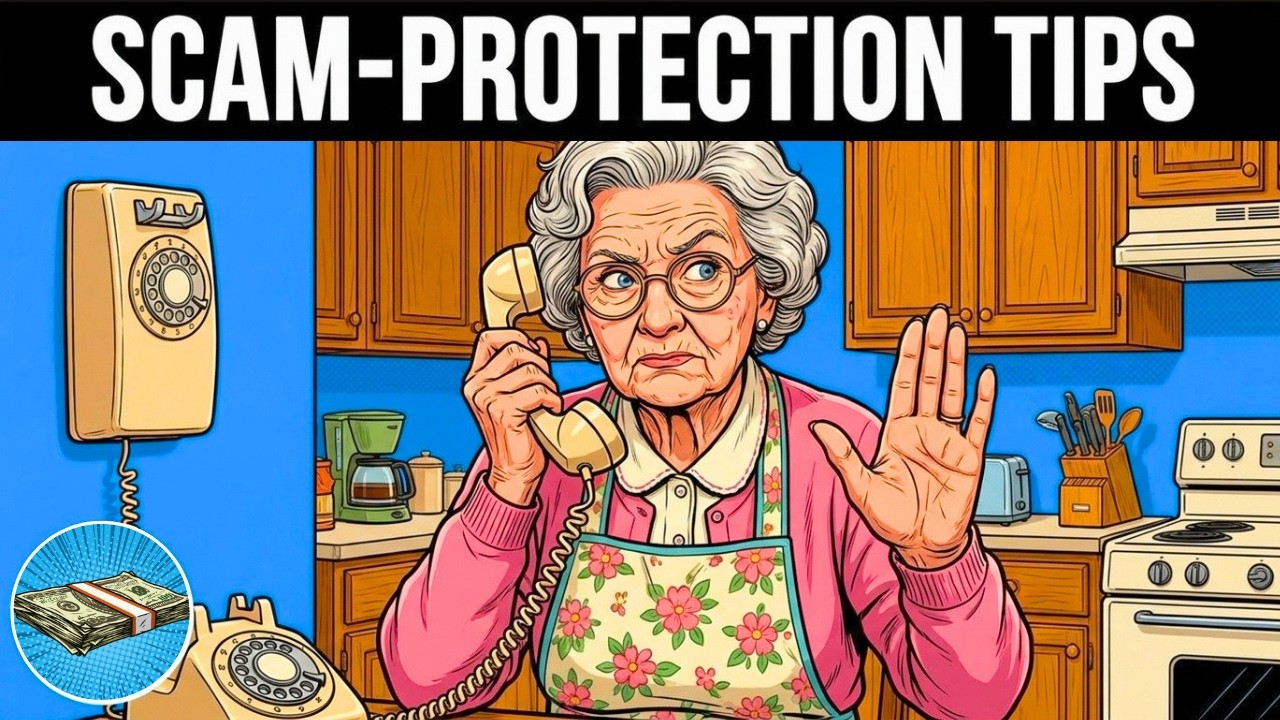
Against this, a set of practical defenses has emerged, cheap, simple rules that cost little or nothing and stop everything from cloned voices to forged checks at the front door. The first line of defense is the telephone itself. The single most powerful rule is also the easiest: if the number is not saved in the phone, do not pick up. Let it ring to voicemail every time.
Real callers, the doctor’s office, the pharmacy, family, leave messages. Scammers almost never do, because a recorded message is evidence and they know it. This one habit filters out the overwhelming majority of scam calls without a confrontation. There is a quiet bonus as well: numbers that always hit voicemail get flagged as dead ends and are dialed less over time.
The phone should work for the person who owns it, not the other way around, and anyone with honest business can wait ninety seconds for a call back. Government agencies send letters, not calls. The IRS does not call, Social Security does not call, Medicare does not call. When these agencies genuinely need to reach someone, they send official mail, usually several letters, with case numbers and reply instructions.
A caller claiming to be from any government agency, especially one demanding immediate payment or threatening arrest, has revealed everything in the first sentence. Hang up without another word, because there is no such thing as being rude to a person impersonating a federal officer to commit robbery. If a real letter ever arrives, it will carry a case number that can be verified by calling the agency directly from a number looked up independently, never one the letter sender provides by phone. Caller ID lies.
The name and number displayed on caller ID can be faked in seconds with cheap software, a trick called spoofing. Scammers deliberately display a bank’s real name, a utility company, even numbers from the victim’s own neighborhood, because a familiar-looking number lowers guard. The rule that defeats it completely is simple: never trust an incoming call’s identity. If the bank calls about a problem, hang up and dial the number printed on the statement or card yourself.
A real institution will never mind. Only an impostor is harmed by a callback. Another telephone trap is the one-ring call. The phone rings once and stops, leaving a foreign or unknown number in the missed call list.
Calling back can bill by the minute at rates designed to enrich the scammer, with charges appearing quietly on the next phone bill. The rule is equally simple: a missed call from a number you do not know, with no voicemail, is not your responsibility. Anyone real leaves a message. Curiosity is exactly the reflex this scheme is engineered to exploit.
Gift cards are payment for scammers only. No legitimate business, government agency, hospital, utility, or family emergency has ever been settled with iTunes cards, Google Play cards, or Visa gift cards read over the phone, not once, not anywhere. The moment any caller says the words gift card, the conversation is over, because gift cards are untraceable cash that can be drained from the other side of the world in minutes. This single rule applied without exception defeats entire categories of scams in one stroke.
Store clerks are now trained to ask about large gift card purchases for exactly this reason; if a cashier asks whether someone told you to buy them, that is not nosiness, it is a rescue attempt. Urgency is the scammer’s whole toolkit, and one of the most common scripts is the shut-off bluff. The call is urgent and specific: water, power, or gas will be disconnected within the hour unless payment happens right now over the phone. It is theater.
Real utility companies are required to send multiple written notices over weeks before any disconnection, and none of them take payment by phone under a countdown clock. A panicked person does not stop to think. Any deadline measured in minutes is a bluff by definition. Hang up, breathe, and if there is any real doubt, call the number printed on an actual bill.
Outside the phone, the mailbox holds its own dangers. One of the least known is check washing. Thieves steal outgoing mail, and with ordinary household chemicals they can erase ballpoint ink from a signed check, rewrite the amount and the payee, and cash it. A gel pen defeats them, because gel ink bonds into the paper’s fibers and cannot be washed out.
Every check should be written with a gel pen, and outgoing checks should never be left in the mailbox with the flag up. That little red flag signals thieves as clearly as it signals the mail carrier. Checks go into a blue postal box or straight to the post office counter, ideally before the last pickup of the day, so nothing sits overnight. A check that arrives in the mail can be just as dangerous.
A payment arrives for something sold online, a mystery shopper job, or an accidental overpayment with instructions to deposit it and send back a portion. The bank makes the funds available in days, so it feels cleared. It is not. Banks are required to release funds long before a check truly clears, and a counterfeit can bounce two or three weeks later, at which point the bank takes back every cent and the portion already sent to the scammer is gone forever.
Money sent back against a recent check is money gambled. Anyone overpaying and asking for change is running the oldest paper trick there is. The winning sweepstakes letter is another classic. It is thrilling, a prize with a glossy letterhead and a claim agent to call, but then comes the catch: taxes, processing fees, or delivery charges must be paid first.
Real prizes never, under any circumstances, require payment to receive. Taxes on genuine winnings go to the IRS after the money arrives, not to a stranger by wire transfer before, and a contest never entered cannot be won. That is not cynicism, it is arithmetic. The only thing that letter is qualified to win is a trip to the shredder.
The same applies to the invoice for nothing, an official-looking bill for a magazine renewal, a warranty expiration, or a final notice for a service never ordered. These operations mail thousands of fake invoices, knowing a percentage of busy, trusting people simply pay them. The defense costs nothing: never pay any bill that cannot be matched to your own records. Keep a simple list of actual subscriptions on one sheet of paper, and any invoice that is not on the list gets one phone call to verify or one trip to the trash.
Some of the most deceptive mail is technically legal. Envelopes stamped “Important Medicare information enclosed” or “Time-sensitive official documents” turn out to be insurance advertisements dressed up as government correspondence. The tell is in the fine print. Real government mail comes from a .
gov return address, carries no sales language, and never pressures a purchase. Marketing mail must say somewhere, usually in tiny print, that it is an advertisement. Find that line and the costume falls off. When in doubt, real Medicare questions have one number, printed on the card itself.
Another trick is smaller and guiltier: an envelope containing a small gift, printed address labels, a calendar, sometimes an actual nickel visible through the window, followed by a donation request. The technique has a name, reciprocity pressure. Something was given, so something feels owed. But unsolicited gifts that arrive by mail are yours to keep free and clear with zero obligation.
That is federal law. Keep the labels, use the calendar, spend the nickel, and give only to causes chosen deliberately on your own schedule through their official address. The front door is the third battlefield. Someone in a work vest with a laminated badge says they are from the water company, the gas company, or the city, and they need to come in to check a leak, take a reading, or conduct an inspection.
Real utility workers schedule visits, carry verifiable ID, and will stand outside without complaint while you call the company’s official number to confirm them. That phone call is the entire test. An honest worker expects it. An impostor finds a reason to leave before it connects.
The door stays closed and the chain stays on until the company itself, dialed from a bill, confirms the visit. Badges are printed by anyone with a laser printer. Dispatch records are not. The two-person distraction is worse.
One person occupies the homeowner at the front door with a survey, a lost pet, or a water test that requires running the kitchen tap, while a partner slips through the unlocked back door or garage and goes straight for bedrooms, purses, and pill bottles. The defense is a habit, not a gadget. Back door and garage stay locked at all times, even when home, even in daylight. Any doorstep conversation that oddly needs you to leave the doorway, check the backyard, run a faucet, or look at the fence line ends right there.
One door open at a time, and you standing in it. Then there is the crew that arrives to upgrade the security system, free, they say, because the alarm company sent them or because the old provider went out of business. What actually happens is that they swap or disable real equipment, sign the homeowner into a costly new contract with a company they have never heard of, or simply learn the whole layout of the system. The rule mirrors the utility rule: no one touches the alarm without a confirmation call to the number on the monitoring bill.
Real security companies notify customers in writing before any technician visit. An upgrade nobody requested is a downgrade in disguise. The same logic applies to every caller who claims to be helping. No bank employee, no fraud investigator, no police officer, no government agent, no grandchild’s lawyer, nobody legitimate ever, for any reason, needs a PIN, an online banking password, or a one-time security code read to them.
Those codes exist to prove it is really you. Handing one over hands over the account. When any caller asks for one, the question is already answered. Hang up.
Not because it is rude, but because the entire security system of modern banking depends on that number staying in exactly one head: yours. One of the newest and most unsettling tricks is the cloned voice. With a few seconds of audio pulled from a social media video, software can now clone a family member’s voice convincingly enough to cry for help on the phone. The technology is real.
The defense is beautifully old-fashioned. Ask the caller something no stranger could ever mine from the internet: the name of a childhood pet that was never posted, what was cooked at some long-ago dinner, the nickname nobody outside the family knows. A cloned voice has your grandchild’s sound but none of their memories. One private question and the mask has nothing underneath it.
The final and most important rule outranks all the others. Every scam on this list shares a single weakness: scams cannot survive daylight. They depend on speed, secrecy, and a decision made alone. Before sending money to anyone new for any reason, no matter how urgent, tell one trusted person first.
Say it out loud. Nine times out of ten, hearing the story spoken to another human being is all it takes for the seams to show. Scammers count on silence and hurry. Give them neither and they have nothing at all.
And if the worst has already happened, there is no shame in it; these operations fool doctors, lawyers, and bankers every single week. Report it, tell the bank immediately, and tell your people. Silence is the only thing that ever helps the thief.