Fifty. That is the number of old-fashioned frugal living practices passed down through generations of grandmothers who lived through war, recession, and scarcity. These were women for whom waste was not an option, and every resource had to be stretched as far as it could go. In an age of convenience and constant consumption, the question is whether their methods still matter.
The evidence suggests they do, and the list begins with the smallest, most overlooked everyday objects. Rubber bands, for example, arrive in nearly every household free of charge, wrapped around vegetables, bundled mail, and securing packages. Most people throw them away without a second thought. Grandmothers kept a jar on the counter and reused them until they lost their stretch, never once paying for something that nature and commerce delivered to their door.
The same logic applied to buttons. When a garment wore out completely, the buttons were cut off before the fabric was discarded, saved in a tin, and used to repair the next shirt or coat that lost one. New buttons are surprisingly expensive, but a small collection eliminated that cost entirely and extended the life of good clothing for pennies. The kitchen was a central battleground in the war against waste.
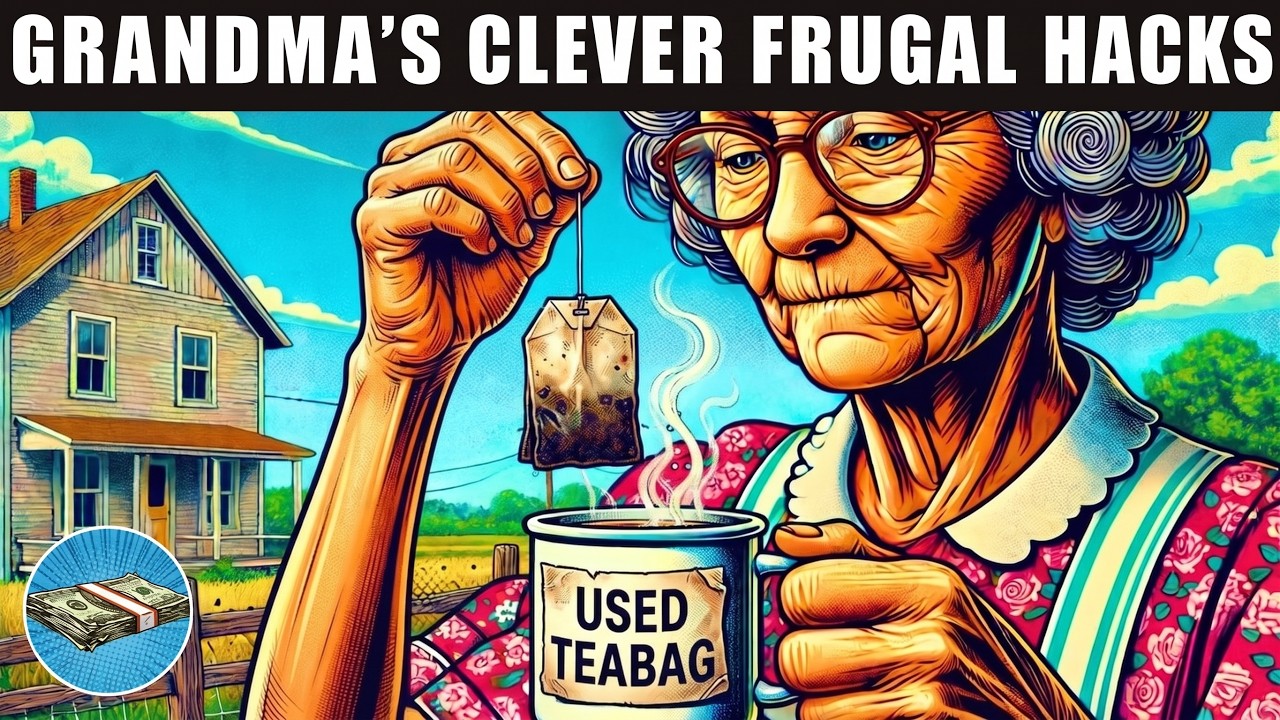
Grandmothers knew that pasta did not need a massive pot of boiling water, only enough to submerge and stir it, cutting the energy needed to heat it every single time. They understood that a tea bag held more than one cup, so they steeped it twice, effectively halving their tea costs over a year. They cooked in bulk, making double portions and freezing half, so that future meals were ready at ingredient cost rather than takeout prices. They made their own stock from vegetable peelings, onion skins, and chicken bones, simmering what others threw away into a rich, flavorful base that cost several dollars a carton in stores.
They preserved food at peak season, turning cheap summer tomatoes into sauce and freezing sale-priced berries, ensuring they ate well year-round without paying premium off-season prices. They bought whole foods instead of pre-processed ones, recognizing that a bag of oats cost a fraction of the packaged granola made from the same ingredient, and that a whole chicken yielded more meals per dollar than pre-cut pieces. They ate cheaper cuts of meat, turning chicken thighs, pork shoulder, and beef chuck into extraordinary meals through slow cooking methods that developed flavor while costing dramatically less. And they used every part of the vegetable, eating broccoli stems, making pesto from carrot tops, and flavoring soups with corn cobs.
The modern kitchen is filled with expensive products that grandmothers replaced with a handful of basic ingredients. White vinegar, baking soda, and a little dish soap handle the majority of household cleaning needs, replacing a cabinet full of heavily marketed, heavily priced commercial products. Glass jars from pasta sauce, pickles, and jam were washed and repurposed as drinking glasses, storage containers, and organizers, serving the same function as a matching set from a kitchen store for no extra cost. Homemade bread required only flour, water, salt, and yeast, costing a fraction of a bakery loaf, and stretching the money further still.
Paper was treated as the resource it is, with both sides used before anything was discarded. Cloth rags cut from old cotton t-shirts and flannel replaced paper towels entirely, eliminating an expense that could exceed a hundred dollars a year. Laundry and clothing offered their own opportunities for savings. Line drying was standard practice, saving the significant energy consumed by the dryer while extending the life of the fabric.
Clothes were worn multiple times before washing unless they were visibly dirty or odorous, reducing water, detergent, energy, and wear on the garments themselves. When clothes did need attention, mending was the default response. A small hole in a sock or a worn elbow on a sweater was repaired with a sewing basket and an hour of learned skill, extending the life of clothing by years. Shoes got the same treatment.
A cobbler could resole a quality pair for a fraction of the cost of new ones, and replacing worn heels and reconditioning leather meant buying quality once and maintaining it rather than buying cheap repeatedly. Grandmothers were strategic shoppers long before the term existed. They kept price books, small notebooks recording the prices of items at every store they visited regularly, so they could recognize when a sale was genuinely a deal and stock up accordingly. They never shopped without a list, understanding that grocery stores were designed by experts whose entire job was to make customers deviate from their plan.
They never shopped hungry, knowing that an empty stomach increased both the quantity and the caloric density of what ended up in the cart. They shopped alone whenever possible, avoiding the impulse purchases that came from children, partners, or hungry friends. They planned weekly no-spend days, staying home and using what they had, accumulating over fifty days of pure savings annually. And they negotiated everything.
Grandmothers haggled without embarrassment, and the modern equivalent meant calling to renegotiate internet bills, phone plans, and insurance premiums, with the understanding that the worst answer was always just no. The principles extended to the home itself. Grandmothers did not heat or cool rooms they were not using, closing vents and doors to spare bedrooms and storage areas, conditioning only the air in the spaces they actually occupied. They insulated as much as possible, stuffing cloth under drafty doors and covering windows in winter, practices now replaced by inexpensive modern weather stripping that returned its cost through lower energy bills.
They kept freezers full, even filling containers with water when they were sparse, because the frozen items helped maintain temperature and reduced energy consumption. They repaired things instead of replacing them, investigating why a toaster stopped working rather than rushing to buy a new one, often finding the fix was a deep clean or a loose wire. They maintained everything they owned, changing oil on schedule to avoid replacing engines, cleaning refrigerator coils to extend their life, understanding that the cost of care was always less painful than the cost of replacement. The financial philosophy underneath all of it was unwavering.
Grandmothers built their lives on the distinction between a want and a need, pausing before any purchase to categorize it honestly. They lived below their means, always, suspicious of lifestyle inflation and upgrades simply because they were now affordable. They avoided debt with near visceral resistance, recognizing that interest payments were money spent on something already consumed, the opposite of investment. They paid themselves first, moving even a small percentage of every paycheck into savings the moment it arrived, not trusting themselves or life circumstances to have money left over at the end of the month.
They stocked up on non-perishables when prices dropped, buying several months of toilet paper, soap, canned goods, and dried beans at sale prices, essentially purchasing future needs at today’s discount. They canceled subscriptions they forgot they had, hunting down every small monthly charge designed to be forgettable. And they took care of their health proactively, walking, eating real food, sleeping enough, and managing stress through community and purpose, understanding that medical bills were one of the largest financial emergencies a family could face. Giving was not exempt from the frugal mindset.
Homemade gifts, baked goods, jams, knitted items, framed photos, and handwritten recipe cards were given with genuine care and cost a fraction of store-bought presents. Gift-making happened year-round, with grandmothers always thinking ahead, setting aside things they made or found that would suit someone they loved, spreading the effort and financial pressure across the whole year. Books came from the library, free, providing entertainment, education, cookbooks, and novels, a resource that modern libraries have expanded with ebooks, audiobooks, and streaming apps. Haircuts were learned at home, basic trims and children’s cuts extending the time between professional visits.
Even gift wrap and greeting cards were homemade or bought at the dollar store, recognizing that the sentiment was in the words, not the price tag. But beneath every practical tip was one unifying principle, the emotional and psychological foundation that held the entire structure together: be grateful for what you have. This was not mere sentiment. It was practical financial psychology.
Gratitude was the antidote to the consumption impulse. When a person genuinely appreciated what they already owned, the need for the new thing, the upgraded version, the trending item, slowed down, and with it the buying and the spending. Every grandmother who lived through scarcity understood something that an abundance culture struggles to teach. Enough is not a number.
Enough is a decision. And the moment that decision is made, the financial pressure of modern life begins to lift. These practices were not born of deprivation but of resilience. They were worn like armor against financial catastrophe, ensuring that when hard times came, and they always eventually do, there were reserves, there were habits, and there was the quiet confidence of having lived within one’s means all along.
Living below one’s means was not an experience of lack. It was the absence of financial anxiety, the ability to sleep soundly knowing that an unexpected bill was an inconvenience rather than a crisis. The savings were real. The freedom was real.
And the accumulated wisdom of generations who had no choice but to make every resource count remained as relevant in a modern economy as it was in the kitchens and homes where it was first practiced.