They say Ardmore nearly died three times. I know because I was there for all three. My name is Thomas Callaway, and I came to that town in the autumn of 1893 with $43 sewn into the lining of my coat, a worn pair of boots, and the kind of hope young men carry like a lantern in the dark, not knowing yet how easily the wind can take it. I was twenty-one, born in Jack County, Texas, the third son of a family that had more children than land and more land than money.
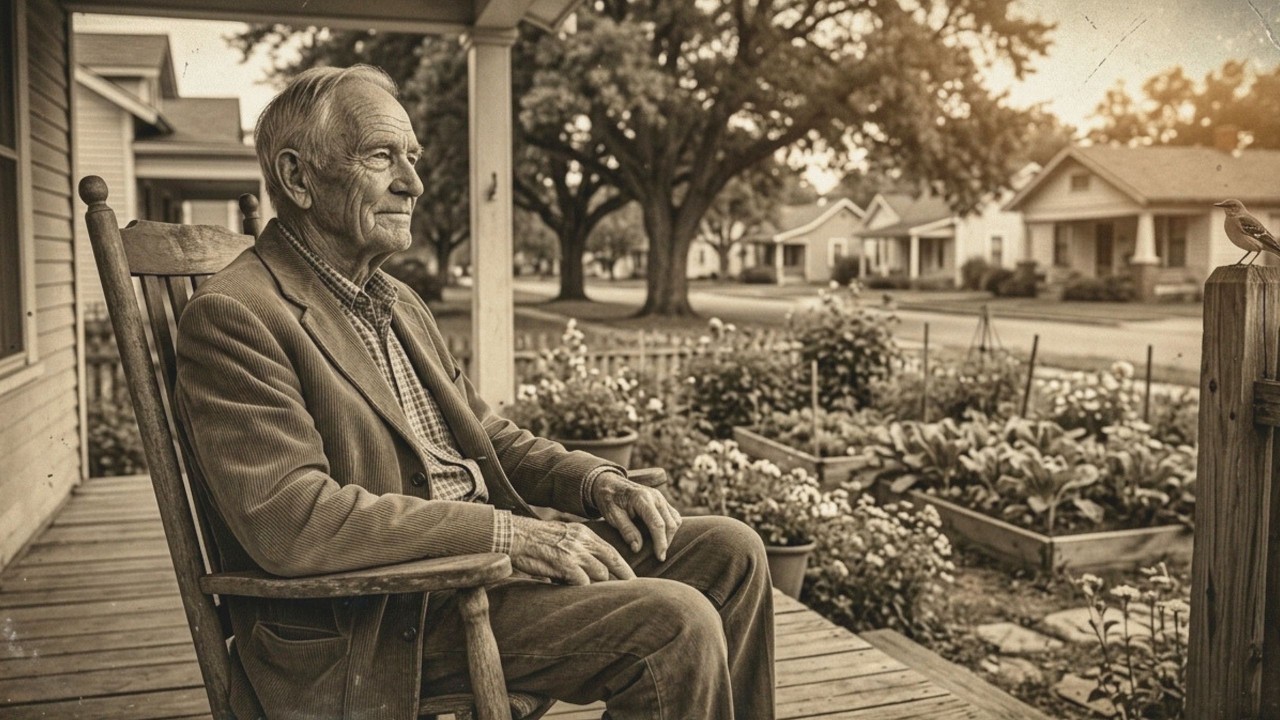
My father was a quiet man, not cold, just worn, with a face that had seen too many dry summers and not enough rain. The lines carved into his skin weren’t just age. They were arithmetic. The math of a life where the numbers never quite added up.
We weren’t starving, but we were close enough that the difference didn’t feel like much on certain winter mornings. I left Texas because I was running from the particular kind of suffocation that comes from watching your future arrive before it’s supposed to. The same fields, the same dust, the same slow surrender that had taken my father and his father before him. A man I’d worked with on a cattle drive told me about Ardmore one night over a fire, his voice low like someone might steal the idea right out of the air between us.
He said the Indian territory was opening up. Said there was land, work, possibility. Said a young man with a strong back and a willingness to endure could build something real there. Three weeks later I was on a wagon heading north, with a change of clothes and a Bible my mother pressed into my hands the morning I left without saying a word.
She didn’t need to. The way she held it out, steady, like she was handing me a piece of herself she could spare, said everything. The road was long and unkind. October had settled into the land like an unwelcome guest, and the wind that came down from the north carried a bite that felt personal.
The sky was the color of old pewter, flat and low, pressing down on the world like a lid. The wagon carried a family from Missouri, a dry goods merchant who never once stopped sweating despite the cold, and a man who claimed to be a surveyor but whose hands didn’t look like they’d held anything heavier than a glass of whiskey in years. Nobody talked much. That’s the thing people don’t tell you about long journeys on bad roads.
The silence isn’t peaceful. It’s heavy. It settles on your shoulders the same way the dust does. We crossed the Red River on a cold afternoon in late October.
There was no bridge. The ferryman was a lean, sun-darkened man who rationed his words like a resource. The water was the color of rust, and the sound it made against the hull was low and constant, like a warning in a language I hadn’t learned yet. On the other side, the land opened up, flat in some places, gently rolling in others, with stretches of post oak and blackjack timber breaking the horizon.
The grass was dry and pale. The sky, once we were clear of the river’s timber, was enormous, the kind of enormous that doesn’t inspire you so much as remind you of your own size. I felt very small and very far from everything I had ever known. But I also felt something else, something quieter.
I felt like the past had finally stopped being able to see me. It took another two days before the wagon rolled into what passed for the main street of Ardmore. And I use that word street charitably. It was more of an intention, a wide stretch of packed earth flanked by wooden storefronts.
There was a hardware store, a general dry goods outfit, a post office that shared its building with a barber shop, and several establishments whose purposes were made clear by the men leaning in the doorways. The population was somewhere around five thousand souls, though souls might be a generous accounting for some of them. It was a young town, not young like a child is young, but young like a wound is young, raw, tender, not yet sure if it would heal clean or leave a scar. There was no running water, no sewage system.
The wells along Main Street had been dug more for fighting fires than for drinking. The streets turned to mud when it rained and to packed clay the color of dried blood when it didn’t. It was not a comfortable place to be, but it was alive, and that counted for a great deal. I found a room above a saddlemaker’s shop on the south end of Main Street, paying four dollars a month to a woman named Mrs.
Holt, who had the manner of someone who had extended trust to strangers before and regretted it. She had rules. No visitors after dark. No cooking in the room.
No debts carried past the first of the month. I agreed without argument. I had forty-three dollars and no job. Agreement was the most sensible currency I had.
Within a week I found work at a small daily paper that operated out of a two-room building on the east side of town. I hadn’t gone looking for newspaper work specifically. I had gone looking for any work that would pay, which meant I walked into every establishment on Main Street and said the same thing to every proprietor, that I was willing, I was able, and I would not embarrass them. The newspaper hired me because the man who ran it, an older fellow named Garrett with inkstained fingers and a permanent squint, happened to need someone that same afternoon, and I happened to be standing in his doorway when the need arrived.
That is the truth of most opportunities. They are less about merit than about timing and the willingness to be present when the door is open. The work was not glamorous. I set type.
I ran errands. I delivered papers on horseback along a route that covered the main commercial street. Printers at that time earned nine dollars a week. I earned less as a man who knew nothing about printing, which is to say I earned just enough to keep the room at Mrs.
Holt’s and eat one adequate meal a day. For outside news, we relied on a man in Fort Worth who would call us by telephone and read us the headlines from the papers there. The rest we clipped from the Dallas News and the Fort Worth Record, reassembled into something that resembled local relevance and printed on four pages that smelled of fresh ink and ambition. It wasn’t much, but it was mine in the way that any honest work becomes yours.
Not through ownership, but through the particular exhaustion that comes from doing it every day with your full attention. Ardmore in those early years did not ask much of you in the way of comfort. It asked everything in the way of endurance. The winters were harder than I had expected.
The cold off the plains came with a persistence that felt almost deliberate. I learned to sleep with my coat on. I learned to be grateful for small things. A cup of hot coffee in the morning.
The warmth of the horse’s flank against my leg on the delivery route. There was no real law in the way I had understood the word growing up. The statutes we lived under had been extended from Arkansas, enforced not by county sheriffs elected by the people, but by United States deputy marshals who rode in from somewhere else and rode back out again, carrying the law like a piece of equipment they hadn’t fully broken in yet. It worked, more or less.
The people who came to Ardmore came because they were attracted by opportunity, which is another way of saying they came because they had run out of other options. Land was the dream. Land was always the dream. I taught school for a time in the evenings and on weekends to supplement what the paper paid me, reading and arithmetic to the children of families who had arrived with even less than I had.
By the spring of 1894, I had saved enough to rent a small house on the edge of town. Two rooms, a wood stove that drew poorly when the wind came from the south, a porch that leaned slightly to the left, as if it were perpetually listening for something. But it felt like the beginning of something, like the first real sentence of a story after a long and uncertain preamble. Then I found a small parcel of land on the south side of town that a man was willing to sell on monthly installments, and I negotiated a price I could meet if nothing went wrong, which is the only way most men of modest means ever manage to own anything, by betting on the narrowest possible margin between what they earn and what they owe, and praying the margin holds.
It held barely some months, but it held. There were dances, square dances mostly, held in whatever space was large enough. A cleared-out storeroom, a barn, occasionally the street itself on a warm evening. The first real social organization I can remember was the Algonguin Club, a group of young men and women who gathered for dances and entertainments, bringing to their gatherings a kind of deliberate refinement that spoke to a collective desire to be more than the rawness of the place they had arrived in.
People dressed carefully for those evenings, with the particular attention that people pay to appearance when appearance is one of the few things they can still control. For a few hours, standing in a room lit by oil lamps with a fiddle filling the air, you could almost forget that the street beyond the door was unpaved and the nearest hospital was a day’s ride away. Almost. The Algonguin Club gave way eventually to the Elks Club, which became the social center of the city for years afterward.
But in those early years, it was the Algonguin that I remember. It had the feeling of something improvised, which suited the town it belonged to. The climate in those years was wetter, or so it seemed to me then, though perhaps I was simply younger and more inclined to remember the good seasons and let the dry ones blur. The land around Ardmore was fertile enough to reward a man who worked it properly.
Cattle did well. Farmers brought their grain into town to sell to the men who kept horses for their buggies and their hacks. There were no industries, no refineries, nothing that manufactured anything beyond the basic commerce of a frontier town finding its feet. It was not a glamorous life, but it was an honest one.
And in those years, before everything changed, honesty was about the most valuable currency in circulation. I didn’t know yet that the town was sitting on something, that beneath those unpaved streets and modest storefronts, the ground itself was keeping a secret that would, in the fullness of time, remake everything above it. The spring of 1895 arrived warm and dry. The oaks leafed out early.
The sky was clear for weeks on end, the kind of clear that makes a place look more permanent than it is. It was the kind of weather that makes a man lower his guard. He shouldn’t have. The fire started on a Tuesday, in a livery stable near the south end of Kado Street.
Nobody ever established the cause with any certainty. A lantern left burning too close to the hay. A spark from a horse’s shoe against stone. Some small and ordinary act of carelessness that in other circumstances would have amounted to nothing.
On the night of April 19th, 1895, it amounted to everything. The buildings were wood, almost everything in Ardmore was wood, and with the wind coming hard from the southwest, the awnings that stretched over the street served as nothing so much as a continuous ladder for the fire to climb. The town had a volunteer fire company with hoses and a pump, the kind of organized good intention that communities assemble when they understand in the abstract that fire is a danger. What they did not have, and what no amount of intention could substitute for, was water.
The wells on Main Street were shallow and limited, and the first thing a fire of any real ambition does is outlast your water supply. I heard the bell first, then the shouting. Then I came out onto the street and looked south and saw that particular orange that a large fire makes against a dark sky, something hotter and more violent than the warm orange of a lamp or a hearth. I ran toward it.
Most men did. Every building that burned was someone’s livelihood, the physical container of someone’s particular attempt at a life. You ran toward it because standing still felt like a kind of surrender. The heat reached me half a block away, pressing against my face like a hand.
The air smelled of burning wood and something sharper underneath, the paint on the storefronts and the tar paper on the roofs releasing themselves into the smoke. The men of the volunteer company worked the pump with the desperate efficiency of people who understand they are losing but have not yet accepted it. Within the first hour, the fire had taken the livery stable entirely and moved to the adjacent buildings with a speed that seemed to violate some basic understanding of how solid things behave. Wood that had stood for years, dry after weeks without rain, seasoned by sun and wind into something very close to tinder, did not resist.
It participated. I passed buckets of water from a line that stretched from the nearest well to the edge of the fire. The water made no measurable difference, and we kept passing it anyway because stopping felt worse than continuing. The wells gave out before midnight.
When the last of the water was gone, the decision was made to dynamite. I had never heard dynamite before that night. The first blast hit me in the chest before I heard it with my ears, a concussion that seemed to rearrange something in my rib cage, and then the sound arrived, enormous, flat, final, like a door being slammed by something much larger than a door. The idea was to create a gap the fire couldn’t cross.
It worked eventually, after three blasts and two buildings brought down and a section of Kado Street that looked in the gray pre-dawn light like a mouth with teeth knocked out. By morning, the south end of Ardmore’s main commercial district was gone. Not damaged, but gone, reduced to foundations and ash. Thirty-seven businesses lost.
Nearly the entire commercial core of a town that had barely finished building itself. But here is the thing about Ardmore and the people who built it. They did not treat catastrophe as a conclusion. They treated it as information.
The plank buildings that burned were not rebuilt as plank buildings. They were rebuilt in brick. Within months, the south end of Main Street was a construction site of a different kind, deliberate construction, planned construction, materials chosen for permanence rather than convenience. It is a strange thing to watch a town improve itself through disaster, strange and not entirely comfortable, because the improvement carries within it the cost of what was destroyed.
I never entirely forgot what had stood there before. Some things you don’t forget, not because you try to remember them, but because they were loud enough and hot enough and real enough that they simply stay. The fire of 1895 was the first thing Ardmore survived. It would not be the last, and the next one would not come with warning bells.
The next one would come from the ground itself. For eighteen years after the fire, Ardmore rebuilt itself in the patient, unglamorous way that towns rebuild. The brick buildings on Main Street aged into respectability. The streets were still unpaved in places, but there were more of them now, and they went farther.
By 1913 I was forty-one years old, no longer young in any sense that required qualification. I had been at the paper for nearly two decades. Garrett had retired, the paper had changed hands twice, and I had stayed through both transitions because I had become, without quite planning to, the institutional memory of the operation. I owned my house outright by then.
I had a garden behind it that I tended on Sunday mornings, not because I needed the vegetables it produced, but because there is something in the act of tending a garden that satisfies the part of the mind that wants to see the direct result of its own attention. I was settled. I was not prepared for what August of 1913 brought. The discovery didn’t announce itself the way the fire had.
There was no alarm bell, no orange light against the sky. It came quietly, the way the most consequential things often do. The Healdton oil field, discovered in August of 1913 in the land south and west of Ardmore, by a group of local men led by Roy Johnson. He was a deliberate man, not flashy, the kind who forms his opinions slowly and then holds them with a steadiness that can look like stubbornness from the outside but is in fact something closer to integrity.
The well came in, and the news moved through Ardmore the way news moves through a small town, faster than it should, louder than the facts warrant. What happened to Ardmore in the months that followed is difficult to describe to someone who has not seen a quiet place suddenly become loud. It is not simply that there was more activity, more wagons on the street, more strangers arriving at the train station. It is that the quality of the air itself seemed to change.
Money arrived first, in the form of the transactions that precede ordinary prosperity. New hotels went up. The facades of existing businesses were improved. The town I had lived inside for nearly two decades was replaced by something faster and less certain.
I walked Main Street on a Saturday morning in the autumn of 1913 and felt for the first time in years that I was in a different place than the one I thought I knew. There were new signs, new awnings, men in suits I hadn’t seen before, moving with the particular purposefulness of people who have come somewhere because they intend to take something away with them. It was exhilarating and unsettling in equal measure. The people who had been here, who had arrived with nothing, who had passed buckets on the night of the fire and rebuilt and stayed through the lean winters, were not being displaced exactly.
Nothing so dramatic. They were simply being diluted. The town they had built was becoming a different town, one that contained their history but was no longer entirely shaped by it. I watched a man I had known for fifteen years sell his hardware store that autumn to an investor from Tulsa who had arrived on the Tuesday train and made his offer on Wednesday and was gone by Friday with a signed agreement in his coat pocket.
He stood on the sidewalk outside the store the morning after the sale and looked at the facade with the expression of a man who has gotten what he asked for and discovered in the getting of it that he had wanted something slightly different. I remember that morning clearly, the morning of September 27th, 1915. The sky was the particular hard blue of a late summer day when the heat has been building for weeks. I had a cup of coffee on my porch before walking to the office.
I watched a mockingbird work through four different songs on the fence post, cycling through them with the systematic thoroughness of an animal that takes its work seriously. I laughed at the bird, a small laugh, the kind that costs nothing and means everything in the moment it occurs. It would be the last easy laugh I had for a very long time. The explosion happened at three o’clock in the afternoon.
I know the time because I had just looked at the clock on the wall of the newspaper office, not five minutes before. I was at my desk reading copy. Then the world came apart. This was not a sound first.
This was a pressure. A concussive wave moved through the building the way a hand moves through water, displacing everything. And in that fraction of a second before the sound arrived, I had the strange sensation of being very briefly not quite present, as if the air itself had been removed from around me and not yet replaced. Then the sound arrived.
The closest I can come to describing it is this. It was the sound of something very large and very certain ending. The windows of the newspaper office came in. All of them simultaneously, in a single moment of glass becoming something other than glass, a lateral movement of fragments that embedded themselves in the far wall and the surface of my desk.
I was on the floor. I don’t know when I got there. My ears were producing a high, sustained tone that sat over everything else like a layer of gauze. I put my hand to my face.
There was blood on my forehead. Glass, I assumed, though I couldn’t feel it yet, which I understood distantly was not a good sign. A tank car on the Santa Fe tracks had been sitting in the heat of the afternoon sun for hours. It contained a petroleum distillate.
The gas that built up inside had found a source of ignition somewhere in the vicinity of a paving crew working near the tracks, where small fires had been burning to heat the materials they were laying. The car was positioned close to Main Street, close enough that when it went, the blast radius included everything that mattered. I moved to the window frame and looked out. The windows for fourteen blocks in every direction were gone.
The facades of buildings closest to the tracks had been pushed inward, their brick faces pressed back against their interior walls, creating a kind of geological cross-section of a building’s life. Goods from the storefronts were distributed across the street with a randomness that had a surreal quality. Ordinary objects, bolts of cloth, canned goods, a wooden chair, arranged in the street as if placed there by someone without any particular organizing principle in mind. Fifty persons died that day.
Fifty. In a town of the size Ardmore had become, that number was not abstract. Those were people with names I knew, faces I recognized, histories I had watched accumulate over years of proximity. The man who ran the dry goods store three doors from the newspaper office had been standing in his doorway at three o’clock, taking the afternoon air the way he always did at that hour.
He was not standing there afterward. I moved through the street in a state I can only describe as functional disorientation, my body performing the motions of a person responding to an emergency while some essential part of my mind remained back in the newspaper office, still looking at the clock, still living in the three o’clock that existed before everything changed. I helped where I could. My hearing was largely gone for the first several hours, which meant I could see what was needed but could not always coordinate with the other men working beside me.
A young woman had been working in a millinery shop half a block from the tracks. I found her sitting on the sidewalk with her back against what remained of the front wall, her hands in her lap, looking at the street with an expression of such complete stillness that for a terrible moment I thought she was gone. She was not. She looked up at me when I knelt beside her and said something I could not hear.
I watched her mouth and tried to understand and couldn’t. So I did the only thing that seemed available to me, which was to sit beside her on the sidewalk and be present in the basic animal way that proximity sometimes has to substitute for everything more useful. I walked her to the church three blocks north, which had been established as a gathering point for those who needed help. The pastor stood at the door with the expression of a man who has seen enough to know that what he is looking at is beyond the ordinary scale of pastoral care, and who has decided in the face of that knowledge to simply keep standing at the door and doing the next useful thing.
I left her there and went back to the street. The Santa Fe Railroad would eventually pay for the rebuilding, in the careful legal language of liability and settlement. It was the right outcome. The money was real and it mattered and it helped.
But money does not close the particular kind of account that a day like that opens. Fifty people gone between one breath and the next, between one ordinary September afternoon and the silence that replaced it. I thought about that for a long time afterward. About the distance between the person who checks the clock at three o’clock on an ordinary Tuesday and the person who was on the floor of a newspaper office ten seconds later with glass in their forehead and the world rearranged past recognition.
About how thin that distance is. About how it is always thin in every ordinary moment of every ordinary day, and how we live as if it isn’t because the alternative, holding that knowledge constantly, is not compatible with the business of continuing. The explosion was heard thirty-five miles away. I have thought about that fact more times than I can count.
About the people thirty-five miles from Ardmore who heard that sound and did not know what it was, who perhaps looked up from their work or stepped to a window, and then returned to what they had been doing, the moment already receding, while fifty people did not come home. I walked home that evening through streets that looked like the streets I had always known and did not feel like them. The brick buildings were standing, most of them, but the windows were gone, and without windows a building has a different quality, something between a structure and a ruin. The light came through the empty frames and made the insides visible from the street, made everything briefly public that had been private.
It felt, walking home through those windowless streets, like the town itself had been opened. Perhaps that is what the great disruptions do. Not just the physical damage, which can be repaired, which was repaired, but the opening they create in the ordinary assumption that the world will continue to behave in predictable ways. Some openings, once made, are never entirely closed again.
I am an old man sitting on a porch. That is the honest account of what I am. Not a survivor exactly, that word implies a drama I am no longer sure the facts warrant. Not a witness, though I witnessed things.
Something simpler and less defined. A man who was present. A man who stayed. I have thought often in these later years about the nature of staying.
It is not a glamorous act. It does not make a good story in the way that leaving makes a good story. Leaving has direction and momentum and the narrative satisfaction of a destination. Staying is the accumulation of small decisions not to leave, made over and over again in ordinary moments, most of which are not dramatic enough to remember individually and which add up over time to something that only reveals its shape when you look back at it from a sufficient distance.
I stayed in Ardmore through the fire and through the oil and through the explosion. Through the seasons that followed each of those events, the rebuilding seasons, the seasons in which the town worked to absorb what had happened to it and determine what it was going to be in the aftermath. I stayed because Ardmore was mine, not in the legal sense though I owned my house and my garden, but in the way that a place becomes yours when you have been present for enough of its history that you can no longer separate your own history from it. The water system that arrived after the turn of the century transformed the daily texture of life in ways so fundamental that the people who came after could not have understood what it had meant to live without it.
The sewage system that followed. The electric lights. The automobiles that replaced the horses on the delivery routes, making obsolete the particular skill of folding a newspaper one-handed while a horse navigated the ruts of Main Street, a skill I had mastered over years and then watched become irrelevant in less than a decade. The market for oats that had sustained so many of the farmers around Ardmore, gone, done away with entirely because men no longer kept horses.
I think about the Indian schools sometimes, the ones that operated on tribal funds in the years before Oklahoma was a state. Bloomfield Academy near Durant. The schools near Tishomingo and Hugo and Muscogee. I think about the students who attended those schools, educated in a territory that was not yet a state, under laws extended from Arkansas, and what it cost them to be educated in such circumstances, and what they carried with them from that education.
Choices have costs even when they are the right ones. That is something I have come to believe with more conviction the older I get. The right choice and the costly choice are often the same choice. I am sitting on this porch now.
The town is out there beyond my garden, going about its business in the late afternoon light, and I can hear it, the sounds of a place that has decided over and over again to continue. Voices, movement, all the ordinary transactions that constitute a town being itself on an ordinary day. The mockingbird is back on the fence post, cycling through his inventory of borrowed songs with the same systematic thoroughness as always, pausing between each one with what looks, if you are willing to credit a bird with such a thing, like the consideration of a craftsman reviewing his own output. I thought about whether I would warn that young man who arrived here in 1893, if I could find a way across the distance of all those years and say, here is what is coming, here is the fire and the oil and the explosion, here is the cost.
I don’t think I would. Not because the knowledge would break him, he was tougher than he knew, but because the not knowing was part of what made the arriving possible. You cannot walk toward a fire you can see from far enough away and still walk at the same pace with the same openness that you walk toward a horizon that holds its secrets. The not knowing was the condition of the courage.
Strip it away and you strip away something essential. Some things are better carried forward than back. Ardmore is not the town I arrived in. It is not the town that burned in 1895, not the town that woke up to find itself wealthy in the autumn of 1913, not the town that lay open to the sky on the evening of September 27th, 1915, its windows gone, its dead not yet fully counted.
It is all of those towns, and it is none of them. It is what remains when you put them all together and subtract everything that couldn’t survive. The wooden buildings that burned. The innocence that preceded the oil.
The particular ordinary Tuesday afternoon that the explosion ended. What remains is brick and memory and the slow, unglamorous work of continuing. What remains is a place that has been tested and has not, in the final accounting, been found insufficient. I find a great deal of comfort in that, more than I expected to in my younger years, when comfort seemed like a lesser ambition than the ones I was pursuing.
It turns out that comfort, the real kind, the earned kind, the kind that comes from having been present for enough of a place’s history that you understand its capacity for endurance, is not a lesser thing at all. It is, in fact, the thing. The light is changing. The amber is deepening toward the orange that comes just before the sun drops below the treeline.
The mockingbird has stopped his inventory. He is sitting still on the fence post, which he rarely does. There is something in his stillness that seems almost companionable, almost like the stillness of something that has said what it had to say and is now simply present. I know that feeling.
I have earned that feeling. The town tried to take everything from me three times. The fire took the world I had begun to trust. The oil took the quiet I had learned to inhabit.
The explosion took fifty people I had known by name, and took from the rest of us the assumption that ordinary afternoons were safe, that three o’clock on a Tuesday was simply three o’clock on a Tuesday and nothing more terrible than that. But here is what the fire could not take. Here is what the oil rush could not dissolve and the explosion could not silence. The knowledge that a place is more than its disasters.
That the people who build a thing and lose it and build it again are not diminished by the losing. That survival is not simply the absence of death but the presence of something that keeps choosing to continue in the face of every reason not to. Ardmore remained. I remained.
And on evenings like this one, with the light doing what it does and the mockingbird sitting still on the fence post and the town going about its business beyond my garden in the steady, unsentimental way of places that have outlasted their worst moments, that feels like enough. It feels, in fact, like everything.