In the autumn of 1887, four death certificates were filed at the Monroe County Courthouse in Madisonville, Tennessee, all bearing the Mercer surname of Bell’s Hollow. Silas Mercer, fifty-eight, died on October 3rd. His wife Eleanor, fifty-three, on the 7th. Their son Thomas, thirty, on the 10th.
Their daughter Ada, twenty-six, on the 14th. The causes ranged from gastric fever to cardiac failure to a vaguely noted respiratory collapse. A respected local physician named Lawrence Hodge had signed each certificate without reservation, and the county processed the documents as a matter of routine. Nathaniel Mercer, Silas’s cousin and the family’s long-time accountant, appeared at the courthouse on October 20th with papers granting him authority to settle the estate.
Within thirty days, the Mercer holdings—240 acres of timberland, a working sawmill, and a two-story farmhouse—had been sold to a consortium of Knoxville investors for roughly a third of their assessed value. By December, the Mercer name had all but vanished from local memory. It might have remained an unremarkable tragedy of disease and misfortune, had it not been for a stubborn detail. Three of the four death certificates had been prepared before the dates on which those same individuals had last been seen alive.
Bell’s Hollow occupied a narrow valley where the foothills of the Unicoi Mountains began their rise toward the North Carolina border. Its residents made their living from timber and subsistence farming, and its roads saw little traffic beyond the occasional trade drifting along the old wagon road between Madisonville and the Cherokee forest lands to the east. The Mercer family had been part of that landscape for two generations. Silas’s father, a Virginian of modest means, had purchased the tract in the 1840s and built the first steam-powered sawmill in the eastern half of the county.
By the time Silas took control in the mid-1850s, the Mercer name carried weight in the Hollow. The mill employed fourteen men during peak season. The family attended the Methodist Church in Tellico Plains every Sunday, and Silas served two terms on the county road commission. Neighbors described the Mercers as reserved but dependable, people who paid their debts on time and kept their business to themselves.
The farmhouse stood at the end of a gravel lane half a mile from the main road, partially obscured by a stand of old-growth oak and hickory that Silas had never permitted to be cut. A covered porch ran the length of the front facade, and a stone chimney rose from the eastern gable. Behind the house, a path led through a tangle of blackberry bushes to the sawmill on the bank of a shallow creek. The mill operated from dawn until dusk during the warm months, the rhythmic squeak of the saw blade cutting through pine and cedar providing a constant backdrop to life on the property.
Eleanor Mercer managed the household accounts and kept the ledgers for the mill. She could be seen most afternoons walking between the house and the mill office with a leather satchel of receipts tucked under her arm. She was a woman of medium height with dark hair drawn back in a tight bun, and she spoke in the measured, deliberate manner of someone who had learned early that words, like money, should not be spent carelessly. The couple’s two children had remained on the property well into adulthood.
Thomas, the elder at thirty, had taken over day-to-day operations of the sawmill from his father in 1884 after Silas began complaining of fatigue and shortness of breath. He was broad-shouldered, with his mother’s dark eyes and his father’s tendency toward long silences. Though the mill hands respected him, several later recalled that he had grown noticeably distracted during the summer of 1887. Ada, twenty-six, had trained as a pharmacist’s assistant under Mr.
Horace Webb in Madisonville and divided her time between the apothecary shop and the family home. She was the only Mercer who spoke easily with strangers and the only one who had ever expressed a desire to leave Bell’s Hollow permanently. The fifth member of the household, at least for practical purposes, was Nathaniel Mercer. He did not live at the farmhouse, but in a rented room above a dry goods store in Tellico Plains, and he arrived at the Mercer property every morning at seven without fail.
Nathaniel was a second cousin to Silas, the son of Silas’s late uncle Edmund, brought into the family business in 1879 after a series of failed ventures in Chattanooga left him without prospects. He kept the ledgers, negotiated with timber buyers, and gradually insinuated himself into nearly every aspect of the Mercer enterprise. Nathaniel was forty-four, a man of average height and unremarkable appearance whose most distinguishing feature was a pair of thin gold-framed spectacles that he polished obsessively with a cloth kept in his vest pocket. He spoke in a soft, agreeable voice that put people at ease, and he was known to bring small gifts—a bag of peppermints, a newspaper from Knoxville—when he visited the homes of business associates.
No one in Bell’s Hollow could later recall ever having seen him angry or drunk or in any way out of control. This fact, in retrospect, became one of the most unsettling details of the entire affair. The first external sign that something had shifted within the Mercer family appeared in the spring of 1887. A representative of the East Tennessee and Western North Carolina Railroad arrived in Madisonville in April and began making inquiries about a proposed route connecting the railhead at Sweetwater to the timber-rich slopes of the Unicoi Range.
The route passed directly through a 120-acre tract owned by Silas Mercer, level ground running parallel to the creek that offered the most economical path through the narrow valley. The railroad representative, a Mr. Arthur P. Denby, called on Silas at the sawmill on the morning of April 19th and presented a formal offer of eight dollars per acre—roughly twenty percent above the going rate for undeveloped timberland.
Silas listened without comment, asked that the written proposal be left, and said he would consider the matter. A week later, Denby returned with ten dollars per acre. Silas declined again. Three additional offers followed through May and June, each higher than the last and each met with the same flat refusal.
By July, word had spread through the Hollow that Silas Mercer was holding out against the railroad. Neighbors speculated about his motives, ranging from shrewd bargaining to simple stubbornness. Some suggested he intended to demand an exorbitant price and retire to Knoxville. Others suspected that Eleanor, born on that property and never living anywhere else, could not bear to surrender her family’s land.
What the neighbors did not know, and what no one outside the Mercer family would discover for nearly two decades, was that Silas’s refusal had nothing to do with sentiment. The tract contained something that could not be sold without exposing a system that Silas and Nathaniel had been operating for at least eight years. Beginning in approximately 1879, the two men had engaged in a practice later described by investigators as title manipulation. A clerk in the county recorder’s office, a man named Vernon Carver who had grown up in Bell’s Hollow and whose sister had once been engaged to Nathaniel, provided the Mercers with advance notice whenever a neighboring landowner fell behind on tax payments or faced a judgment that might force a sale.
Silas or Nathaniel would then approach the landowner, express neighborly concern, and offer to purchase the distressed property at a price generous enough to appear charitable but far below its true market value. The original tax lien or judgment would be quietly satisfied, and the Mercer family would hold clear title to land acquired for a fraction of its worth. The system had worked smoothly for years, generating profits that Eleanor tracked in a separate set of ledgers never shown to anyone outside the immediate family. By the spring of 1887, these ledgers documented the acquisition of at least eleven properties totaling more than four hundred acres.
The problem, as Thomas Mercer discovered during his periodic visits to the courthouse in June, was that several of these transactions contained irregularities a determined examiner could use to challenge the validity of the titles. Boundary descriptions had been copied incorrectly. Dates of filing did not match the county’s master index. In two cases, the same parcel appeared to have been sold twice to different buyers, with only one transaction properly cross-referenced.
A railroad surveyor preparing a title abstract for the proposed route would almost certainly uncover them. If the inconsistencies became public, the Mercers faced not only the loss of the disputed properties, but criminal prosecution for fraud. This was the real reason Silas kept refusing Denby’s offers. He was stalling for time while Thomas attempted to untangle a legal mess that Silas and Nathaniel had spent a decade creating.
Thomas visited the courthouse two or three times a week throughout June and July, ostensibly researching boundary lines and old surveys. The clerk who assisted him, Everett Sloan, a young man who had replaced Vernon Carver after Carver’s unexpected resignation in 1885, recalled that Thomas seemed increasingly agitated. He would arrive with a list of parcel numbers, request deed books, and spend hours cross-referencing entries while making notes on loose sheets that he folded inside his coat before leaving. On one occasion, Sloan observed Thomas staring at a page in the deed book for nearly ten minutes without moving, his face pale, his jaw clenched so tightly that the muscles in his neck stood out like cords.
He left without speaking and did not return for nearly two weeks. When he finally came back, he requested access to the mortgage registry, a separate set of volumes kept in a locked cabinet that required the county clerk’s personal authorization to open. What Thomas found there, according to Sloan’s later testimony, appeared to shock him. He closed the registry after only a few minutes, returned it without comment, and walked out with the gait of a man who had just received catastrophic news but had not yet decided how to react to it.
The nature of that news would not be fully understood until 1906, but the fragments that survived suggested that Nathaniel had been operating a second parallel scheme that neither Silas nor Thomas had authorized. While Vernon Carver still worked in the recorder’s office, Nathaniel had used his access to file several mortgages against Mercer-owned properties, including the very tract the railroad now sought to purchase. The mortgages listed the same Knoxville investment group that would later buy the Mercer holdings, and the documents had been backdated to appear to predate the original deeds. Nathaniel had quietly encumbered the family’s land with obligations only he knew about, creating a legal trap that would spring the moment anyone attempted to sell clear title.
When Thomas discovered this in July, he understood immediately that Nathaniel had been preparing for exactly the scenario now unfolding. A buyer with deep pockets and legal resources would inevitably expose the title irregularities, at which point Nathaniel could step forward as the creditor with the strongest claim on the most valuable parcels. The betrayal was so comprehensive that Thomas reportedly spent three full days in his room without speaking to anyone, emerging only on the fourth morning to confront his father with the evidence. Silas, when presented with the documents, reacted not with outrage but with a kind of paralyzed dread.
He acknowledged that the mortgages appeared fraudulent and that the family faced legal jeopardy on multiple fronts. But when Thomas proposed taking the evidence to the county prosecutor, Silas refused. An investigation, he argued, would inevitably uncover the earlier scheme of title manipulation. The family’s reputation would be destroyed.
Criminal charges were almost certain, even if the Mercers could prove Nathaniel had acted alone. The discovery process would expose every questionable transaction Silas himself had orchestrated over the preceding eight years. There was no way to reveal Nathaniel’s crimes without revealing their own. The two were woven together so tightly that pulling on one thread would unravel the entire fabric.
Thomas accepted this logic with visible reluctance, but Eleanor, listening from the kitchen doorway, did not. She understood that Nathaniel’s scheme had placed the family in an impossible position, but she also recognized that refusing to act was a form of surrender. The railroad would not wait forever. Arthur Denby would eventually grow tired of Silas’s evasions and examine the title records himself, at which point the entire structure of fraud would collapse regardless.
The only viable response, Eleanor concluded, was to gather her own evidence—not to prosecute Nathaniel, but to create a record that could be used as leverage. If Nathaniel could be made to understand that the family possessed documentation of his crimes, he might be persuaded to release the fraudulent mortgages and allow the property to be sold cleanly. It was a dangerous strategy, relying on a bluff that would only work if the threat was credible, but Eleanor saw no alternative. She began removing the ledgers from the sawmill office in late July, transporting them to the farmhouse in small batches and hiding them in various locations.
Some went under loose floorboards in the attic, others inside the fireplace of a bedroom that had not been used since Silas’s mother died in 1878. A few of the most sensitive volumes she entrusted to Ada, who carried them to the apothecary shop in Madisonville and locked them in a cabinet that Mr. Webb believed contained only pharmaceutical supplies. During the late summer, Ada began asking Horace Webb carefully phrased questions about the properties of certain medicinal compounds.
She wanted to know whether there were substances that could produce symptoms resembling common gastrointestinal illness—nausea, vomiting, fever, progressive weakness—without leaving traces a physician of the period would likely identify. Webb, a cautious man who had been practicing pharmacy for more than thirty years, found the questions troubling. He later told investigators that he had asked Ada directly whether she was concerned about someone’s health, and that she had replied in a tone he described as unnervingly calm that she was merely expanding her professional knowledge. He did not press the matter, but he noted the exchange in a personal journal that would not come to light until 1907.
By August of 1887, the Mercer family was no longer a single entity with shared interests, but a fractured coalition whose members were preparing for separate and potentially conflicting outcomes. Nathaniel, for his part, could not have failed to notice the shift. He was present at the sawmill every day, and he must have observed the ledgers gradually disappearing from the office shelves. He must have noticed Thomas’s absences and sensed the conversations that stopped when he entered a room.
And yet his demeanor did not change. He continued to arrive at seven each morning. He continued to polish his gold-rimmed spectacles. He continued to speak in his soft, agreeable voice.
The performance was flawless, and precisely this unbroken composure seemed most terrifying to those who later tried to reconstruct the events of that summer. Silas Mercer fell ill on the morning of September 12th, 1887. He had been working in the mill office since dawn when he suddenly complained of severe abdominal pain and asked Thomas to help him back to the farmhouse. By the time they reached the kitchen door, Silas was bent nearly double and sweating profusely despite the cool morning air.
Eleanor sent for Dr. Hodge, who arrived around eleven and examined Silas in the downstairs bedroom. Hodge’s diagnosis was acute gastric disturbance, likely of dietary origin, complicated by nervous exhaustion. He prescribed rest, a liquid diet, and a compound of bismuth and laudanum.
He assured Eleanor her husband would recover within a week or ten days, provided he did not resume work too quickly. Hodge was a competent physician by the standards of rural Tennessee in the 1880s. There was no reason at the time to question his assessment. What happened during the three weeks that followed would later become the subject of intense speculation.
Silas did not recover. His condition fluctuated, improving for a day or two and then worsening again. By the end of September, he had become too weak to leave his bed. Hodge visited four more times, adjusting the treatment each time, but never revised his initial diagnosis.
Nathaniel, meanwhile, began telling a different story. In conversations with timber buyers and suppliers, he mentioned that Silas was gravely ill and unlikely to resume his duties. He spoke of it with practiced regret, shaking his head and polishing his spectacles. By the first of October, according to multiple witnesses, Nathaniel had effectively assumed control of all Mercer business operations, signing contracts and directing the mill hands as if the transfer of authority had already been formalized.
Silas Mercer was declared dead on October 3rd. The death certificate, signed by Dr. Hodge, listed the cause as gastric fever, duration three weeks. The body was transported to a funeral home in Madisonville and prepared for burial without an autopsy.
No one requested one. Silas was interred in the family plot behind the Methodist Church in Tellico Plains on October 5th with approximately thirty mourners in attendance. Nathaniel stood at the graveside with his head bowed, his spectacles in his hand, the picture of restrained grief. Eleanor stood apart, her face rigid and unreadable.
Thomas did not attend the service, a fact several attendees later recalled with puzzlement, though no one thought to ask where he had been. The second death certificate for Eleanor Mercer was filed on October 7th, four days after her husband’s burial and only two days after she had been seen at the funeral service. The cause was listed as cardiac failure. The prevailing sentiment in Bell’s Hollow was that Eleanor had died of a broken heart.
A romantic notion that obscured the more disturbing questions that might otherwise have been asked. Where had Eleanor been between the funeral and her alleged death? Who had attended her in her final hours? Why was there no additional funeral service, no entry in the church registry, no notice in the local newspaper?
And why, as would later be documented in sworn statements, had at least three people seen Eleanor Mercer alive on October 8th, the day after her official death? The third death certificate was for Thomas Mercer, dated October 10th, cause listed as respiratory collapse. Like his mother, Thomas was reported to have died at home, attended by Dr. Hodge.
Like his mother, his death generated no funeral notice, no obituary, and no documented burial. The funeral home in Madisonville had no record of receiving a body. Thomas Mercer simply vanished from the public record as completely as if he had been erased. The fourth and final death certificate was for Ada Mercer, dated October 14th, cause listed as complications of influenza.
By this point, even the most incurious residents of Bell’s Hollow had begun to whisper. Four deaths in a single family in eleven days, with no visible funerals, no obituaries, and no bodies that anyone outside the family could claim to have seen. The most detailed of the statements that later surfaced came from Mrs. Caroline Brewster, who operated a boarding house on the road between Bell’s Hollow and Madisonville.
She stated under oath in 1906 that on the evening of October 8th, she had observed a woman matching Eleanor Mercer’s description walking east along the road, carrying a small traveling case and wearing a heavy veil. The woman had passed the boarding house at approximately seven o’clock just as dusk was settling and had continued walking until she disappeared around a bend in the road. Mrs. Brewster did not think much of the sighting at the time, assuming Mrs.
Mercer was visiting a neighbor. It was only later, when she learned that Eleanor Mercer had supposedly died on the 7th, that the memory took on a different significance. A second statement came from John Ashby, a timber worker employed at the Mercer sawmill for five years. Ashby claimed that on the morning of October 11th, a full day after Thomas Mercer’s recorded death, he had seen Thomas walking along the creek bank near the sawmill carrying what appeared to be a bundle of papers tied with string.
Ashby called out a greeting, but Thomas did not respond or even turn his head. He continued walking until he reached the tree line at the edge of the property and then disappeared into the woods. The third statement was from Orville Tate, who operated a livery stable in Tellico Plains. Tate stated that on the afternoon of October 16th, a young woman matching Ada Mercer’s description had arrived at the stable and requested a horse and carriage for a journey to Sweetwater, where she intended to catch the morning train.
Tate did not have a carriage available that day. The woman declined and left on foot. Tate remembered the encounter clearly because the woman had seemed nervous, glancing repeatedly over her shoulder, and because she had given her name as Miss Webb, a name that Tate knew did not belong to any family in the immediate area. The anonymous statement was a brief note, unsigned and written in an unsteady hand, that simply read, “The doctor knows more than he told.
”
On October 20th, Nathaniel Mercer appeared before the county probate judge and presented documents he claimed granted him full authority to administer the Mercer estate. The documents included a will purportedly signed by Silas in August of 1887 naming Nathaniel as executor and sole trustee, as well as powers of attorney from Eleanor and Thomas authorizing Nathaniel to act on their behalf in all business matters. A later examination in 1907 would conclude that the signatures on all three documents were forgeries executed with sufficient skill to pass casual inspection. The probate judge, however, was not a trained examiner, and Nathaniel was granted the authority he sought.
On October 22nd, Nathaniel sold the 240-acre Mercer property including the sawmill and all equipment to the Knoxville Development and Land Company for a total of $3,200. The assessed value was approximately $9,500. The deed of sale was recorded the same day with an unusual notation indicating that the transaction had been negotiated prior to the deaths of the family members and was being finalized posthumously. No one appears to have questioned this explanation.
On October 24th, a separate transaction conveyed water rights and a right-of-way for railroad construction to a subsidiary of the railroad for an additional $1,100. The combined proceeds, less than half the true value of the assets, were deposited in a Knoxville bank account under Nathaniel’s sole control. On the night of November 2nd, a caravan of wagons arrived at the Mercer farmhouse. Neighbors who observed the activity from a distance reported that the wagons were loaded with furniture, household goods, and what appeared to be boxes of papers from the sawmill office.
By dawn, the farmhouse was substantially empty. The only items left behind were a few pieces of heavy furniture, a set of kitchen utensils placed neatly in a wooden crate on the kitchen table, and a single framed photograph of the Mercer family taken in 1881, left face down on the mantelpiece in the front parlor. Nathaniel Mercer relocated to Knoxville in early 1888 and established himself as a partner in a modest land and timber enterprise partially funded by the proceeds from the Mercer liquidation. He purchased a house on Clinch Avenue, joined a Presbyterian church, and lived quietly.
He never married and never spoke publicly about the Mercer family. He died of a cerebral hemorrhage on the night of February 16th, 1896, at the age of fifty-three, leaving an estate valued at approximately $14,000. Among the papers found in his desk after his death was a single sheet of stationery, blank except for the words “Property of Nathaniel Mercer” written across the top, beneath which someone had written in pencil, “or whoever pays most. ”
For nearly two decades, the story of what had happened in Bell’s Hollow remained a matter of local speculation and fragmentary rumor.
The deaths were attributed to disease. The sale of the property was understood as an unfortunate but necessary consequence of the family’s extinction. The inconsistencies in the record—the death certificates prepared before the deaths, the absence of funerals, the sightings of people who were supposed to be dead—were either dismissed as errors or forgotten entirely. The discovery that brought the Mercer case back to light occurred on the morning of April 4th, 1906.
Samuel Whitaker, twenty-nine, a native of Nashville recently appointed as deputy clerk for Monroe County, was organizing the county’s older records in a basement room beneath the courthouse. While working through a stack of tax ledgers from the 1880s, he noticed that one volume appeared slightly thicker than the others. Inside the envelope taped to the back cover, he found copies of the four death certificates, the four witness statements, Eleanor Mercer’s handwritten accounting of payments made by Nathaniel, and the anonymous note about the doctor. There was also a partly completed letter in Eleanor’s handwriting, addressed to no one in particular, clearly intended as a record of what she had uncovered.
The letter described the scheme of title manipulation that Silas and Nathaniel had carried out over the preceding years, as well as Nathaniel’s separate filing of the fraudulent mortgages. The final paragraph read: “I have placed copies of these documents in several locations, knowing that Nathaniel will destroy the originals if he finds them. I do not know what he intends to do next, but I am now certain that he has been preparing for this moment for longer than any of us understood. The mortgages he filed give him a claim on everything we own.
If Silas dies before the matter is resolved, I do not believe that Thomas, Ada, or I will be safe. ”
The letter was dated September 29th, 1887, four days before Silas Mercer’s recorded death. Whitaker took the envelope to his superior, the county clerk, who listened to his explanation with an expression of profound weariness. The clerk told Whitaker that the Mercer matter was best left alone.
The people involved were either dead or gone. No crime had ever been proven. Pressing the issue would only stir up old resentments. Whitaker was not satisfied.
Over the next fourteen months, he located and interviewed the three named witnesses and persuaded each to provide sworn statements. He tracked down Vernon Carver, the former county clerk, in Asheville, North Carolina. Carver initially refused to discuss the case, but eventually agreed to speak off the record. He admitted that he had provided information about distressed properties to both Silas and Nathaniel, and that he had resigned in 1885 after discovering that Nathaniel had used his access to file documents Carver had not authorized.
He refused to specify what those documents were, but he told Whitaker that Nathaniel was “the most patient man I ever met and the most dangerous for that very reason. ”
Whitaker also attempted to locate Dr. Hodge, but found that Hodge had died in 1902. The son, a physician himself, allowed Whitaker to examine his father’s surviving case notes.
The notes were consistent with Hodge’s stated diagnosis of gastric fever, but Whitaker noticed something the son had apparently overlooked: a notation in the margin of Hodge’s entry for September 28th, five days before Silas’s death, that read simply, “Patient improving. Fever reduced. Expected recovery within one week. ” The notation directly contradicted the narrative of rapid decline that had led to Silas’s death on October 3rd.
If Silas had been improving on the 28th, what had caused his condition to reverse so suddenly? The entries for September 29th through October 2nd were missing entirely, the pages apparently torn from the notebook. The most significant discovery came in January of 1907. While examining a box of uncataloged court records, Whitaker found a folder containing documents related to a lawsuit filed in the Monroe County Circuit Court in November of 1887.
The plaintiff was listed as Thomas Mercer. The defendant was Nathaniel Mercer. The suit alleged that Nathaniel had obtained the family’s signatures on the powers of attorney and the will through fraud and misrepresentation, and sought an injunction preventing Nathaniel from disposing of the family’s property. The complaint had been filed but never served.
The case file proved that Thomas had not been dead on October 10th as the death certificate claimed. He had been alive in Madisonville, actively attempting to stop Nathaniel from liquidating the estate. A note in the file indicated that the complaint had been withdrawn, but the withdrawal form was unsigned and bore no date. Whitaker speculated that Nathaniel had discovered the filing and persuaded Thomas to abandon it, perhaps by threatening to expose the family’s earlier frauds.
The alternative possibility—that Thomas had been prevented from pursuing the case by means more direct than persuasion—was not something Whitaker was prepared to state publicly, but he noted it in his private journal. Whitaker’s investigation culminated in a report submitted to the county clerk in March of 1907. The clerk acknowledged receipt but took no action. The report was filed in a drawer and remained unread by anyone but Whitaker.
In November of 1907, a fire in the courthouse basement damaged a portion of the older records, including the tax ledger that had contained Eleanor Mercer’s envelope. The envelope itself, which Whitaker had removed to his office for safekeeping, survived. The ledger did not. The fire effectively ended any realistic possibility of official action.
Whitaker, disillusioned, resigned his position in early 1908 and moved to St. Louis, where he found work as a clerk for a railroad company. He retained possession of the Mercer documents and occasionally mentioned to acquaintances that he intended to write a book about the case. He never did.
He died of pneumonia in 1929, and the trunk containing the documents passed to his widow, who apparently did not know what it contained. When she died in 1946, the trunk was sold at an estate auction to a dealer in used furniture, who emptied its contents into a dumpster behind his shop. A fragment of the story suggests that a teenage boy salvaged a handful of papers from the dumpster and kept them in his bedroom for several years before his mother threw them away during a spring cleaning in 1953. No one can confirm this.
What then actually happened to the Mercer family in October of 1887? The evidence allows for a partial reconstruction. Silas Mercer died on or about October 3rd, probably as a result of his illness, though the possibility that his death was hastened by some external agent cannot be ruled out given Ada’s inquiries at the pharmacy and the missing pages from Hodge’s notebook. Nathaniel, who had been preparing since at least the spring, obtained death certificates for the remaining family members through the cooperation of someone in the county recorder’s office.
The certificates were backdated or prepared in advance, the dates chosen to create a plausible timeline of sequential deaths that would allow Nathaniel to claim the entire family had been wiped out before anyone could question the liquidation. Eleanor, Thomas, and Ada, however, were not dead. They had learned of Nathaniel’s plan and had fled separately, each believing that remaining in Bell’s Hollow would result in either imprisonment for the family’s earlier crimes or something more immediately dangerous. Thomas attempted to fight back through the legal system, filing the lawsuit, but abandoned the effort for reasons that remain unclear.
He attempted to return to the property at some point after the liquidation, probably to recover documents that could be used as evidence, and was never seen again. Whether he met with an accident, fled under a new identity, or was silenced by Nathaniel or his associates is impossible to determine. A record surfaced in 1919 of a woman using the surname Mercer Webb witnessing a marriage in Springfield, Missouri—the name combining Ada’s own surname with that of her former employer, suggesting a deliberate choice to signal her identity while maintaining concealment. No further trace of her has been found.
Eleanor’s fate is the least documented of all. She was seen walking east along the road on October 8th, carrying a traveling case, and then she vanished. No death certificate in her name other than the fraudulent one has been located. No census record, no marriage license, no grave marker.
She simply walked out of the documentary record on that October evening and never walked back in. The Mercer case resists easy categorization. It is not a murder mystery in the conventional sense, because the only death that can be confirmed with any confidence—that of Silas Mercer—is also the one about which the fewest questions were asked. It is not a story of supernatural horror, though the image of a woman walking down a country road the day after her own recorded death carries a distinct chill.
It is not a cautionary tale about greed or a tragedy of family dysfunction or an indictment of the institutions that failed to intervene, though it contains elements of all these things. The case is, ultimately, a study in the power of documents to shape reality. Nathaniel Mercer did not kill his family with poison or a weapon. He killed them with ink, paper, and the unquestioning acceptance of a system that treated official records as indistinguishable from facts.
Once the death certificates were filed, Eleanor, Thomas, and Ada ceased to exist in the eyes of the law. What makes the case genuinely disturbing, however, is the symmetry. Nathaniel used against his own family the same techniques the family itself had used against its neighbors for nearly a decade. The title manipulation, the reliance on inside information, the exploitation of legal loopholes—all these were elements of a system that Silas and Nathaniel had built together, a system that had enriched them both.
When Nathaniel turned that system against the Mercers, he was not inventing a new form of predation. He was simply redirecting an existing one. The family had created a machine for erasing other people’s claims to property, and in the autumn of 1887, that machine was used to erase the family itself. The farmhouse in Bell’s Hollow was demolished in 1892, and the land was eventually absorbed into the Cherokee National Forest, established in 1920.
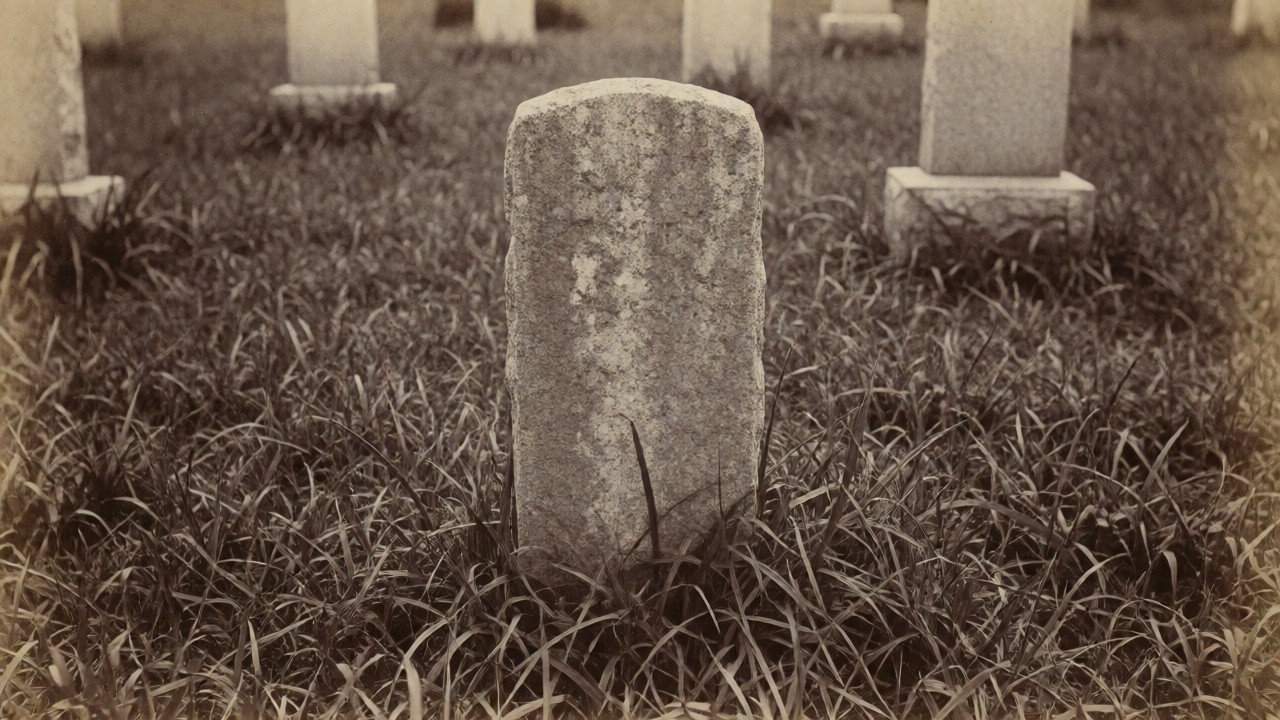
The site where the Mercer home once stood is now overgrown with second-growth timber, accessible only by a hiking trail that follows the old wagon road from Tellico Plains. There is no historical marker. The Mercer name appears nowhere in the official literature of the forest. The only acknowledgment of the family’s existence is the grave of Silas Mercer in the cemetery behind the Methodist church in Tellico Plains.
Visitors occasionally notice that there are no other Mercer graves nearby, despite the family’s prominence in the community during the 1880s. No Eleanor, no Thomas, no Ada. A few observant visitors have asked the church’s pastor about it. He tells them he has heard the story of the Mercer family, but does not know the details, and that in any case the church has no records that would clarify the matter.
The records simply do not exist. The Mercers vanished from Bell’s Hollow so completely that even the evidence of their vanishing has almost entirely disappeared.