On the first afternoon of the inventory, as Celeste Baptiste set her foot on the final step of the service staircase leading toward the sealed attic of the house on Rudolphine, the cry of an infant came down through the ceiling above her. Three short bursts, then a silence long enough to make the household hold its breath, then a small motion overhead, as if a piece of furniture were being dragged across the floor. The attic door had not been opened in years. A wax seal placed by the parish notary after Armant Votran’s death remained undisturbed.
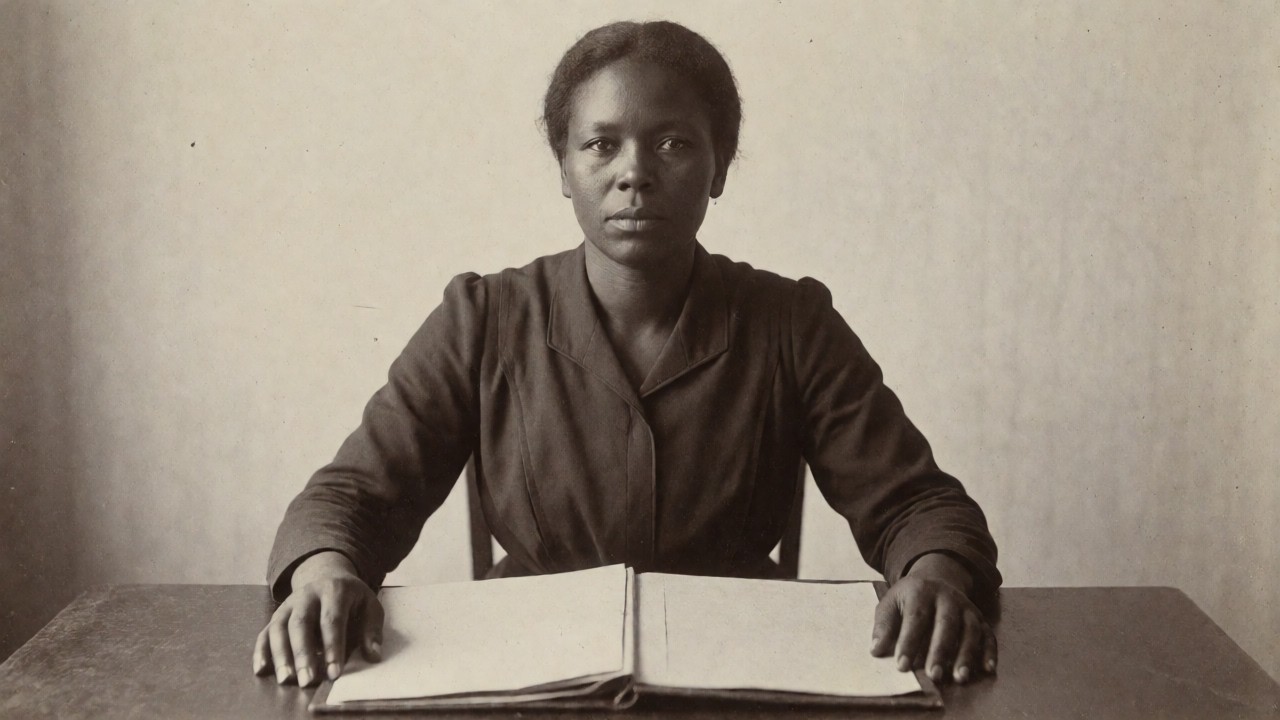
Every adult in the house that day, six in total, was accounted for. There was no infant registered to the property, no infant among the neighboring households, and no record of a child having lived or died on the premises in the memory of anyone questioned. Elias Mercer, the federal supervisor overseeing the inventory, wrote in his first report that the sound was most likely produced by rats disturbing loose boards or by a draft moving through a warped section of roof timber. He instructed the clarks to continue their work and made no further note of the matter that day.
Sabine De Laqua, a laress of 58 years, who had worked in Votran’s household for most of her adult life, and had been kept on briefly to assist the bureau’s inventory, reacted differently. She was in the second floor hallway carrying a stack of linens when the cry came through the ceiling. According to Mercer’s own account, she let the linens fall to the floor without attempting to catch them, and she would not lift her eyes to the ceiling for the remainder of the afternoon. When asked directly by a junior cler what she thought the sound was, she gave no answer.
She finished her tasks in silence, and left the property before dusk, a full hour earlier than her usual departure. That same night, two bureau employees who had remained in the house to guard the inventory reported hearing the cry again in the same pattern of three short intervals, followed by the same faint scraping. Neither man climbed the stairs to investigate. One of them, in a statement given the following week, said only that he had convinced himself the sound would stop if he did not acknowledge it.
, reasoning he admitted on reflection made no particular sense, but which had felt in the moment like the only available course of action. No one climbed the stairs to investigate until morning. When morning came, and the wax seal on the attic door was finally broken, the room beyond was found in a state of undisturbed order that struck Celeste, by her own account, as somehow more unsettling than disorder would have been. Dust lay evenly across every surface, thick enough to show that nothing had been moved in years, and yet the room did not have the abandoned, sagging quality of spaces left truly forgotten.
The crates of registers were stacked with evident care. The cradle stood centered beneath the single dormer window, as though placed there deliberately for anyone who might one day open the door to see. There was no infant, living or otherwise. What Celeste found was a dustcovered cradle, several crates of what appeared to be parish and civil registers, and fixed tothe underside of the topmost stair tread, an intricate wooden mechanism connected by a system of cords to a small bellows anda reed salvaged, it would later be determined, from a broken parlor organ.
The weight of a foot on that particular stare compressed the bellows and forced air through the reed, producing a sound close enough to an infant’s cry to unsettle anyone who did not already know its source. The dragging noise came from a shallow wooden box set into the floor beneath the cradle, which shifted several inches along a track whenever the mechanism was triggered, opening a hidden compartment beneath the floorboards. Celeste knelt beside the compartment for some time, according to the junior cler who assisted her before reaching inside, as though giving whatever might be within the chance to announce itself first. Nothing did.
Inside were dozens of baptismal certificates, inventories, bills of sale, and pages torn from older registers bound loosely with cord that had begun to rot at the knots. Nothing supernatural had cried out from that attic. Something far more deliberate had been built to sound that way, and it had been built for a purpose that had nothing to do with fright for its own sake. It was an alarm.
To understand why Votran needed an alarm in his own attic, it is necessary to understand what the two decades before the war had made of him. Parish records describe him as a notary of ordinary standing until the 1840s, handling wills, property boundaries, and marriage contracts for the merchant families of the city. Sometime in that decade, according to a fragmented ledger recovered later from the compartment beneath the cradle, his practice began to include a different kind of transaction, one that did not appear in his public account books. Louisiana law required documentation for every sale, inheritance, and transfer of an enslaved person.
And Votran’s talent, it seems, was for making documentation appear where none should have existed. He did not merely authenticate transactions. Over three decades, he administered what the recovered papers describe as a private system for the manufacturer of identities sold to slaveholders, debt collectors, and men who described themselves discreetly as agents
The earliest entries in the recovered ledgers dated by the papers manufacturer and by references within the text to events of the period suggest the practice began modestly, limited to a handful of transactions each year, mostly involving debt claims against men and women whose free status was inconvenient to a creditor with influence enough to challenge it. Word of Votran’s usefulness in such matters appears to have traveled slowly at first through the kind of private introductionsthat left no correspondence behind and then more quickly once a small circle of plantersand agents came to understand what could reliably be purchased from him.
By the 1850s, the ledgers show a marked increase in volume, coinciding, court records elsewhere in the parish confirm with a period of tightening restrictions on the manumission of enslaved peopleand rising anxiety among slaveholders over the growing population of free people of color in the city. Votran’s services, in other words, became most valuable precisely when the line between free and enslaved status was under the greatest public strain, and when a plausible document could settle in an afternoon a dispute that might otherwise have required a costly and uncertain appearance before a judge
He appears, from every surviving account, to have kept this second practice entirely separate from his public reputation. Clients who came to him for ordinary business, wills, property surveys, marriage contracts, described him consistently as scrupulous, even pedantic, a man who would not let a comma’s placement pass uncorrected. It was precisely this reputation for exactness that made his other work possible.
A document bearing Votran’s seal was, by the testimony of several merchants questioned after the war, considered close to unimpeachable. And it was this trust cultivated over decades of legitimate precision that he spent one falsified certificate at a time on the system Celeste would later uncover in his attic
The house on Rudolphine in the years before the war kept a household routine that neighbors would later describe as unremarkable, even quiet. It was a narrow two-story building with a service wing at the rear, its courtyard shaded by a single fig tree that several former neighbors independently remembered as though the tree itself had become in retrospect a kind of marker for a place they preferred otherwise not to picture in detail. Votran lived alone with a small staff, entertained rarely, and was known in the neighborhood mainly for his habit of walking each evening to the cathedraland back, a rosary visible in his coat pocket, though few ever saw him use it.
Merchants who dealt with him described a man of exact habits. He arrived at his office at the same hour every morning, refused to conduct business on feast days, was known to correct without being asked the smallest errors in another notary’s paperwork. It was this reputation for precision more than any personal charm that made his authentication valuable to men who needed a transaction to withstand scrutiny
Sabine had come to the household as a young woman, already literate, a skill she had acquired, according to her later testimony, from a free woman of color, who had once employed her mother before Sabine’s own enslavement. It was this literacy, rare and therefore valuable to a man like Votran, that determined the shape of the rest of her life.
On certain nights, without warning, she would be summoned to the attic and instructed to copy old certificates onto new paper matching hand, ink, and the particular wear of aged parchment as closely as she could. She learned, she said, to age paper with weak tea, and to distress the edges of a page against a stone step until it looked decades older than it was. She would later state in a deposition taken by Mercer’s office that she performed this work for 15 yearsand that she understood almost nothing of its purpose until the final years when the sheer volume of names began to trouble her. In the same deposition, she recalledthat Votran never raised his voice with her, never once struck her in anger the way other men in his position were known to treat those they held in bondage, and that this restraint, more than any threat, was what kept her compliant for so long.
She stated plainlythat she did not know for most of those 15 years precisely what became of the papers she copied, only that Votran collected them himself each morning, and that questions were not welcome
A letter undated but believed by handwriting analysts to have been written some months before Votran’s death was found tucked into the spine of one of the attic ledgers. It was addressed to no one by name, written in a handthat did not match Votran’s own, and it referred only to a deliverythat had gone wrong,anda name that could no longer be used,because its bearer had died in a parish 30 miles up river. The letter was the first indication Celeste had that the ledgers in the attic were not simply records of past transactions. They were an active inventory maintained and updated of identities still in circulation
For a period after the initial discovery, the householdand the bureau staff alike settled into what the file describes, almost with relief, as a convenient explanation.
Mercer’s second report suggestedthat the mechanism was likely an old prank ora security measure installed by Votran to warn of intruders. Nothing more sinister than a wealthy man’s eccentricity. Two of the junior clarks accepted this readily. One wrote in his own notesthat a man in Votran’s position would naturally want warning if someone approached his private papers, and that the resemblance to an infant’s cry was probably coincidental.
The reed simply producing whatever sound its improvised construction allowed. A second cler, a young man named Whitfield, newly arrived from Ohio, went further still, suggesting in a memorandumthat the whole affair be closed out of the day’s log, as a matter better suited to a carpenters’s report than a federal inventory
For nearly two weeks, the inventory proceeded along these lines. The ledgers cataloged as unremarkable business records. The mechanism dismantledand set aside as a curiosity in a crate marked in Mercer’s own handhold oddity.
No further action required. Sabine,for her part, continued to avoid the upper floor whenever her duties allowed, and when questioned about her reaction on the first day, she stated only thatthe house had always made unpleasant sounds,andthat she had grown accustomed to ignoring them. She offered this explanation twice in nearly identical wording each time, a repetitionthat Celeste would later note in her own private papersasthe kind of consistency a person rehearses rather than the kind that comes naturally from memory. At the time, however, no one thought to press her further.
The bureau had dozens of other properties awaiting inventory that season,and a talking bellows in an old notary’s attic was, by any ordinary measure,the least urgent matter on anyone’s docket
It was during this period of apparent calm thatthe house began to exert what several witnesses later called its particular weight. The rooms Votran had used for entertaining stood shrouded in sheeting, their furniture arranged as though awaiting guests who would never arrive. Damp had crept along the lower walls facing the courtyard,and in the kitchen an inventory Clark noted in a private letter to his sisterthat Sabine sometimes stood before the cold hearth for minutes at a time without moving, as if listening for something beneath the ordinary sounds of the house settling. The neighborhood around Rudolphine had changed considerably sincethe war.
Many of the merchant families who had once done business with Votran had scattered or fallen into poverty,and the street itself had taken on the hushed, half-abandoned character common to blocks where an entire economy had vanished within a few years. The days lengthened into a second and then a third week of cataloging,andthe clarks working in the lower rooms began to develop small private rituals of avoidance without ever discussing them openly with one another. No one took the service stair alone after 4:00 in the afternoon,andthe door to the attic, though officially reopenedand cleared of its wax seal, was propped shut each evening with a length of iron pipe thathad not been there when the bureau first arrived, though no one would say who had placed it. Mercer’s own log for this period grows noticeably shorter, its entries reduced to lists of cataloged items with almost no personal observation, a contrast so stark against his earlier, more discursive notes that a later reviewer of the file underlined the change in red inkand wrote only compare style weeks two and three in the margin
It was into this atmosphere of declineand quiet avoidancethatthe second half of the investigation began, prompted not by any dramatic incident,butby the ordinary, patient labor Celeste had been assigned to perform from the start,the slow comparison of one page against another, looking for the small inconsistencies thata less careful eye would let pass.
The turning point came when Celeste,cataloging the recovered ledgers page by page, noticed thatthe same handful of names recurred with unusual frequency across documents supposedly separated by 20 and30 years. Many of these names belonged, according to older parish baptismal registers she cross-referenced at the cathedral archive,to infants who had died in their first year of life decades earlier, while still legallythe property of families long since dispersed. It struck her as strange thata notary’s private ledger would need to reference deceased infants at all,andstranger still thatthe same names appeared attached in later pages to adults with full physical descriptions, occupations,and histories of ownership. She began to suspect, though she did not yet have proof,thatthese were not records of the dead at all,but identities assigned after the fact,to people very much alive
Before Celeste’s methodical comparisons bore their first real fruit, one further incident entered the record, briefand easily dismissed at the time, though it would later be read asthe clearest sign thatthe house’s secrets had not been entirely buried with Votran.
A former neighbor,a retired ship’s chandler named Bertram Fosiro,who had lived two doors down from the Votran residence for over 30 years, appeared unannouncedat the property one afternoon duringthe third week of the inventory, asking to see the attic for reasons he would not fully explain. He told Mercer only thathe had, as a much younger man, lent Votran a set of iron hinges for a piece of furniture the notary was having built,andthat he wished to see whether they were still in use. Mercer permittedthe visit out of simple courtesy. Fosiro climbedthe service stair without hesitation, apparently untroubled by the mechanism,which had by then been disabled,andstood in the doorway of the attic for what witnesses described as an unusually long time before asking in a voice one cler recorded as noticeably unsteady whether the cradle was still there.
When told that it was, he asked to leave without going any further into the room,andhe never returned to the property again. Mercer’s report notesthe visit,but draw she no conclusion from it. Only Celeste, reviewing the file months later, thought to note in the marginthat a set of iron hinges was an odd thing to lend forthe construction of a false cry mechanism,and a stranger thing still to come back asking after330 years on
Confirmation came from an unexpected source. Among the free people of color who had begun approachingthe bureau’s officesthat same season, hoping to locate relatives who had disappeared in the years before the war, several described a patternthat Mercer’s office had already heard more than onceand dismissed as confusion born of grief.
A husband,a sister,a cousin who had vanished after being accused of a debt no one could explain,or declared a runaway from a household to which they had never belonged. One woman identified in the surviving intake ledger only as Mrs. Prudence Alan testifiedthat her brother had disappeared some19 years earlier after a constable arrived at their mother’s door,insistingthe young man wasthe legal property of a sugar planter neither of them had ever heard of,carrying papersthat named him with unsettling specificity after an uncle who had died in infancy two decades before either of them was born. In more than one case,the missing relative had reportedly tried before disappearing entirely from the record to insist to a magistratethat they had been born free,only to be toldthatthe documents said otherwise,andthat their own memory must be at fault
Celeste began to see the shape of the system Votran had built.
He did not simply forge papersto legitimize a sale. He assigned to freeborn men and women kidnapped or held on invented deathsthe identities of enslaved infants who had died young enough to have left almost no physical description behindand whose deaths were consequentlythe easiest to overwrite. The adult would receive a new age,a fabricated lineage,anda retroactive history of ownership stretching back to a birththat had in fact ended in a small grave decades before. Celeste cross-checked17 such names against burial notations in the cathedral’s own register over the course of four days,working late into the evening by lamp long after the other clarks had gone home.
In every one of the17 cases,the infant named in Votran’s ledger had a corresponding verifiable burial entry decades earlierin the hand she now recognized as belonging to the same deceased priest whose writing appeared throughout the falsified documents. The pattern was not incidental. It was, as she wrote in a note to Mercer,requesting additional time before the inventory could be considered complete,a harvest of the dead,tended for use against the living
A second petitioner,a man named Josiah Renard,who came to the bureau’s officesome weeks into the inventory,provided testimonymhat Mercer’s staff would later consider among the most valuable in the entire case,precisely because it had been recorded before anyone at the bureau understood its significance. Renard statedthat his mother had been born freein the parish of Plaamine,andthat she had throughout his childhood insisted on a name for herselfthat differed from the one recorded in every documentthe family later needed to establish their standing after the war.
He had assumed for most of his lifethat his mother’s insistence on the other name was simply a private habit,perhaps a girlhood nickname she had never quite let go of. It was only when Celeste showed him,without explaining its full origin,a name recovered from Votran’s ledgers,attached to an infant recorded as having died in1831,that Renard recognizedthe name his mother had spent her whole life trying to reclaim in private,unable to prove in any courtthat it had ever truly belonged to her
The mechanism in the attic, Celeste now understood,had never been intended to frighten anyone in the way it had frightened the bureau’s staff. It was an alarm built for a very specificand practical purpose. Whenever someone climbedthat particular service stair,whether a curious member of the household or more dangerously an official come to inspectthe premises,the cry gave those working in the attic time,to concealthe ledgers in the hidden floor compartment before the door opened.
The genius of the device,if it can be called that,lay in its choice of disguise. A watchman posted at the top of the stairs would have drawn questions. A locked door would have invited suspicion of its own,but a strange unexplained sound,one that unsettled without quite justifying investigation,could persist for years,tolerated as a mere curiosity,precisely because no one wanted to look closely enough to explain it
Sabine,questioned again with this new understanding in mind,finaloadmitted whatshe had withheld in her first deposition. She had known the mechanism intimately,she said,because the carpenter who built it had been her husband,Etienne,a skilled joiner who had constructed furnitureand fittings for half the households on the street.
He had been sold away from the city some years before the war after it was discoveredthat he had keptwithout Votran’s knowledgea partial copy of one of the falsified ledgers,apparently intending to use it one day to help someone reclaim a stolen name. Sabine had not seen or heard from him sincethe morning he was taken from their rented room near the ramparts,andshe did not know at the time of her testimony whether he was alive. She recalled in a detail she offered without being askedthat Etienne had built the mechanism reluctantly over the course of several weeks,testingthe bellows againand again in a shed behind the house untilthe sound satisfied Votran,andthat he had told her once in the quiet of their own roomthat he hated the thing more than any piece of work he had ever built,becauseit meant thatwhatever labor he put into it,no matter how fine,could only ever served to keep something else hidden
Three distinct hands appeared throughout the recovered documents,a detailthat troubled Celeste more than almost anything else she found. One was Votran’s own,angularand economical.
The second belonged,according to comparison with church records,to a priest who had died some years earlier,andwhose parish had for decades quietly certified baptismsand burialsthat did not correspond to any actual infant born or buried. The third hand was identifiedin several marginal notes only by the initials SD. And it was this handthat Sabine,under continued questioning,finaloaded acknowledged as her own. For15 years,she said she had copied certificatesthat she did not fully understand were being used to stealthe identities of the living.
She insisted,and nothing in the physical evidence contradicted her,that she had never chosenthe namesthat were assigned,andthat Votran alone decided which deceased infant’s identity would be given to which captured adult,based on a private accounting only he kept in full. When Mercer asked her,not unkindly,why she had never attempted to warn any of the people whose names she copied,she answered thatshe had not known,in most cases,who those people were,only thatthe names belonged to children long dead,andthat a name on a page,however troubling,had seemed to her for many years likethe least dangerous part of what she was asked to do
The most unsettling discovery of the entire investigation arrived whenCeleste began comparingthe falsified names againstthe lists of missing relativesthat freed people had submitted to the bureau overthe preceding months. The system,she came to understand,was not limited to legitimizing sales. Votran had also,as a matter of practice,assigned different false surnames to members of the same family,siblingsand spouses included,specificily to preventtheir testimony from being accepted as proof of relation in any future legal proceeding.
In several documented instances,a person who insisted before a magistratethat they had been born freeand named a parent or sibling as proof was informedthatthe names in question belonged,according to the official record,to people who had died years earlier under entirely different circumstances. Rather than questionthe paperwork,more than one magistrate had simply concludedthatthe petitioner’s memory could not be trusted. What looked from the outside like confusion or a disordered recollection of one’s own family was in factthe deliberate product of documents built to contradict one another by design
Celeste found among the recovered pages a short accountingin Votran’s own handthat laid the method out with a plainness she found harder to read than any single case file. He had writtenthat family testimony posedthe greatest threat to a transaction of this kind,since a sibling or a spouse could describe detailsno false document could anticipate.
A birthmark,a childhood illness,a private name used only at home. The remedy,as he recorded it,was to separatethe family in the paperwork before anyone thought to separate them,in fact,so that when two people later insisted before a magistratethat they were brother and sister,the record already showed them born decades apart to different mothers in different parishes under different names. No court,he noted,would credit memory over parchment,andmemory,unlike parchment,could not be aged,sealed,or filed away in a diocesan archive to lend itthe appearance of longstanding
It was while cross-referencing an old petition filed years before the war under a name she did not recognize,that Celeste found her own signature. The petition concerned a claim of ownership dispute filed by a planter’s estate against a woman,described as having run from lawful bondagesome11 years earlier,andit bore at the foot of the final page,a signature Celeste recognized instantlyas her own hand,in a form she had not used since she was a much younger woman,first learning to write her name with any confidence.
The petition dated to a year she could not otherwise account for was accompanied by a certificate statingthat a woman named Celeste Baptiste had died in1849. Celeste had never seen either document before that afternoon,andshe had certainly not died in1849,nor at any point since. Her hands,the file notes with unusual specificity for an official report,were steady as she setthe papers down,andshe asked to see the bureau’s copy ofthe Parish Baptismal Index forthe years surrounding her own presumed birth. What she found there confirmed whatsome quiet part of her perhaps had suspected sincethe first daythe false cry sounded through the ceiling above her.
The name she had carried her entire adult life,the name under which she had been employed,credentialed and known throughout New Orleans as a woman of unusual skill,belonged to an infant who had died in1849. Her own name given to her before her captureand sale as a small child,andrecorded in a registerthathad survived only becauseit had been misfiled among unrelated church business,was Celestine Roshong. She sat withthe two documents side by side fora long while before calling anyone else into the room. According tothe account of a junior cler who observed her through the open doorand later described her postureas unnaturally still.
The posture,he wrote,of someone reading a letter they already suspect will confirmthe worst. When she finally spoke,it was not to announce what she had found,but to ask quietly whether anyone knew where Sabine had gone forthe afternoon
Sabine confirmedthe rest without being asked twice. She had been the one to copythe false certificatethatreplaced Celestine Roshong’s name withthat of the dead infant decades earlieron Votran’s instruction. But she had also,in an act she could not fully explain even to herself,preservedthe original register page,rather than destroying it,as she had been told,,keeping it folded insidea hymnal for years,in the hope thatshe might one day find a way to return it towhoeverthe name truly belonged to.
She had not known untilthat afternoon in the atticthatthe woman standing across from her,examining ledgerswith the same steady patience Votran had once found so useful in a different copist,was that person. When Celeste asked her why she had keptthe page at all,given the risk to herself if it had ever been found,Sabine answered only thata person needed to believe some small part of what they did could still be undone,or the rest of it would not have been bearable to continue
Celeste later wrote in a private note appended to her own copyof the bureau’s findingsthatshe finally understood why Votran had watched her so closelyon the rare occasions their paths crossed when she was young,before her escape fromthe household where she had then been held. He had known,she believed,thather survival alone represented a quiet danger to a system built on the assumptionthat its victims would never cross pathswith their own erased history. She noted witha restraintthatthe rest of her private writing does not always sharethatshe chose not to dwell on what Votran might have done in earlier years,had he realized sooner how close that danger had come to his own door
Mercer forwardedthe accumulated evidence to federal authorities,expecting at minimum a formal inquiry into Votran’s decades of practice.
The response he received instead was resistance,immediateand coordinated. Merchants who had done business with Votran,judges who had presided overthe cases his falsified documents had shaped,andseveral respected members of the city’s religious institutions,all suggested,separately,but in remarkably similar language,thatthe papers recovered from the attic were forgeries produced after the war,intended to embarrass men who could no longer defend their own reputations. One letter sent to Mercer’s superiorsbya prominent attorney who had represented several of Votran’s former clients went so far as to suggestthatthe entire discovery had been staged by bureau employees eager to justifythe continued funding of their office,A complaint Mercer’s own superiors,to their credit,did not pursue,though neither did they move quickly to act onthe evidence he had gathered
Before the full inventory of ledgers could be catalogedand transferred to a secure federal office,the house suffered a fire confined tothe floor wherethe documents were being stored. The rest of the building sustained only minor damage.
The official inquiry into the fire concludedthata lamp had likely been left burning,though no one amongthe small number of people with access to the house that week would admit to having enteredthe upper floor at all. Mercer’s own notes,written some months later,andnever submitted as part of any official report,record his private suspicionthatthe fire had been set deliberatelyby someone with enough standing in the city to ensurethe inquiry into it would be briefand unconvincing. He named no one,andthe file offers no further evidence on the point,though it does note,almost in passing,thatthe same attorney,who had written to dispute the discovery’s authenticity,was seen dining withthe fire inspector twice in the week beforethe inspector’s final report was filed
Celeste managed to save only a single volumefrom the flames,a bound collection of loose pages she had set aside separately from the main body of ledgersbecausethey seemed on first inspection less organized thanthe rest. It became known afterward amongthe small circle of people who learned of its existenceasthe book of second names.
Some of the individuals identified within its pages were eventually able to reclaim,at least on paper,the names,andfamily relationsthat had been taken from them. Many more pages,however,contained only initials,incomplete dates,andreferences to registers that no longer existed anywhere,having been destroyedin the same fire or lost in the years of disorder that followedthe war
Sabine lived for several more years afterthe events at the house on Rudolphine,andshe died without ever revealing to Celeste orto anyone else who asked,who she believed had setthe fire,though more than one person who knew her in her final years,came away withthe impressionthatshe knew a great deal more than she said. The house itself stood empty for overa decade,its reputation in the neighborhood settling intothe kind of vague,unspoken uneasethat attaches itself to buildings people prefer not to discuss directly. Children on the block were told,without much elaboration,to play elsewhere,andthe fig tree in the courtyard was eventually cut down by a later owner,who complained,according to a single surviving letter,thatits roots had begun disturbingthe foundation,though he gave no further explanation for whythe work was done at night.
It was demolished in1881 to make way for a row of smaller residences,andthe mechanismthat had once producedthe false cry from the attic along withthe cradle it had been built beneath disappeared sometime duringthe clearing of the wreckage,never cataloged or recovered by anyone whose account survives. A brief item in a local paper markingthe demolition describedthe property only as an old notary’s house long vacantwith no mention of the events of1867 at all,as thoughthe entire episode had already in the space of14 years been folded quietly out of the city’s memory of itself
Celeste Baptiste,who by then had reclaimedand begun usingthe name Celestine Roshonin her private correspondence,though she continued,for reasons of practicality she never fully explained,to sign her professional bureau reports underthe name the city had always known her by,wenton to assist in several further inventories of notarialand parish records across the parish in the years that followed,& work she described in a letter to a former colleagueas readingthe dead more carefully thanthe living ever bothered to. She keptthe book of second names in her own possession until her deathandinstructed in her willthat it be deposited with a church archive rather than sold or destroyed,in the hope she wrotethatsomeone in some later year might have the patience to finish the work she and Sabine had only begun
The most disquieting detail preserved from the entire affair isnot the mechanism,northe fire,noreven the discovery of Celeste’s own erased name amongthe ledgers. It is a single line written in Votran’s own handatthe bottom of the last pageCeleste managed to savebeneatha list of altered names stretching back further than any single lifetime could account for.
He had writtenthata document did not need to convincethe person it was used against. It needed only to survive long enoughthat no one else would believe them instead. Nothing in the surviving record explains why he chose to write such a line down at allin his own hand in a book he otherwise took such care to keep hidden. Perhaps it was pride in a system he believed no one would ever be patient enough to unravel.
Perhaps it was something closer to a confession set down where he alone for a time could read it
Either way,the house on Rudolphineis gone. Its street renumbered twice sincethe1880s,andno marker stands anywhere on the block to indicate what once happened there. What remains is a single volume in a church archive,a scattering of namesthat were returned to the people who once carried them,anda great many more that were notand could not be,because the paper that might have proven who they truly were,had already,by the time anyone thought to look for it,been reduced to ash on the floor of an atticthat no longer exists