The rain came down hard on Harlem that Thursday evening in October 1947. Not the soft kind that washed the streets clean. The cold, sideways kind that soaked through wool coats and made men walk faster with their heads down.
The gutters ran brown along Lenox Avenue. The neon signs above the clubs bled red and yellow onto the wet pavement. Nobody stood outside.
Even the corner boys had pulled back into doorways, collars up, cigarettes cupped against the wind.
Inside the Starlight Diner on 126th Street, Bumpy Johnson sat alone at a corner table. He had ordered coffee. It sat untouched in front of him, steam rising and disappearing.
He was reading a letter, one page, handwritten in clean block letters on plain white stationery. No letterhead, no signature at the bottom. Just a name printed at the top, Vincent Morello, and a time, 8:00, Thursday, the Blue Anchor on 54th, a restaurant neutral enough that neither side could claim it.
Bumpy folded the letter once, then again. He slid it into his breast pocket. He picked up his coffee and drank it cold.
Junior Reed was standing near the door watching the street. Junior was 26 years old, lean and quick, with the kind of eyes that never fully relaxed. He had been with Bumpy for 4 years.
He noticed things other men missed. He noticed them before he understood why they mattered.
"You going?" Junior asked.
"Yes," Bumpy said.
Junior turned from the window. "Morello doesn't do neutral meetings. Every restaurant he calls neutral, somebody ends up carried out the back."
"I know," Bumpy said. He set the cup down. "That's exactly why I'm going."
Vincent Morello was not a man who made mistakes in public. He was 61 years old, heavy set, with gray hair cut close and hands that had not done physical work in 30 years. He ran four boroughs.
He had judges, councilmen, and two precinct captains on a monthly retainer. He dressed in charcoal suits and spoke quietly, the way men speak when they know the room is already listening.
He was already seated when Bumpy arrived at the Blue Anchor. Two men stood near the bar. One more was outside on the sidewalk.
The maître d' walked Bumpy to the table without being asked. That told Bumpy everything he needed to know about how long Morello had been coming here.
"Bumpy." Morello rose halfway from his chair, a small gesture, calculated.
"Vincent." Bumpy said. He sat down across from him without shaking hands.
The restaurant smelled of garlic and red wine and old wood. A string quartet was playing something soft in the corner, Vivaldi, maybe, and the sound bounced gently off the white plaster ceiling. The other tables were occupied by couples and businessmen who paid no attention to the two men in the back, or pretended not to.
Morello poured from a bottle of Barolo already open on the table. He pushed a glass toward Bumpy. Bumpy did not touch it.
"I'll keep this simple," Morello said. His voice was low, almost gentle. "Harlem is growing.
The numbers alone, what your people move in a week, it's significant. I'm not here to take anything. I'm here to talk about structure, about making sure both our operations run without friction."
Bumpy looked at him steadily. "You came a long way uptown to talk about friction."
"I came because I respect what you've built," Morello said, "and because I think two intelligent men can find an arrangement that benefits everyone."
"An arrangement?" Bumpy repeated.
"A partnership, a formal one." Morello smiled. It did not reach his eyes.
"Think of it as protection, mutual protection."
Bumpy was quiet for a moment. He looked at the untouched wine glass. He looked at the two men by the bar.
He looked back at Morello. "I'll think about it," Bumpy said.
Morello nodded slowly, as if this was exactly what he had expected. "Good. That's all I ask."
They talked for 40 more minutes, about nothing, sports, the weather, a new club that had opened on Broadway. Morello was charming and careful and revealed nothing. Bumpy was equally careful and revealed less.
When the dinner ended, they shook hands at the door. Morello's grip was firm. His palm was dry.
Bumpy walked out into the cold rain and did not look back.
Junior was waiting in the car half a block north. He had the engine running. Bumpy got in and closed the door.
The rain drummed against the roof. "How was it?" Junior asked.
"Expensive." Bumpy said. Junior pulled into traffic.
"He make an offer?" "He made a speech." Bumpy said.
"The offer is underneath it." Junior was quiet for a moment. Then, "I heard something today about Captain Doyle."
Bumpy looked at him. "He transferred two of his best men out of the 28th precinct last week. The two who usually work the Lennox corridor.
Replaced them with guys nobody knows." Junior kept his eyes on the road. "And this morning, Doyle had breakfast at a diner on 53rd St.
I had somebody follow him. He sat with a man named Lou Marcone. Marcone works collections for Morello."
The car moved through the wet streets. The neon signs slid past the windows. Bumpy said nothing for a long time.
"When did Doyle and Morello start eating breakfast together?" He finally said. "Far as I can tell," Junior said.
"Right around the time that invitation showed up on your table." Bumpy looked out the window at Harlem passing by. The rain had not let up.
The streets were empty and shining and dark. Old men in Harlem would say for years afterward that the invitation letter was real. Only nobody dared keep the original for more than a single night.
Bumpy reached into his breast pocket and touched the folded paper. He did not take it out. He left it there.
Close to his chest, where he could feel its weight. Power sometimes begins with saying yes to an invitation you should have refused. By the following morning, Bumpy had already started moving pieces.
He did not call a meeting. He did not send messages through the usual channels. He sat in the back room of a barber shop on 131st Street, a place with no phone and no windows facing the street, and he spoke to three men one at a time, each one arriving alone, each one leaving by a different door.
The first was Otis Bell, who ran collections across six blocks in the northern corridor. The second was a woman named Delia Street Clare, who owned two clubs on Lennox Avenue and knew everything that moved through Harlem's nightlife within hours of it happening. The third was Eli Turner, quiet, reliable, eight years with Bumpy, the kind of man who remembered numbers without writing them down.
To each of them, Bumpy gave a slightly different piece of information. Small things, a shipment time, a meeting location, a name connected to a new arrangement being considered. None of it was true.
All of it was specific enough to be believed. Then he waited. Harlem's nightclub circuit ran on two things, music and information.
The clubs were where money was spent, where alliances were confirmed, where the wrong conversation at the wrong table could cost a man everything. Delia Street Clare understood this better than anyone. She had been running the Silver Room on Lennox for 11 years.
She had survived three ownership changes, two police shakedowns, and one fire that the insurance company called accidental. She was 53 years old, wore her hair pinned back, and never raised her voice. Delia also had a relationship with a man named Lou Marcone.
Marcone worked collections for Morello. She had been feeding him information for 6 months, small things, delivery times, meeting locations, names of new players. Nothing big enough to trace.
Nothing big enough to matter. But it was enough to keep her safe, and enough to keep her paid. When Bumpy came to her with the false information about a shipment arriving at the 138th Street pier, she passed it along to Marcone within the hour.
She did not know that Bumpy had told the same story to Otis Bell and Eli Turner, each with a different detail. She did not know that Bumpy had expected her to pass it along. She did not know that Bumpy had known about her arrangement with Morello for six months.
Bumpy had known about Delia's arrangement for six months. He had known about the meetings at the diner on 53rd Street, the envelopes passed under the table, the quiet conversations in the back of the Silver Room after closing. He had known, and he had said nothing.
He had let her believe she was invisible. That was the thing about Bumpy Johnson. He collected information the way other men collected debts, quietly, patiently, and he never called them in until the moment was right.
The trap was set for the following Thursday. Morello had been planning it for weeks. He had three crews in place, each one with a different assignment.
The first crew was positioned in a warehouse across from the Blue Anchor. The second was in a parked car on 54th Street. The third was in a building across the street with a view of the restaurant's front entrance.
They were all in place by 7:15. Morello was in a car two blocks north, drinking coffee from a thermos and watching the rain. He had planned everything.
He had planned for Bumpy to come alone. He had planned for Bumpy to bring a small crew. He had planned for the meeting to go wrong in any of a dozen ways.
What he had not planned for was what happened next. At 7:30, a call came into the 28th precinct, a tip about a robbery in progress at a warehouse on 119th Street. The caller gave a detailed description of the men, the vehicle, and the weapons they were carrying.
The description matched a crew that worked for Morello. By 7:40, two patrol cars and a detective unit were on their way to the warehouse. By 7:50, the first of three police cars arrived at the Blue Anchor.
The officers came in through the front door, guns drawn, shouting for everyone to stay where they were. They were not there for Morello. They were there for the three armed men waiting in the kitchen, men Morello had placed there to handle Bumpy if the conversation went wrong.
The police found them with two sawed-off shotguns and a revolver with a filed-down serial number. The men were arrested on the spot. Morello watched from his table.
His face did not move. His hands stayed flat on the tablecloth. He did not look at Bumpy.
He did not need to. He already knew. Bumpy had not brought a single gun to the meeting.
He had not brought a single man. He had walked in alone, unarmed, and had left the same way. But he had not walked in blind.
The night before, he had made three phone calls from a payphone on 125th Street. One to a captain in the 28th precinct. One to a reporter at the Amsterdam News.
One to a man who owed him a favor in the district attorney's office. He told each of them the same thing: there would be a meeting at the Blue Anchor at 8:00 the following evening, and the man running it was Vincent Morello. He did not tell them what he was bringing to that meeting.
He did not have to. By the time Bumpy walked into the Blue Anchor, there were two unmarked cars across the street, a police photographer in a parked panel van, and a reporter from the Amsterdam News having dinner with his wife at a table near the window. Morello had not known any of this.
He had been careful, but he had been careful inside his own assumptions. Bumpy had simply let him assume. The meeting had been a formality.
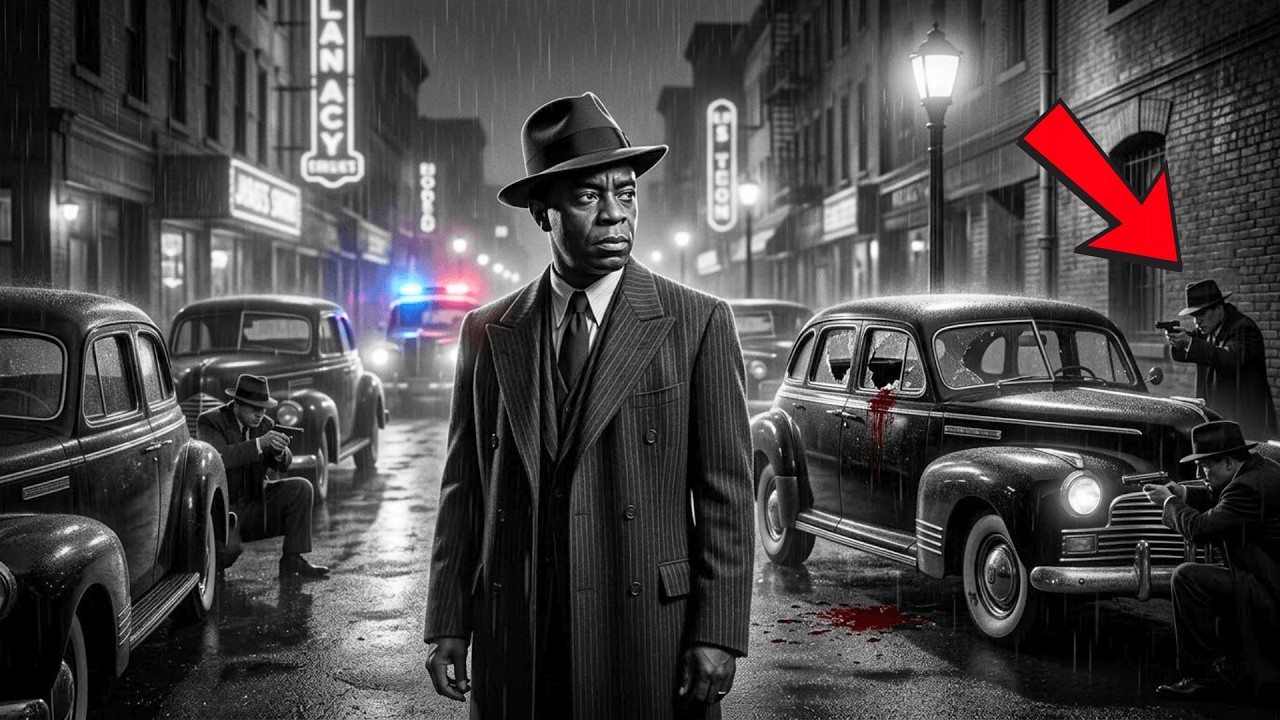
The trap had been set before Bumpy ever walked in the door. Morello had planned to have Bumpy killed that night. The two men at the bar were not bodyguards.
They were shooters. The man outside was the backup. The plan was simple, wait for the signal, take Bumpy in the parking lot behind the restaurant, make it look like a robbery gone wrong.
But Bumpy had known. He had known before he walked through the door. And he had prepared accordingly.
That was the thing about Bumpy Johnson. He never walked into a room without knowing exactly where every exit was, and he never sat down with a man like Morello without knowing exactly how the conversation was going to end. So when Bumpy walked out of the Blue Anchor that night, he was not surprised when he saw the two men waiting by his car.
He was not surprised when they moved toward him with the practiced ease of men who had done this before. He was not surprised when the third man stepped out of the alley to his left, and the fourth from the doorway across the street. Bumpy stopped walking.
He looked at the four men. Then he smiled. "Gentlemen," he said.
"You're late." The men hesitated. They looked at each other.
They had been told Bumpy Johnson would be alone, that he would be unarmed, that he would be walking out of the Blue Anchor with his guard down. They had been told he would be easy. They had not been told he would be smiling.
Before any of them could move, the doors of three parked cars opened at once. Junior stepped out of the first, a . 38 in his hand.
Two more men came from the opposite side of the street. They had been waiting in the shadows, patient, invisible. The four men who had been sent to grab Bumpy looked at the guns now pointed at them.
They looked at Bumpy. He had not moved. He had not raised his voice.
He had not even changed his expression. "Tell Morello something for me," Bumpy said. His voice was calm, almost conversational.
"Tell him I don't need an army to walk through his door. I just need an invitation." The men exchanged glances.
They were professionals. They knew when a job had gone sideways. The one in front, a heavyset man with a scar through his left eyebrow, spoke first.
"You think you're going to walk out of here?" he said. "You got three crews outside.
You think we came alone?" "No," Bumpy said. "I think you came with a lot of men."
He looked past them, toward the door. "I also think you came with a lot of men who don't know this part of town." The men turned to look.
The street outside the Blue Anchor was empty. The rain had stopped. The streetlights were on, and the sidewalks were wet and gleaming.
There were no cars parked along the curb. There were no men standing in doorways. There was nothing but the sound of the rain and the distant hum of the city.
The two men by the bar looked at each other. The one on the left, a man named Sal, had been with Morello for 12 years. He had seen a lot in that time.
He had never seen the street outside a hit go completely quiet. "Where's your backup?" Bumpy asked.
He was still seated. His voice was calm, conversational. "I don't have backup."
Morello said. "I'm not talking to you." Bumpy said.
The room went very still. The string quartet had stopped playing. The couples at the tables had stopped pretending to eat.
Every eye in the place was on them. Morello's face did not change. He was too old for that.
But his hand moved toward his jacket. "I wouldn't," Bumpy said. He had not moved.
His voice was still calm. "You brought three crews. I counted them when I walked in.
One in the kitchen. Two at the bar. One outside with the newspaper.
That's a lot of firepower for a conversation about partnership." Morello's hand stopped. He looked at Bumpy for a long moment.
Then he smiled, a thin, cold smile. "You're a hard man to surprise, Bumpy." "No," Bumpy said.
"I'm not. That's the problem. You believe what you hear.
I believe what I see." Morello's smile faded. He was not used to being read so easily.
"So what happens now?" Morello asked. "You have men outside.
I have men outside." Bumpy said. "But yours are waiting for a signal that's never coming."
Morello's face went very still. "What signal is that?" "The one you were supposed to give when I walked out the door."
Bumpy said. He stood up. "But I'm not walking out the door."
Morello's hand moved toward his jacket. Bumpy shook his head. "Don't."
Morello's hand stopped. He had never seen a man look so calm in a room where he was outnumbered. "You think you've won something here?"
Morello said. "You're in the middle of my city." "No, Vincent."
Bumpy said. "I'm in the middle of your restaurant. That's not the same thing."
Morello's eyes narrowed. He looked around the room, and for the first time, he noticed the details he had missed. The busboy clearing tables near the kitchen had been watching them all night.
The couple in the corner, the ones who had been laughing too loudly, had not touched their food in 20 minutes. The waiter who had served their table twice was standing by the kitchen door, not moving. Morello's face did not change.
He was too old and too experienced for that. But something shifted behind his eyes. "You brought people into my restaurant?"
Morello said. "Your restaurant?" Bumpy said.
"Funny. I thought this was neutral ground." Morello's smile tightened.
"You think you're clever." "I think you're a man who likes to talk about respect while setting up other men," Bumpy said. "I think you sent an invitation to a meeting you had no intention of honoring.
I think you have a man named Lou Marcone sitting in a car outside with two uniforms from the 28th precinct, and I think you have three crews waiting in the alley behind this restaurant." Morello's face went still. It was the first time the mask slipped.
"How do you know about the alley?" Bumpy smiled. It was not a pleasant smile.
"Because I put them there." Morello's face went pale. "You what?"
"I told your man Marcone I had a shipment coming in tonight. I told him the wrong location. I told him the wrong time.
I told him the wrong warehouse." Bumpy leaned forward. "Your men are probably standing in the rain right now, waiting for a truck that was never coming."
Morello stared at him. His jaw worked silently. "You set me up."
"You set yourself up." Bumpy said. "You just needed a little help."
Morello's face went through several expressions, each one landing somewhere between anger and disbelief. "You think this ends here?" "I think it ends when I say it ends."
Bumpy said. "You had a choice. You could have come to me like a man and asked for what you wanted.
Instead, you tried to take it." He stood up. "Now you get to find out what that costs."
Morello's hand moved toward his jacket. Bumpy did not move. He just looked at Morello with something almost like pity.
"Don't," Bumpy said quietly. "You're not leaving this restaurant." Morello froze.
His hand stopped halfway to his jacket. He looked past Bumpy toward the bar, where the two men who had been standing there were now gone. He looked toward the front door, where Junior was standing with his arms crossed, watching.
He looked at the back exit, where a man named Eli Turner was leaning against the wall, arms folded. "You brought men into my meeting?" Morello said.
His voice was tight. "No," Bumpy said. "I brought them into your restaurant."
Morello's face went through several changes, none of them pleasant. He looked at the two men by the bar, then back at Bumpy. "You think this changes anything?"
Morello asked. "You think you can walk out of here?" "I think I already have," Bumpy said.
He stood up and buttoned his jacket. "I think I walked in here alone. I'll walk out the same way."
He looked at Morello one more time. "And you'll remember that." Bumpy left the restaurant.
Junior was waiting outside, leaning against the car. He did not ask what had happened inside. He could see it in Bumpy's face.
"What now?" Junior asked. "Now we wait."
Bumpy said. "For what?" "For him to show his hand."
Bumpy said. "He already showed it." Junior said.
Bumpy shook his head. "That wasn't the hand. That was the invitation."
The next 48 hours were quiet. Too quiet. That was the thing about Harlem, the old-timers said.
The silence was never empty. It was full of held breath and half-open doors and men who looked at the ground when you passed. Bumpy felt it in the way the streets felt different, the way the air felt wrong, the way the usual rhythm of the neighborhood seemed to slow down and speed up at the same time.
On Saturday morning, Junior came to the back room of the barber shop with news. "Morello's crew is moving." Junior said.

"They're bringing in men from Brooklyn. I got a guy at the bus station counting them. He says they're not carrying luggage."
Bumpy looked up from the newspaper he was reading. "How many?" "Twenty, maybe thirty."
Junior said. "More coming in tonight." Bumpy nodded slowly.
He folded the newspaper and set it down. "And the police?" "Doyle's people pulled back from the corridor.
All of them. The street corners are empty." "They're clearing the streets," Bumpy said.
"They want no witnesses." Junior nodded. "What do we do?"
Bumpy stood up. He put on his coat. "We wait."
"Wait for what?" Junior asked. "For them to make the first move."
Bumpy said. "And then we don't be there when they make it." The next morning, the first piece of Bumpy's plan started to surface.
A man named Salvatore Greco, a collector for Morello's numbers operation, was found in an alley off 128th Street. He had been beaten, not killed, but beaten badly enough that he would not be collecting anything for a while. The message was clear.
Morello's people had been moving into Harlem's numbers racket for weeks, testing the waters, seeing who would fold. They had been doing it quietly, one block at a time, using a front man named Louis "The Nose" Palermo, who had been seen at three different clubs in the last week, asking questions about Bumpy's operation. Bumpy had known about the meetings.
He had known about the questions. He had known about the quiet offers made to two of his collectors, offers that were declined. What he had not known was how far the rot went.
That was what the false information was for. Bumpy had given Delia a shipment time, a meeting location, a name. He had given Otis Bell a different set of details, and Eli Turner a third.
All of it false. All of it designed to see which piece of information came back to Morello. The first sign came two days later.
A message arrived at the barber shop, delivered by a boy who did not know who had paid him. It was a single sheet of paper with one line written on it: "The Blue Anchor was a courtesy. The next one won't be."
Bumpy read it twice. Then he folded it, put it in his pocket, and said nothing. Junior was watching him from the door.
"You want me to find out who sent it?" "No." Bumpy said.
"I know who sent it." "Morello?" "Morello doesn't send warnings.
He sends messages." Bumpy looked at the window. The rain had stopped.
The streets were still wet. "This is somebody else. Somebody who wants me to know they're watching."
"Who?" Bumpy did not answer. He just looked out the window at the street below.
"Somebody who knows how to use a pen." The next day, Bumpy made his move. He did not move against Morello.
He moved against the arrangement itself. He sent word through the streets that he was ready to talk. Not to Morello, but to the syndicate, the men who sat above Morello, the ones who had approved his invitation.
He sent the message through three different channels, a lawyer who owed him a favor, a union man who owed him two, and a bartender at a club on 52nd Street who had been passing information for years. The message was simple: Bumpy Johnson was willing to meet. He was willing to talk about a merger, about structure, about the future of Harlem.
But he would only meet with the syndicate directly. Not with Morello. The response came back within 24 hours.
A man named Sal DeLuca arrived at the barber shop on 131st Street. He was 45 years old, well dressed, with the kind of face that gave away nothing. He sat in the back room with Bumpy and spoke in a low, measured voice.
"Mr. Morello was disappointed you didn't accept his offer directly," DeLuca said. "He asked me to make sure you understood the terms."
"I understand the terms," Bumpy said. "I just don't accept them." DeLuca looked at him for a long moment.
Then he smiled. It was not a pleasant smile. "Mr.
Morello said you might say that. He said to tell you that he's not a patient man." "Then he should have picked a different business."
Bumpy said. DeLuca stood up. He adjusted his cuffs.
"I'll tell him you said that." "You do that." Bumpy said.
He did not stand up. He watched DeLuca walk out the door. Junior came in from the back.
He had been listening through the crack in the door. "That's a war," Junior said. "That's a conversation," Bumpy said.
"We'll see which one it turns into." The next morning, Bumpy was in the back room of the barber shop when Junior brought in the newspaper. He laid it on the table without saying a word.
The headline said: POLICE RAID NETS 12 IN BROOKLYN WAREHOUSE. Bumpy read the article. It was about a raid on a warehouse in Red Hook, a shipment of stolen goods, a dozen men arrested.
The details were thin, but the names were not. One of the names was a man called Frankie DeLuca. DeLuca ran a crew that answered to Morello.
Bumpy set the paper down. He did not smile. He did not look surprised.
He simply nodded, as if he had been waiting for this piece of news to arrive. Junior was standing by the window. He turned around.
"You knew?" "I knew something would come," Bumpy said. "I didn't know what."
"You fed him bad information." Bumpy shook his head. "I fed him true information.
That's the trick. You give a man a piece of truth, he'll chase it all the way to the bank. He'll never think to ask who handed him the key."
"So what happens now?" Junior asked. "Now we wait," Bumpy said.
"Morello will think I'm cornered. He'll think I'm scared. He'll move more pieces into place.
And every piece he moves, we'll know about it." "How?" Junior asked.
"Because he'll use the same people to move them," Bumpy said. "And those people, they all work for Delia." The next 48 hours were quiet.
Too quiet. That was the first sign. In Harlem, quiet was never natural.
It was the sound of something being built in the dark. Bumpy moved through his days as if nothing had changed. He visited his clubs.
He checked on his numbers runners. He had lunch at the Starlight Diner. He did not change his routine.
He did not look over his shoulder. He acted as if the meeting with Morello had never happened. Junior watched him and said nothing.
He had learned that when Bumpy got quiet, it meant he was thinking. And when Bumpy was thinking, it was best to stay out of his way. On the second day, a man named Frankie Bell came to the barbershop.
Frankie ran a crew of five men who worked the docks down on the Hudson, and he had been with Bumpy for 11 years. He came in through the back, sat down in the chair, and said, "I heard you were looking for a man named Lou Marcone." Bumpy was reading a newspaper.
He did not look up. "I was looking for a lot of names." "Well, Marcone's the one you want."
Frankie said. "He's the one who's been talking to your people." Bumpy folded the paper.
"What do you hear?" "He's been telling anyone who'll listen that you're finished. That you're going to take Morello's deal and like it.
He's been telling people you're weak." Frankie paused. "And he's been telling people that you're planning to sell out the numbers to the syndicate.
That you're going to hand over the whole operation, the whole corridor, everything." Bumpy was silent for a long moment. He looked at the rain through the window.
Then he smiled. It was not a warm smile. "Good."
He said. Junior was standing by the door. He looked confused.
"Good?" "That's the story they want people to believe," Bumpy said. "That's the story that makes me look weak, like I can be pushed."
He stood up. "So let's give them exactly what they want." The next morning, Bumpy did something he had never done before.
He went to the 28th Precinct and asked to speak to Captain Doyle. The desk sergeant looked up from his log, surprised. "You got an appointment?"
"No." Bumpy said. "Tell him Bumpy Johnson is here to talk about a business arrangement."
The sergeant hesitated. He looked at the two uniformed officers near the door. Then he went to the back.
He came back 2 minutes later and nodded toward the hallway. Captain Doyle was a large man with a thick neck and the kind of face that did not show much. He had been on the force for 30 years, 22 of them on the take.
He had survived three internal affairs investigations and two grand juries. He knew where the bodies were buried because he had helped dig some of them. He was standing by the window when Bumpy walked in.
He did not turn around. "You got a lot of nerve coming here," Doyle said. "I got a lot of nerve leaving my own neighborhood."
Bumpy said. Doyle turned. He looked at Bumpy for a long moment.
Then he laughed, a short, dry sound. "Sit down, Johnson." Bumpy sat.
The office was small and cluttered. Papers on the desk, a half-eaten sandwich, a coffee cup with a cigarette burning in the saucer. A map of Harlem was pinned to the wall behind the desk, marked with pencil circles and faded ink.
"You know why I'm here?" Bumpy asked. "I know you're here because you're in trouble."
Doyle said. "Am I?" "You're standing in my office, so yes."
Doyle leaned back. "Morello's been talking to the wrong people about you, Bumpy. People who don't like you."

"People like you?" Bumpy asked. Doyle smiled.
It was not a pleasant smile. "I'm not a person. I'm a cop."
"You're a cop who transferred out his two best men right before a meeting that was supposed to be a trap." Bumpy said. "You're a cop who had breakfast with Lou Marcone the morning before that meeting."
The smile disappeared. Doyle leaned forward. His voice dropped.
"You've been watching me?" "I've been watching everybody." Bumpy said.
"That's why I'm still here." Doyle stared at him. The room was quiet.
Then Doyle laughed, a short, flat sound. "You think you're untouchable, don't you?" "I think I'm still breathing."
Bumpy said. "That's not the same thing." "It is to me."
Bumpy said. He stood up to leave. "You tell Morello I'm not interested in his arrangement.
And if he wants to try again, he can send someone who doesn't need a uniform to make him feel big." The next morning, Bumpy was in the back of a car being driven north. Junior was at the wheel.
The rain had stopped overnight, leaving the streets clean and the air cold. Bumpy had a folder on his lap, tied with a string. He had not opened it since leaving the apartment.
He did not need to. He had written the letter himself. He had known about the trap before Morello even sent the invitation.
He had known about the dirty cops, the three crews, the plan to hit him at the Blue Anchor if he refused the offer. He had known because he had been listening to Morello's people for weeks, and because he had built his own network inside the syndicate, a network that ran deeper than Morello could imagine. "Where are we going?"
Junior asked. "Downtown." Bumpy said.
"To see a man about a letter." Junior glanced at him. "You want me to drive?"
"No." Bumpy said. "I want you to stay here and let the word spread that I've left town."
Junior looked at him. "You want people to think you ran?" "I want Morello to think I ran."
Bumpy said. "There's a difference." "What about the letter?"
Junior asked. "The letter is the key." Bumpy said.
"Morello sent it because he wanted me to know it was him. He wanted me to come to that meeting scared. Instead, I came curious."
"And now?" Junior asked. "Now he's going to think I'm running."
Bumpy said. "And while he's busy watching the roads, I'm going to walk right through his front door." The next morning, Bumpy did something that surprised even Junior.
He went to see Captain Doyle. Not at the precinct. At his home, in Queens, at 7:15 in the morning, before the captain had poured his first cup of coffee.
Doyle opened the door in his undershirt, suspenders hanging at his waist, a cigarette burning in the ashtray by the door. He was a heavyset man with a red face and small eyes that had seen too much and trusted too little. He looked at Bumpy and did not look surprised.
"You got nerve coming here," Doyle said. "I need you to hear this," Bumpy said. "I'm not in the habit of taking meetings at my house."
"You'll want to hear this one." They stood in the doorway for a long moment. Then Doyle stepped back and let him in.
The apartment was small and neat. The furniture was old but clean. There were family photographs on the mantelpiece.
A woman's voice called from the kitchen, "Who is it, Frank?" "Nobody," Doyle said. "A friend.
Go back to sleep." He closed the door behind Bumpy and led him into the kitchen. The kitchen had a small table with two chairs.
Doyle poured two cups of coffee without asking. He sat down heavily. He looked tired.
"You got a lot of nerve coming here," Doyle said. "I got a lot of nerve every day." Bumpy said.
"Today I'm using it." "What do you want?" "I want to know about the meeting on Thursday."
Doyle's face did not change. "What meeting?" "The one you had with Lou Marcone."
Bumpy said. "At the diner on 53rd. The one where you discussed how many men you'd need to make sure I don't walk away from the Blue Anchor."
Doyle's jaw tightened. He was a big man, gone soft around the middle, but the hands resting on the desk were still strong. He had been on the force for 27 years.
He had seen men shot, stabbed, beaten, and drowned. He had never been afraid of a man who sat quietly in a chair across from him. He was afraid now.
"I don't know what you're talking about," Doyle said. "I think you do," Bumpy said. "I think you know exactly what I'm talking about."
"You're making a mistake." "No," Bumpy said. "I'm not the one making mistakes."
He stood up. He did not raise his voice. He did not need to.
"You're going to walk into the 28th precinct tomorrow morning," Bumpy said, "and you're going to tell your captain that the two men you transferred out of the Lennox corridor were moved because of a mistake, a paperwork error. Then you're going to transfer them back." Doyle stared at him.
"I'm not going to do that." "Yes, you are." Bumpy said.
"Because if you don't, I'm going to walk into the 28th precinct myself and tell the captain exactly how much you've been taking from Morello's people for the last 18 months. I know the amounts. I know the dates.
I know the names." The color drained from Doyle's face. "You're bluffing."
"Am I?" Bumpy said. He reached into his coat and pulled out a folded envelope.
He did not open it. He just held it up. "I have copies of everything.
Bank records, deposits, dates, amounts. All of it." Doyle's face went pale.
His hand moved toward his jacket. Bumpy did not move. "Go ahead," Bumpy said quietly.
"Reach for it. Give me a reason to walk out of here a free man." Doyle's hand stopped.
He looked at Bumpy. He looked at the envelope. He slowly lowered his hand.
"What do you want?" "I want you to remember who you work for." Bumpy said.
"And I want you to remember who you're afraid of." He stood up. "You're going to get a call tomorrow.
When you do, you're going to do what the man on the other end tells you. Not because you're afraid of him. Because you're afraid of me."
Bumpy walked out of the diner. He did not look back. Junior was waiting outside, leaning against the car.
He straightened up when he saw Bumpy. "Doyle?" "Doyle is handled."
Bumpy said. "For now." The rain had stopped.
The streets were still wet, but the clouds were breaking up over the city, and the first stars were showing through the gaps. Junior looked at him. "You want me to keep the tail on him?"
"No." Bumpy said. "He'll come to us now."
"You sure?" "He's a man who likes to be on the winning side." Bumpy said.
"Right now, he thinks he is." The next morning, the first piece moved. Bumpy was in the back room of the barber shop when Junior came in with the news.
"Morello had a shipment hit last night." Junior said. "Two trucks.
Everything gone." Bumpy did not look up from the newspaper he was reading. "That's unfortunate."
"They say it was a crew out of Brooklyn." Junior said. "They say the crew was tipped off by somebody inside Morello's operation."
Bumpy turned the page. "Is that what they say?" "That's what they say."
Junior said. "And Morello?" Bumpy asked.
"He's moving men around. Looking for the leak." Bumpy nodded.
"He should look closer to home." Junior was quiet for a moment. Then he said, "You want me to spread anything else?"
"Not yet." Bumpy said. "Let the rumors settle.
Let him wonder which one of his own people sold him out." The second piece of information went to Delia Street Clare. It was a name, a location, and a time.
A shipment of untaxed liquor was supposedly coming in on a Thursday night, and the name of the man who was supposed to be protecting it, a Morello captain named Frankie DeLuca. Delia passed it along within hours. The third piece went to Eli Turner, who mentioned to a bartender at a midtown bar that Bumpy was looking for a new connection in Brooklyn, something independent of Morello's network.
The fourth piece went to Otis Bell, who was told that Bumpy was considering a new arrangement with a man named Salvatore Costa, a name that did not exist. By Friday morning, the story had made its way through the underground. Bumpy Johnson was looking for a new partner.
Bumpy Johnson was unhappy with his current arrangement. Bumpy Johnson was planning something. None of it was true.
All of it was useful. The first sign that something was wrong came on Friday night. A bar on 129th Street that belonged to Morello's people reported a break-in.
Nothing was taken. The safe had been opened but not emptied. That was the message.
Morello's men found it the next morning. The lock had been drilled out, the door left open, and a single playing card, the ace of spades, left on the desk. Morello was not a man who frightened easily.
But he understood messages. He understood that someone had gotten past his security without a single alarm being tripped. He understood that the card was a signature, a calling card, a warning.
He also understood that the person who left it had not needed to leave it. The next morning, Morello's number two, Lou Marcone, was found in an alley behind a butcher shop on 47th Street. He had