And he looked at her again, and she had the distinct, disorienting sense of being read the way she read other people. Comprehensively, gently, without permission and without malice. “Why did you stop? ” he said.
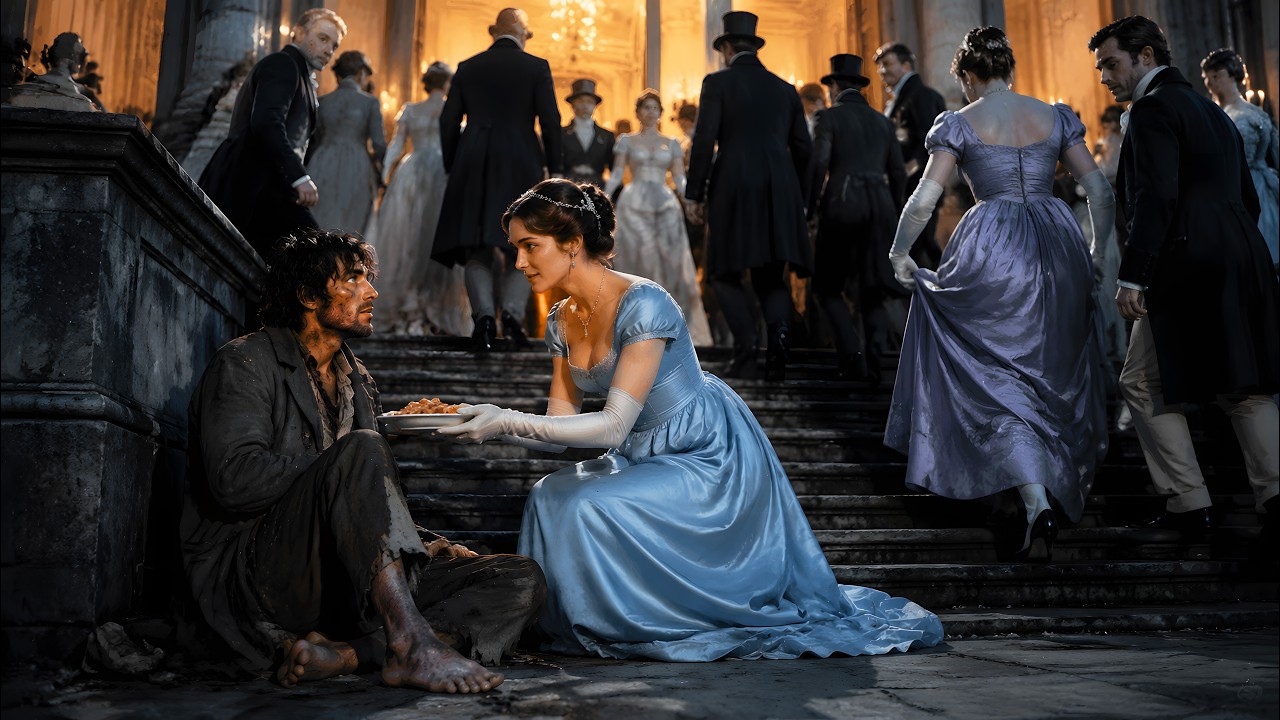
She considered her answer. She had been taught by the corridor and the kitchens and the head footman’s silences that the truest answers were rarely the safest. She also suspected, on no evidence she could name, that this was not a man for whom the safe answer would do. “Because no one else did,” she said.
“And because you were counting. ”
He did not flinch. He did not ask how she knew. He only let the smallest movement happen at the corner of his mouth, a thing that was not quite a smile and was certainly not nothing.
“You noticed. ”
“You were tapping on your knee in threes. ”
“Habit. ”
“A patient habit.
”
“A long one. ”
Somewhere behind the door, a woman laughed, high and sharp and uninterested in anything that could not be eaten or worn. The laugh broke whatever small thing had been forming between them on the cold floor. Yelena gathered the empty cup.
She tucked it back under her shawl. She stood. “There is a door at the end of the east passage,” she said quietly. “It opens on a courtyard.
The courtyard has a bench. The bench is out of the wind. If you are still here in an hour, I can walk you to it. There is a stove in the gatehouse.
The gatekeeper owes me a kindness. And if I am not still here in an hour, then you will have gone somewhere warmer, and I will be glad of it. ”
He looked at her for a long moment. Then he inclined his head, the smallest fraction of a bow, the kind of bow a man gives when he has not yet decided whether to give the larger one.
She went back down the corridor with the empty cup against her ribs and her count climbing quietly in her chest. One hundred had stepped over him. One had knelt. She did not yet know what that arithmetic would cost her.
She only knew, with the certainty of a girl who had learned to trust the small things, that the arithmetic had begun. In the ballroom, the chandeliers were performing an idea of light rather than light itself. Candles by the hundred, glass by the thousand. Beneath them, a sea of shoulders and silks, and the slow circular motion of people who were less interested in dancing than in being seen to know how.
The lady of the house was the Countess Verena Tolzen. She preferred her wine warmed slightly. She preferred her compliments delivered in pairs. She preferred her servants to keep their faces empty of weather, and her guests to keep their conversation empty of consequence.
She had inherited the estate eleven years earlier upon the death of an uncle whose taste she had never shared, and she had spent those eleven years replacing his furniture and his staff in roughly equal measure. Tonight, she was hosting a winter reception, which meant in practice that she was conducting an inventory. She had invited every family within a day’s ride whose name still carried weight. She had arranged the seating at supper according to a chart she had revised four times in the past week.
The chart was a kind of map of the future as she imagined it. She was a woman who believed firmly that the future was something that could be drawn if one had the right pen. She had not drawn the old man on the floor by the column. The old man was, in fact, a small embarrassment that her steward had brought to her attention an hour before the first carriage arrived.
He had been found at the side gate asking for a master Aldren who had not lived at the estate for forty years. He had given no other name. The countess had considered the matter for the time it took to adjust an earring. He was not to be turned out because turning out an elderly man in this weather would be a story, and stories were a thing the countess found tiring.
He was, however, to be kept inside the small vestibule by the east column, out of sight of the principal stair, and given nothing but water until the morning. The steward had placed a folded blanket beneath the old man’s elbow, which the countess did not know about, and which the old man had quietly refused. So the old man had been there since before the candles were lit. He had watched the first carriage pull up and disgorge a woman in pale green silk who had stepped into the hall, taken one look at him, and addressed her remark to the air above his head.
“Verena really must do something about the drafts,” she had said, and had walked on. He had counted them as Yelena had guessed. He had counted them not out of bitterness, which he had outlived, and not out of curiosity, which he had nearly outlived, but out of a long, patient habit of taking the measure of a room before he spoke in it. He had been taking the measure of rooms for sixty-one years.
He was very good at it. By the time Yelena had knelt beside him with the bread, he had completed his measurements, and he had reached a conclusion. The conclusion did not please him exactly. It never had in any of the rooms in which he had reached it, but it clarified him.
It set the small machinery behind his eyes into the alignment he reserved for nights on which a decision would have to be made before dawn. He had not expected the girl. He had, in fact, made a small private wager with himself, somewhere around the seventieth guest, that no one would stop. The girl had cost him the wager.
She had cost him several other things he had not been prepared to spend tonight. The clean edge of his conclusion, the simplicity of the morning he had planned, the pleasure he had intended to take in a certain quiet, precise act of correction at first light — he now found himself wishing to soften it, not because the correction was less deserved, but because a correction delivered in the same room as such a kindness would be a kind of vulgarity. He sat. He waited.
He listened to the waltz. Down the corridor, in the warm yellow square of the kitchens, Yelena was carrying a tray of pastries shaped like crowns toward the ballroom doors, and she was thinking, against her will, about the way the old man had said her surname, Medisova. He had said it the way her grandfather had once said the names of horses he had known many years earlier. With recognition.
With a small, private regret. Without surprise. She did not know what to do with that. She set the thought down beside the others she had collected that evening.
The precision of his fingers. The gray of his eyes. The patient threes of his tapping. The bow that had been half a bow and might, in a different room, have been the whole one.
She carried the pastries through the doors into the ballroom, where the chandeliers performed their idea of light, and the countess performed her idea of the future, and one hundred guests performed with great elegance an idea of themselves. The head footman was watching her again from the dais by the orchestra. She felt his look the way one feels a draft, and she walked through it without giving it the satisfaction of a shiver. At the long table by the windows, the Countess was holding a small glass of something pale and sweet, speaking to a gentleman in a dark blue coat.
The gentleman was a Baron Estevan, who had recently lost a great deal of money in a venture involving timber. He was nodding at whatever the countess was saying with the careful frequency of a man whose attention was elsewhere. His elsewhere was the door. He had been watching the door since he arrived, because he had been told that someone in particular might appear there tonight.
And if that someone appeared, he was to do nothing at all, and say nothing at all, and most especially to refrain from any expression of recognition. The door had produced only the expected families. Baron Estevan did not, because he had been told not to, glance toward the column by the east wall. The countess noticed the Baron’s attention to the door and concluded with satisfaction that he was waiting for a particular young woman she had seated him beside at supper.
She made a small private note to revise the chart again. In the corridor, the head footman had finished his slow consideration of the kitchen girl and reached his own conclusion: Yelena Medisova was a problem that would shortly need to be solved. He had reached this conclusion several times before over the eight months of her employment and had each time set it aside because she worked harder than the other girls and broke fewer glasses. Tonight, however, he had seen her on the floor where she ought not to have been.
He had heard her lie about a glass that had not existed. And he had felt, behind both observations, the small unmistakable click of a girl who was beginning to act on principles of her own. Principles, in his experience, were the most expensive thing a servant could acquire. He resolved to speak to the steward in the morning.
He did not yet know that the morning would not belong to him. Yelena set the tray of crown-shaped pastries on the long table at the windows and stepped back into the wall the way she had been taught to step back into walls: to make of herself a vertical line, to keep her hands at her sides, to let the room flow around her as if she were a column herself. From this position, she could see almost the whole of the ballroom without appearing to see any of it. She could see the countess at the far end, and the baron in the dark blue coat, and the door, and the long rectangle of the corridor that led past the kitchens and the back stair, and the east column, where an old man was, by her count, into his sixth hour of stillness.
A voice spoke very close to her ear. “You are new. ”
She did not turn her head. “Eight months, my lord.
”
“Eight months. And do you find it agreeable? ”
“I find it employment, my lord. ”
A small huff of laughter.
She risked a sidelong glance and met the eyes of Baron Estevan, who had crossed the room with the slow, distracted gait of a man on his way to nothing in particular. “Employment,” he repeated. “A very precise word. ”
“I try, my lord, to use precise words.
”
“That is a habit I have known in one other person in my life. He used to tell me that imprecise words were the chief cause of imprecise actions, and that imprecise actions were the chief cause of most of the world’s grief. He was a man, you understand, who took grief very seriously. ”
She kept her chin lowered.
“He sounds, my lord, like a man worth listening to. ”
“He was. He is. ”
“Is, my lord.
”
“Is. ” He did not look at her when he said it. He looked instead at the long corridor that led past the kitchens and the back stair and the east column. And he held his glass at the same polite conversational angle.
After a small, carefully chosen moment, he inclined the glass an eighth of an inch in that direction, the way a man might gesture toward a portrait he wished his companion to consider, and then straightened it again and turned, and smiled at the countess across the room, and walked back to her table. Yelena did not move. She counted his footsteps as he went. Twelve.
She counted the breaths she took before her own pulse settled. Seven. She thought about the way he had said “is” twice, the second time more quietly than the first, the way one underlines a word with a fingernail rather than a pen. She thought about the old man’s surname, which she did not know.
She thought about her own. Her grandfather had been a steward once on an estate far to the north. He had told her, when she was small and he was already old, that the family they served had been a family that no longer existed, that the great house had been taken apart stone by stone after a winter she had not been alive to see, and that the master of that house had vanished into a long road from which, her grandfather said, certain men do not return, and certain other men return only when they choose. Her grandfather had been dead four years.
She had not thought of his master, whom he had never named, in any of those four years. She thought of him now. The orchestra finished a piece. The countess raised one elegant hand.
The steward stepped forward and rang the small silver bell that meant the guests were to move toward the supper room. They moved in a long, shimmering procession of silks and shoulders. The corridor by the east column emptied of attendants. For a brief, unguarded interval, it became only a corridor.
Yelena was sent ahead with a tray of small glasses. She walked the corridor with her eyes forward and her count climbing. She passed the column. She did not turn her head.
The old man was no longer there. She felt the absence before she registered it. The corridor felt different. The way a room feels different when a fire has gone out.
She did not stop. She carried the tray into the supper room and set it on the sideboard and stepped back into the wall. And she let her count steady her. In the supper room, the countess took her place at the head of the long table.
The chart she had revised four times was, in her mind, a perfect map of the evening. The steward stepped forward to make the small announcement that preceded the soup. He cleared his throat. A second voice spoke first.
It came from the doorway at the far end of the supper room, the small doorway by which the household entered when the household was not meant to be seen. It was a quiet voice. It carried the way certain voices carry without effort because the room had been built long ago and by a different owner to carry a voice from precisely that door to precisely the head of the table. “Forgive me,” the voice said.
“I believe there has been an error in the seating. ”
Every head turned. The man in the doorway was not, at first glance, the man Yelena had fed bread to in the corridor. The coat the color of wet ash was gone.
In its place was a long dark coat of a cut she had never seen at this estate. Severe and exact. With a single narrow band of silver at the cuff that meant a great deal more than silver. His hair had been smoothed back.
His hands folded now in front of him. With the hands she remembered: precise, patient, accustomed to being obeyed. His eyes were the gray of a struck bell. The countess had risen halfway from her chair before she knew she had risen.
She had begun to assemble a polite welcome for a late and distinguished guest. The welcome reached her lips. It died there. Recognition arrived.
It arrived all at once and from several directions. From the shape of the man’s jaw, which she had seen in a portrait in the long gallery of her childhood. From the cut of the coat, which she had been taught to identify before she had been taught to read. From the small, grave inclination of his head, which was the inclination of a man who was about to be very courteous about something for which courtesy was the cruelest possible instrument.
She sat down. She did not mean to. Her legs had been consulted by a part of her older than her vanity, and they had voted. “Your Grace,” said Baron Estevan from his place halfway down the table, and he rose and bowed, the entire bow given in full, without hesitation.
The word traveled the table the way a struck bell travels a valley. “Your Grace. ” “Your Grace. ” “Your Grace.
” The guests rose as the word reached them, in a slow, uneven ripple, silks rustling, chairs scraping softly. The small, god-like map of the evening tearing very quietly down its center seam. The Grand Duke Mikhail Aldren Vsevolod, who had been counted over by one hundred guests on a cold marble floor, and fed bread by a kitchen girl who counted everything, walked the length of the supper room with the unhurried pace of a man who had already done the difficult part of the evening hours ago. He stopped beside the chair at the head of the table.
He did not sit. He turned very slightly toward the small doorway from which he had entered, and he spoke once more in the quiet voice that the room had been built to carry. “Alina Medisova,” he said. “Please come in.
”
She came. She did not know, until she was walking, that she was walking. She set down the tray of small glasses on the sideboard with the careful unhurriedness of a girl whose hurry would be punished, and she crossed the polished floor under the eyes of one hundred guests, and she stopped a careful three paces from him, because three was the number she had been taught and because three was the number he had tapped on his knee. He inclined his head to her.
It was the whole bow this time. Given in full. “Your grandfather,” he said, “served my father. He served him very well.
He wrote to me before he died about a granddaughter who counted things and who had, he said, a steady hand. I have been a long time arriving. Forgive me. ”
She did not answer.
She could not, just then, find the precise word. He turned to the room. “There has been an error in the seating,” he said again, very gently. “It will be corrected.
There will be no further errors tonight. ”
He looked once at the Countess Verena Tolzen. He did not speak to her. He did not need to.
The look was not cruel. It was worse than cruel. It was an accounting, low-voiced and with very little furniture moved. And the Countess, who had spent eleven years drawing the future with the right pen, understood in that single look that the pen had never been hers.
He offered Yelena his arm. She took it. Her hand on the dark sleeve was steady because she had decided somewhere between the sideboard and the head of the table that it would be. The silver band at his cuff was cool under her fingertips, narrower than she had expected.
She noticed it. She filed it away. He drew out the chair to the right of his own and seated her there. He sat.
He looked down the long table at the room he had measured an hour before, and he smiled very slightly. The smile of a man who had spent a long evening on a cold floor and had decided on balance that the cold had been worth what it had bought. Outside, beyond the tall windows, the first pale edge of dawn was beginning to push at the dark. The soup was served.
The orchestra in the next room began uncertainly a piece more suited to mornings than to nights. The guests ate because they had been taught very young to keep eating no matter what the table did. The Countess Verena Tolzen lifted her spoon and set it down twice before she trusted her hand to lift it a third time. And the Baron in the dark blue coat caught Yelena’s eye once across the long table and inclined his glass an eighth of an inch in her direction.
She inclined her head in return. She did not smile. She had not yet decided what her face was for in this new room. She lifted her spoon.
Somewhere in her, the count that had been climbing all evening came very quietly to rest. The morning, when it fully arrived, found the candles guttered and the chandeliers dimmed to their honest selves. The Grand Duke did not raise his voice in any of the hours that followed. He spoke quietly to the steward, who bowed more deeply than he had in twenty-five years, and went out at once to make certain small adjustments to certain small ledgers that had, for several years, been kept in the wrong hand.
He spoke quietly to Baron Estevan, who listened with the attentive stillness of a man receiving instructions he had been waiting half his career to receive. He spoke briefly and without unkindness to the Countess Verena Tolzen, whose face went through several careful colors before settling on the pale one she would wear with diminishing success for the rest of her life. In the late, soft light of mid-morning, he walked the long, lacquered corridor with Yelena beside him and stopped deliberately by the east column where he had sat the night before. He looked at the marble.
He looked at the place on the floor where she had knelt. “One hundred,” he said. “One hundred,” she agreed. “And one.
”
“And one. ”
He nodded once. The small, private nod of a man closing a ledger that had taken sixty-one years to close. Then he offered her his arm again, and they walked on past the column, past the corridor, past the kitchens where the head footman stood very still against the wall, and did not, for once in his life, watch her go by.
Outside, the courtyard was full of pale winter sun. The bench was out of the wind. The gatehouse stove was lit, and the gatekeeper, who owed her a kindness, was standing in his door with his cap in his hands and an expression of grave, dawning understanding on his face. She did not sit on the bench.
She had no need to now. She stood beside the Grand Duke in the pale winter sun, and she felt, for the first time that she could remember, the small unfamiliar sensation of being precisely where the count had brought her.