She took down the willow bark and the honey. She set Thomas to weighing what he could weigh. She did not go out for the things on her list until the afternoon. When Mrs.
Pel left for the linen draper, Nell took her cloak and went up the area steps into a thin London sun. She went first to the apothecary on Wigmore Street. She stood at the counter for a quarter of an hour and gave him a list that made his eyebrows climb under his wig. Comfrey root, camphor, oil of cloves, tincture of myrrh, tincture of opium, willow bark, senna, chamomile, linseed, a pound of beeswax.
He weighed and wrapped and tied. She set the first banknote on the counter. He gave her the change in coin, put away in a small canvas bag. She went to the ironmonger for a proper set of brass scales—the kind her father had used, with round pans and graduated weights, because the scales in the Hartfield still room were tin and warped.
She went to the glass merchant for new dispensing bottles. She went to the linen warehouse for two bolts of unbleached cloth for bandages. She went to a stationer for a clean ledger and a steel-nibbed pen. She walked back through the lamps coming on.
She had spent £172 and a few shillings. Six days left. Eight hundred twenty-eight pounds to spend. By the third day, she had begun to draw notice from the tradesmen.
The stillroom maid from the surgeon’s house on Henrietta Street came round to ask why the apothecary’s apprentice had said the Hartfield girl was buying out half his stock. Nell told her only that the housekeeper had decided to lay in supplies. The other maid looked at her sidelong and went away unsatisfied. Nell had begun in the small hours to understand that there was more inside this test than she had been allowed to see.
She did not guess at marriage. The idea did not arise. She had been told she was being evaluated as a servant. But she felt the weight of being watched.
On the fourth day she walked to Lambeth and stood outside the door of the small shop her father had once owned. She went inside. Mr. Krum, who had bought the shop to pay the funeral and the back rent, let her into the back room.
Her father’s old chest still sat under a tarpaulin. He had kept it. He said it was hers if she could carry it. She paid him for the carriage.
She paid him also for three of her father’s books—the dispensatory, the herbal, and the small black notebook in which he had written every formula and every patient he had ever forgiven a bill for. She paid more than he asked. She paid because she could, because there was a kind of justice in paying generously with money given to her for no reason she understood. She walked back across the river with the notebook pressed against her ribs inside her cloak.
She did not cry until she was in the still room with the doors shut, Thomas asleep on the bench with his head on a folded sack. Then she cried very quietly into her apron for the length of time it took the kettle to boil. She opened the notebook to the first page and read in her father’s hand: “For Mrs. Hadley, who could not pay—the last I have of the comfrey with my compliments.
Two drams thrice daily. R. Ashby, 1819. ”
She closed the notebook.
She took out the brown bottle and set it on the bench. She thought there was no test in the world, charitable or otherwise, that she would fail if she only spent the money the way her father would have spent it. On the fifth day she bought blankets for the foundling hospital in Bloomsbury—six dozen of them—and a standing order with the apothecary on Wigmore Street to supply the hospital with cough syrup and willow tincture for the rest of the quarter, paid in advance. On the sixth day she bought a proper secondhand brass mortar, a set of measuring glasses graduated in minims, and a single bolt of fine bleached linen to make new stillroom aprons for herself, the two scullery maids, and Mrs.
Pel. On the seventh day she sat at the bench and made up her ledger. She wrote every purchase, every price, every recipient. She tallied to £999.
She had one pound left. She sat for a long time with the last banknote in her hand. She thought of buying a ribbon. She thought of buying stockings without darns.
She turned the note over and over. She folded it and put it inside the apothecary bottle. She put the stopper back in. She put the bottle back in her apron pocket.
She could not think of a thing to buy that would be worth more than the not having spent it. The dowager was not asleep when Mrs. Pel came up with the evening tisane. She had not slept properly in nine weeks.
“Mrs. Pel, the girl—she has been spending. ”
“She has, my lady. ”
“On what?
”
Mrs. Pel hesitated. “On medicines, my lady. On supplies for the stillroom.
On linen for the maids. And I am told, on blankets for the foundling hospital in Bloomsbury. ”
The dowager closed the ledger. “Has she bought no dress?
”
“No, my lady. ”
“No slippers? No fan? ”
“No, my lady.
”
“No jewelry? ”
“No, my lady. ”
The dowager drew a slow breath that caught at the top. She turned her face toward the window.
She had told Nell the test would reveal what each woman believed was worth having. She had thought the girl would buy a dress—that a stillroom maid in borrowed silk would make the contrast complete. She had wanted the contrast complete because she had wanted her son to see what nine gentlewomen would do with ten thousand pounds set down in front of them. She had wanted the maid only as a counterweight.
She had not expected the stone to outweigh them. “Mrs. Pel, I am not certain it was kind. ”
Mrs.
Pel took the empty cup. “It was never going to be, my lady. ”
The dowager laughed once, a short dry sound that ended in a cough. She did not change the test.
She lay in her bed and watched the rain. In the still room, Thomas had crept back down after Nell had gone to bed. He found the room empty. On the table, everything was laid out in preparation for the morning—the jars, the bottles, the rolls of linen, the new scales, the foundling hospital invoices, the bolt of fine linen, the brass mortar, her father’s books, the ledger open at the final tally.
Thomas walked the length of the table with his hands behind his back. He understood that none of it was for her. He picked up one of the small jars of cough salve, the one labeled in his own handwriting for grandmother. He carried it up the back stairs and put it under his pillow.
Above him in the green drawing room, the Earl had not gone to bed. He had been thinking for seven days that in the morning ten women would walk into his mother’s ballroom, and he would be expected to choose. He heard a small sound at the door. Thomas stood in the doorway in his nightshirt.
“You are not allowed up here,” Marchford said without sharpness. “I know. ”
“Then why are you here? ”
Thomas considered.
“Nell bought blankets for the foundling children. With the money. She bought blankets, six dozen, and medicine, and linen for the maids’ aprons, and a mortar because the other one was cracked, and books that belonged to her father. She did not buy a dress.
”
The Earl set his glass down slowly. “Miss Ashby works in the stillroom. ”
“She makes the cough syrup. She is teaching me to grind.
”
“She was given a thousand pounds by the dowager? ”
“Yes. ”
Thomas looked at the Earl steadily. “Is it bad that she spent it on the foundlings?
”
The Earl sat down on the edge of a chair. He thought of nine other tables being laid out with silks and slippers and jeweled combs. He thought of one table in his own basement laid with jars and bandages and a brass mortar and a child’s careful schoolroom handwriting. “No, Thomas,” he said.
“It is not bad. ”
Thomas yawned. At the door he stopped. “She keeps a brown bottle in her pocket.
She touches it when she is afraid. I think it was her father’s. ”
He left. The Earl did not sleep.
He thought of his brother, of the title that had fallen to him, of the belief that he was not worth it. He thought of a woman in his own basement who had spent a week proving, without any knowledge that she was being watched, what worth looked like when it was not performed. He understood he was going to walk into the ballroom already undone, and that he was glad. The ballroom had been arranged with ten long tables.
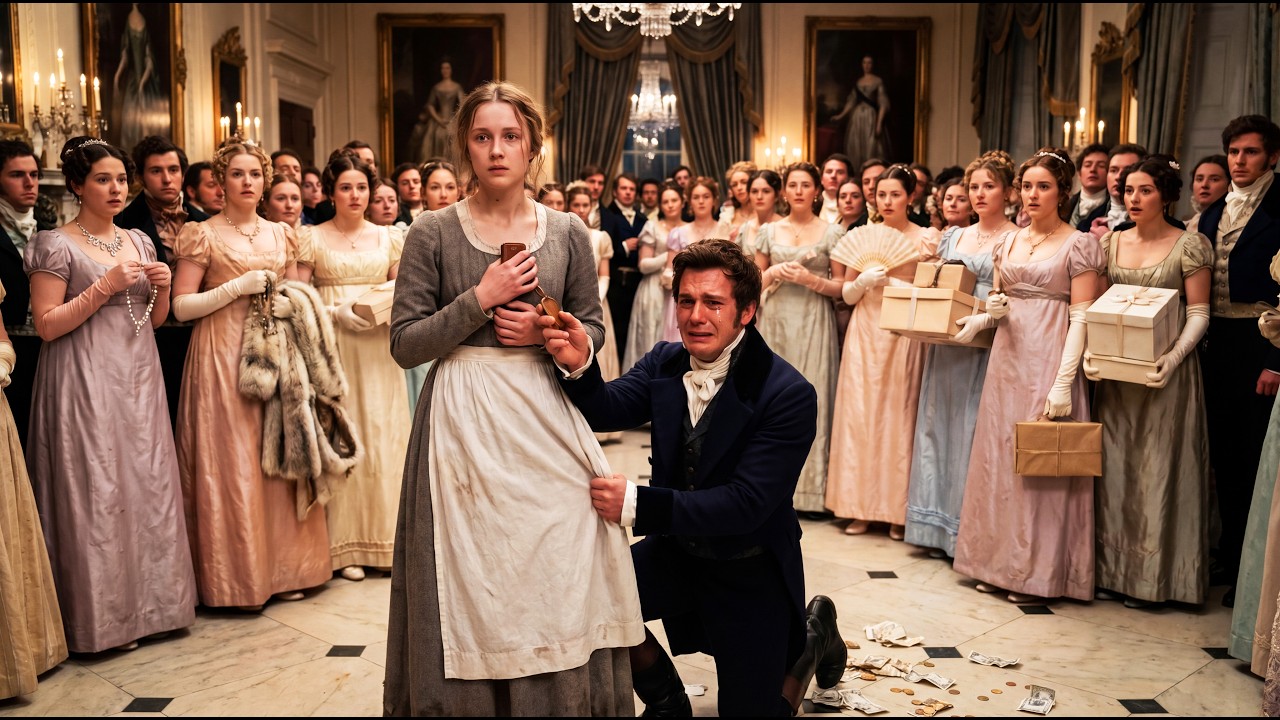
The dowager sat at the head on a dais. The room had filled by ten with two hundred people. The nine gentlewomen arrived in carriages. Their tables were filled with silks, slippers, pearl combs, ivory fans, embroidered shawls.
One had spent the entire sum on a single emerald necklace coiled on black velvet. Another had bought a phaeton and brought a painting of it on an easel. A third had paid down a portion of her family’s mortgage and brought the receipt in a leather case. Nell came up the back stairs in her plain stuff gown with the new clean apron tied over it.
Thomas walked behind her carrying a basket. Mrs. Pel walked behind Thomas carrying a second. She did not look at the gentlewomen’s tables.
She went to her own at the far end. She set out in order every purchase—the jars, the bottles, the bolt of linen, the brass mortar, the new scales, the foundling hospital invoices, the standing order, her father’s three books, the ledger open to the final page, the column tallied to £999. The brown bottle stayed in her pocket. The last banknote stayed inside the bottle.
She stepped back and folded her hands and looked at the floor. The Earl was already in the room. He had watched her come in, watched her set out the jars, watched Thomas place a small label upright against the willow tincture. He walked the length of the room past the other nine tables and stopped at Nell’s.
He stood in front of it for almost a full minute. Two hundred people made no sound. He picked up one of the small jars. The label in Thomas’s hand read: “For grandmother.
Two spoonfuls at night. ”
He set it down. He picked up the foundling hospital invoice. He read it.
He picked up the ledger and read the column to the bottom and saw the tally stopped one pound short. He looked up. “Miss Ashby. ”
She lifted her eyes.
She did not know him. She had never been in the same room with him without looking at the floor. “You have spent £999. ”
“Yes, my lord.
”
“Where is the last? ”
She felt Thomas’s hand creep into the side of her apron. She did not answer at once. She took the bottle out of her pocket and set it on the table among the jars and the bandages and the open ledger.
“Inside, my lord. I could not think what to spend it on. ”
“What does it hold? ” he said.
“The last thing my father made for someone who couldn’t pay. ”
The dowager on her dais made a small sound. The Earl closed his eyes for the length of one breath. When he opened them, the room saw that he was crying without making any sound.
He came round the end of the table. He took Nell’s free hand, the one Thomas was not holding, and turned it palm up. Her knuckles were raw. There was a small green stain at the base of her thumb.
He bent his head over her hand for a moment, then let it go. He addressed the room without raising his voice. “My mother said a test. I do not think she knew what she was testing for.
I think Miss Ashby is the only person in this room who has been honest for a week because she did not know she was being asked to be. ”
He looked at the dowager. She gave him the smallest nod. “I am not worth the title that fell to me.
I have not been worth it for fourteen months. But I have understood this morning that worth is not something one inherits. I will marry if she will have me the woman who spent a thousand pounds on other people’s pain. I will ask her in private.
”
He turned and left the ballroom by the side door. The room began to move again. The nine gentlewomen began to pack their tables. The dowager lifted one finger and said to Mrs.
Pel, “Tell the girl she has my blessing. ”
Thomas tugged on Nell’s apron. “You should go after him. He does not know where the still room is.
He will get lost. ”
She found him in the still room. He was standing at the bench with his hand flat on the wood. He had not lit the candle.
The room was lit only by the gray light from the high window and the red glow of the banked stove. He turned when he heard her step. She shut the door. “Henry,” she said.
He drew a breath. “You did not know. ”
“No. ”
“My mother told you it was charity.
”
“She told me it was a study of what a woman of my station did with what she had not had. ”
He came across the room slowly and stopped two paces from her. “You bought blankets for foundlings. ”
“Yes.
”
“And medicines. And linen for aprons. And nothing for yourself. ”
“I am wearing one of the aprons.
”
He looked at the crease across the bib she had ironed badly at midnight. “The pound in the bottle,” he said. She took out the bottle, unstopped it, tipped the folded note into her palm. She held it out.
He did not take it. “I could not think of a thing to buy with it that would be worth more than the not having spent it. ”
He said, “I have spent fourteen months thinking I was not worth the title my brother left me. I have been wrong about what the word means.
”
“Worth is not a thing you inherit,” she said slowly. “I do not think it is a thing you earn either. I think it is a thing you prove every day with your hands, and then the next day you prove it again. ”
He took the last pace toward her.
He did not touch her. “I am going to ask you a question. You are not to answer yes because I have asked it. You are to answer yes only if it is the answer.
Will you marry me? ”
She put her hand into her apron pocket and held the brown bottle. She thought of her father, of the woman with the sick child, of the foundling hospital, of Thomas’s hand in her apron, of the long table she had laid out herself. She took her hand out of her apron pocket and held it out to him open, with the green stain at the base of her thumb.
He took her hand. “Yes,” she said. Three weeks later, on an ordinary gray morning, Nell came down the back stairs in plain gray wool with the new clean apron tied over it. She went into the still room.
Thomas was sitting on the stool by the window with his chin on his fists, waiting for her. She set out the things she needed—the brass mortar, the new scales, a small jar, her father’s notebook. The brown bottle sat on the bench beside the mortar. She began to work.
Thomas weighed what he could weigh. The door behind her opened. She heard the step she knew. A cup clinked beside her on the bench.
The Earl did not speak until she finished the measurement she was on. “I brought you tea. ”
“Thank you. ”
“Is it the tincture for my mother?
”
“Yes. ”
He stood beside her at the bench and watched her hands. She tipped the powder into the jar, added the oil, stoppered it. She picked up the cup and drank.
Thomas watched them with the small grave appraisal he had always brought to adult occasions. He decided everything was where it should be, and that the cough syrup for his grandmother could be made next, after the tincture for the dowager, in the proper order. The Earl picked up the brown bottle from the bench and turned it in his hand. He had asked her the first night what it had held.
She had told him. He had not asked again. He set the bottle down. He reached out and put his hand over hers on the bench very lightly.
She turned her hand under his and laced her fingers through his. They stood that way for a moment in the long narrow chamber with the brass mortar and the new scales and her father’s books on the shelf above, and the brown bottle sitting on the bench like a witness, and Thomas on the stool by the window kicking his heels softly against the rung, and the gray London light coming down through the high window onto her hands and his, which were no longer the only thing in the room she was holding.