The phone rings, and you already know what it is. It is always something. A daughter with a financial problem. A son locked in a fight with his wife.
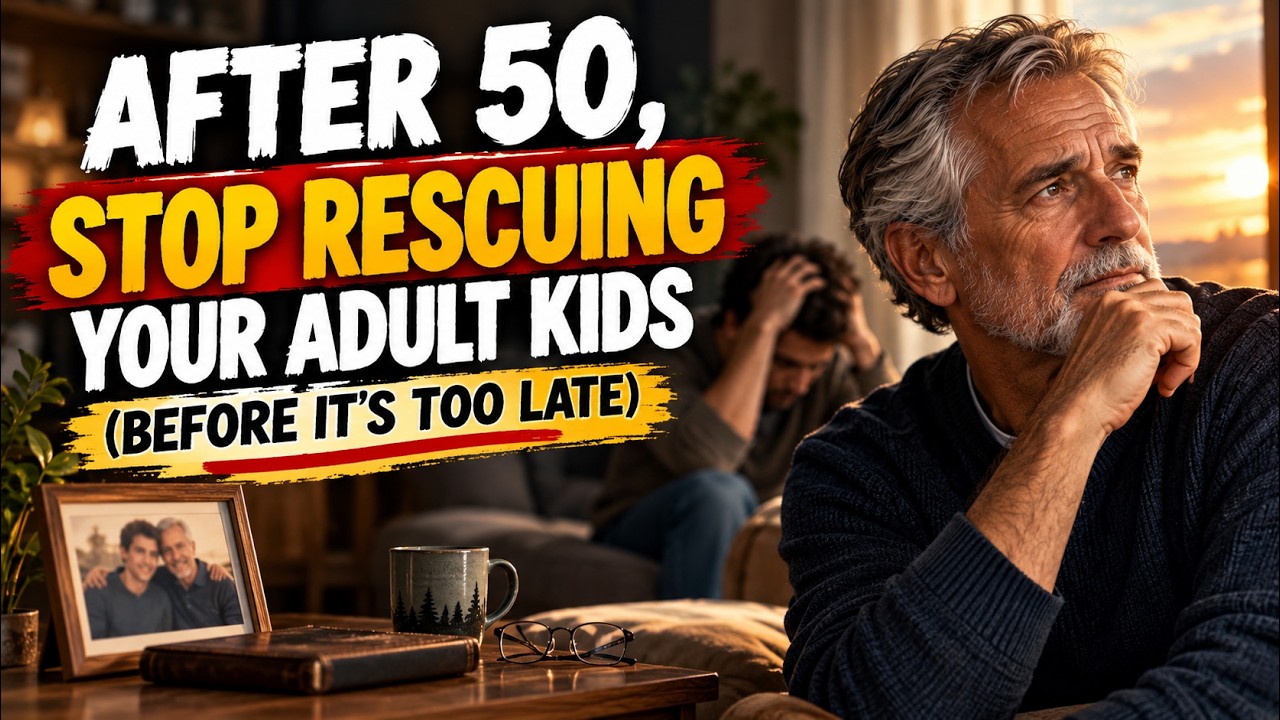
A brother who needs money. A relative who needs a place to stay. Somewhere in the middle of it all, the solution always seems to involve you. You listen, you advise, you drive across town, you write the check, you smooth things over.
Then everyone goes home, and you are left sitting quietly, exhausted, but strangely proud, because you were needed. That need becomes a trap. Being needed can feel exactly like being loved, but the two are not always the same. And for the person who has spent decades as the family fixer, the distinction becomes harder to see with every passing year.
There was a time when this role made sense. You were the strong one, the one people called when things went wrong. Your children needed money, and you found a way. Someone needed a place to stay, and you opened your door.
Someone made a bad decision, and you helped clean up the consequences. You told yourself the same thing every time: that is what family does. But there comes a moment, especially after the age of fifty, when the weight of that role becomes unbearable. Not because the caring stops, but because the realization arrives that you cannot save everyone.
And that you should not have to. Every family has its roles. There is the funny one, the difficult one, the quiet one. And sometimes there is the fixer.
Often, the fixer does not choose the role. It just happens. One person needs help, and you help. Then someone else needs help, and you help again.
Eventually, everyone knows your number. You become the emergency department of the family. The problem with being the emergency department is that it never gets to retire. And neither does the person everyone expects to save them.
The deeper issue is not the helping itself. The deeper issue is what the helping does to the person who gives it. Over time, being needed gives life a sense of purpose, especially once the children grow up and the house gets quieter. The holidays change.
Everyone becomes busy. And suddenly, you are no longer needed in the same way. So you keep finding ways to be useful. You keep looking for problems to solve, not because you are selfish and not because you want control, but because helping has become part of who you are.
This is where resentment begins. After years of sacrificing, the phrase “after everything I’ve done for them” starts to surface. Love becomes a debt. And love should never become a debt.
The uncomfortable truth is that sometimes we keep rescuing people because we need them to need us. It is not selfishness. It is identity. For decades, you had a purpose.
You worked. You provided. You protected. People counted on you.
Being needed felt good. It made you feel valuable. When that need fades, a strange emptiness takes its place, and you start looking for problems to solve simply to fill it. At some point, you have to ask a difficult question: what happens if I do not fix this?
Let that question sit. What happens if your adult child makes the wrong decision and loses money? What happens if they have an argument and you do not step in? What happens if they make a choice you strongly disagree with and you simply stay out of it?
They may struggle. They may become angry. They may blame you. They may even say, “You don’t care anymore.
” That sentence can break your heart. But someone being disappointed in you does not mean you failed them. Sometimes, disappointment is simply the sound of a boundary being created. Adult children are allowed to struggle.
They are allowed to make mistakes. They are allowed to learn things you cannot teach them. They are allowed to live a life different from yours. You do not have to approve every choice.
You do not have to rescue them from every consequence. You can say, “I love you. I’m here if you need me. ” And then step back.
That sentence is powerful because it offers love without taking control. It gives them something every adult needs: the dignity of handling their own life. And it gives you something too. The freedom to stop carrying what was never yours.
Stopping the cycle does not require becoming cold. It requires becoming clear. And clarity begins with knowing what belongs to you and what does not. There are five changes that can transform that clarity into action.
The first is simple: stop answering every crisis. When the phone rings, do not immediately jump into action. Pause. Breathe.
Ask yourself one honest question. Is this really mine to solve? Sometimes the answer will be yes. Sometimes it will be no.
That does not make you uncaring. It makes you honest. You can care without fixing. You can listen without solving.
You can love without taking over someone else’s problem. The second change is about money. Stop using money to remove every consequence. This is incredibly difficult, especially when you have enough to help.
You may think, “If I can solve it, why wouldn’t I? ” Because solving it today may create the same problem tomorrow. Look at the pattern before opening your wallet. Is this truly a temporary emergency, or are you protecting someone from consequences?
If someone repeatedly spends more than they earn, another check will not teach financial responsibility. If someone keeps making the same mistake, another rescue will not create wisdom. Sometimes the kindest thing you can do is refuse. You can say, “I love you too much to keep doing this.
” That sentence may hurt, but a painful boundary is often a necessary gift. The third change is even harder: stop managing your adult children’s relationships. This is where many loving parents get trapped. Your son is fighting with his wife.
Your daughter is struggling in her marriage. You already know what they should do. You want to call. You want to explain.
You want to bring everyone together. But their relationship belongs to them. You can listen. You can share your experience.
You can offer wisdom when they ask. But do not become the third person in their marriage. Some lessons have to be learned privately. Some relationships need room to find their balance.
And some mistakes are necessary parts of becoming an adult. Your child does not need you to prevent every painful experience. They need to know you will still love them afterward. The fourth change is this: protect the life you still have.
You may have spent decades putting everyone else first. You may have postponed your own dreams for years. The trip can wait. The hobby can wait.
The quiet morning can wait. Someone always seems to need something. But eventually, you have to ask how much of your own life you are postponing. Your future deserves protection.
Your retirement deserves protection. Your health deserves protection. Your friendships deserve protection. And your dreams deserve protection.
Do not give away money you will need later. Do not destroy your health keeping everyone comfortable. Do not spend every weekend solving someone else’s problems while your own life quietly waits for you. The fifth change may be the hardest of all: learn to survive other people’s disappointment.
Someone will eventually tell you, “You’ve changed. ” And perhaps they are right. You have changed. You should have.
You have lived. You have lost people. You have made mistakes. You have learned.
You have survived. You are allowed to become different. You are allowed to have boundaries now. You are allowed to protect your peace.
Some people will only love the version of you who always says yes. That is painful to accept, but it can also be freeing. Let them be disappointed. You can still love them.
You can still show up. You can still care deeply. But you no longer have to abandon yourself to prove that love. There is a difference between helping and being responsible for someone’s life.
There is a difference between loving your family and losing yourself inside their problems. After fifty, those differences matter more than ever. Your worth was never something your family gave you. It was yours all along.
You are more than what you provide. You are more than the problems you solve. You are more than everyone’s emergency contact. You are still a person with dreams, with fears, with unfinished chapters.
Your children do not need a permanent savior. They need someone who trusts them enough to grow. Your family does not need you exhausted. They need you present, calm, healthy, and at peace.
So let your children carry their own bags. Let adults solve adult problems. Let consequences teach what advice cannot. And when someone you love falls, you do not always have to pick them up.
Sometimes you can simply sit beside them and say, “I’m here. ” Those two words can be enough. Real love does not always rescue. Sometimes real love trusts.
After fifty, you do not have to prove your love through sacrifice anymore. You have already given enough. You have already carried enough. Now, let your life belong to you again.
Take the trip. Call the friend. Enjoy the quiet morning. Do something simply because it makes you happy.
You are not selfish for wanting peace. You are not selfish for having boundaries. You are not selfish for finally choosing yourself. You spent years teaching your family how to live.
Perhaps now, it is time to teach them something else: how to let you live too. You do not have to save everyone. You only have to love them without losing yourself. Growing older is not about becoming less loving.
It is about becoming free enough to love without carrying everything. Put down what was never yours. Take a breath. And walk into this next chapter with a little less weight.
You have carried enough. Now live.