Long before thermostats and forced-air furnaces, the people who kept homes warm through brutal winters understood a simple truth: heat is never wasted by accident. It escapes. It rises, leaks, drifts, and disappears through cracks, ceilings, floors, and walls. The most practical minds of that older generation treated warmth as a resource to be captured, guided, and storedwith the same care they gave to food put up for the cold months.
Their methods did not rely on electricity, and many still work today in powerless homes where every degree of warmth matters. The oldest and most effective principle was thermal mass. Walls, stones, and water could all soak up heat during the day and release it slowly after dark, smoothing out the sharp swings between sunlight and freezing night. This was the logic behind thick ceramic tile floors placed near sunny windows.
The dark tile absorbed sunlight through the day and gave it back to the room for hours after dusk. The same thinking drove the use of glass canning jars filled with water and arranged along a sunny wall. Water stores more warmth by weight than stone, so each jar acted as a miniature heat battery, radiating a slow, steady warmth into the room as temperatures fell. A bed of dense rocks served the same purpose on a larger scale, holding daytime heat from a stove or the sun and releasing it gradually overnight.
The principle was always the same: high mass, slow cooling, and comfort that lasted long after the fire died. Even the walls themselves could be turned into heat batteries. Phase change material panels, a modern twist on a very old idea, melt and solidify at room temperature, absorbing extra warmth by day and releasing it at night. They made no noise and used no power.
They simply held heat the way a cellar held canned peaches. More traditional homes relied on earth plaster made from clay, sand, and natural fibers. Applied to interior walls, it added both insulation and thermal mass, sealing tiny cracks that let drafts through and absorbing warmth from stoves or sunlight before releasing it gradually into the room. It breathed, it insulated, and it stabilized temperature without machinery or chemicals.
Guiding heat where it needed to go was just as important as storing it. Hot water pipes running along cold basement walls lost a surprising amount of warmth sideways into the concrete instead of rising into the living space. Sliding a reflective mylar backing behind those pipes turned wasted radiant heat back inward, nudging warmth toward the rooms above rather than the foundation. A similar logic applied to reflective interior paints, which could bounce up to ninety percent of radiant heat back into a room instead of letting walls absorb it.
Painted strategically behind heaters, along cold exterior walls, or in sun-facing rooms, the coating acted as an invisible mirror for warmth, boosting the effectiveness of every heat source already in the house. Even the smallest tricks of air movement made a measurable difference. Warm air rises, and in most homes it pooled uselessly at the ceiling while floors stayed cold. A ceiling fan set to a slow reverse pushed that trapped warmth back down without creating a draft, making every degree of heat work twice as hard.
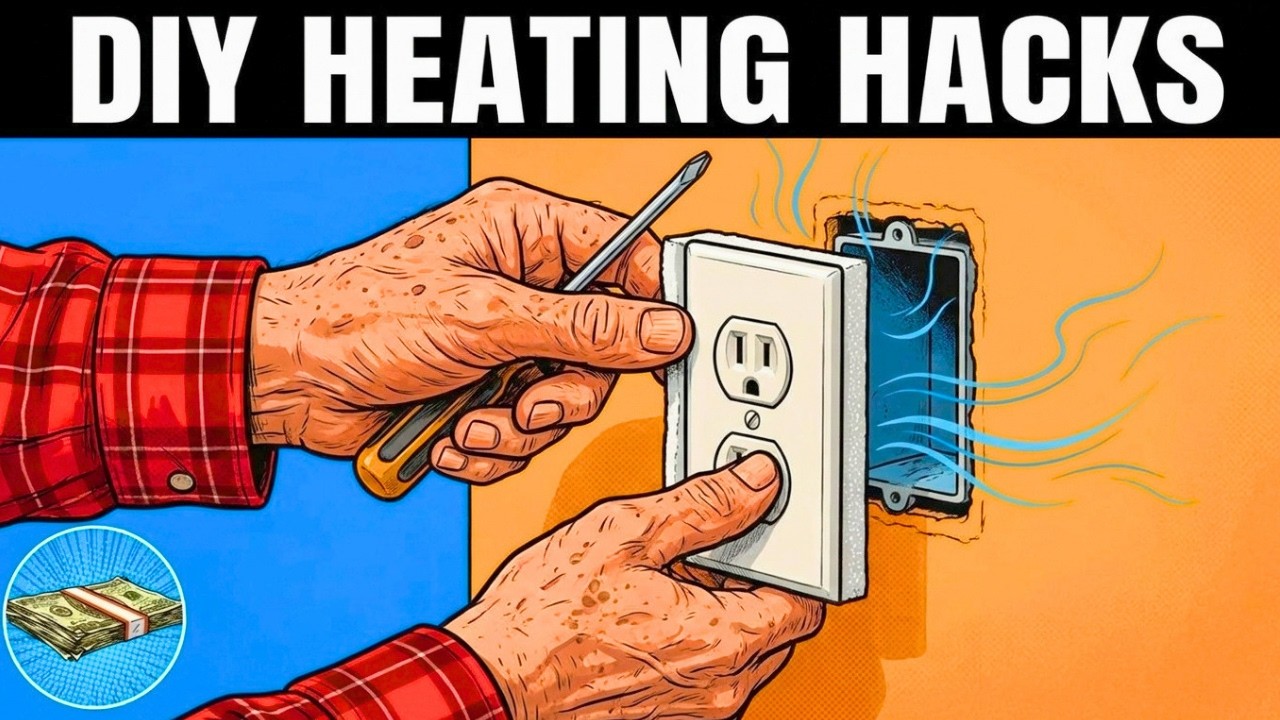
Stairwells created the same problem on a larger scale, letting warm air drift upward and leave lower rooms chilly. A convection damper blocked that upward escape, keeping heat where people actually gathered. The logic was the same as closing unused rooms: shrink the space you are trying to heat and the warmth lasts longer. On a smaller scale, electrical outlets on exterior walls leaked cold air through tiny gaps around the boxes.
Foam gaskets behind the outlet covers blocked those drafts without affecting the wiring. Sealing dozens of tiny leaks felt like adding a whole new blanket to the house. Some of the most effective tricks simply recovered heat that was already being produced and thrown away. A running refrigerator constantly dumped warm air out of its rear coils, and a simple passive recycler guided that rising warmth into the room instead of letting it pool uselessly against the wall.
A clothes dryer threw warm, moist air outdoors, but a safe diverter could direct some of that heat back into the home while filtering lint and controlling humidity. It did not replace a heater, but it softened the winter chill during laundry cycles with warmth that would otherwise have been wasted. The same principle applied to kitchen exhaust. Warm air from cooking escaped straight through the hood, unless a heat exchanger captured some of that warmth with metal fins and transferred it back into the kitchen before the air exited.
Cooking already warmed the house, and reclaiming the stray heat extended that comfort without burning another ounce of fuel. Even the lowliest heat sources could be stretched. Candle stubs and broken crayons, combined safely with wax-soaked paper, made slow-burning heat extenders. They did not replace real firewood, but they helped stretch a dwindling pile through a cold spell.
Pellet stove inserts turned drafty fireplaces into steady heat engines, burning fuel more evenly than logs while the surrounding masonry absorbed and released warmth slowly into the room. A traditional kiva-style fireplace, with its rounded, thick-walled structure, absorbed heat slowly and released it long after the fire faded, radiating warmth into the room instead of up the chimney. The design came from centuries of practical refinement in cold desert regions, where thick walls acted like thermal batteries storing heat well into the night. Some of the most personal tricks focused on keeping the body warm directly.
Before electric blankets, families used stones warmed by a safe heat source and wrapped in thick fabric to carry gentle warmth into bed. Stones released heat gradually for hours because of their high thermal mass. Clean, dry sand worked the same way. When warmed safely and poured into thick socks, it became a simple foot warmer that cooled slowly through the night, steady comfort without electricity.
Wool rugs laid over bedding acted as heavy thermal shields, with their curled fibers trapping tiny pockets of air that slowed heat loss. A lining inside a sleeping bag created a second layer of still air, nature’s best insulation. A canopy lined with heavy fabric collected rising body heat and settled it back around the sleeper, reducing the volume of space the body had to keep warm. Small spaces heat faster and cool slower.
The deeper lesson running through all of these methods was that comfort in a powerless home came not from making more heat but from refusing to lose the heat you had. A haybox surrounded something warm with layers of insulating material, trapping heat the way old slow cookers did. A hot water bed pad, even with the bed itself long gone, could be warmed by the sun or another safe source and would radiate gentle heat for hours as the water inside cooled slowly. Insulated covers sealed floor registers when ducts were inactive, keeping warm air from sinking into unused ductwork.
Draft-free mail slot covers created a closed pocket of still air that stopped the steady trickle of cold from the front entrance. Insulated garage door seals plugged one of the largest moving surfaces in the house, and the effect was often felt in adjoining rooms. A few methods borrowed from the earth itself. Soil stays much warmer than winter air, and closed loop earth tubes made quiet use of that steady temperature.
Air or fluid circulating through buried tubing absorbed the soil’s mild warmth and returned it indoors, enough to lift a frigid home into livable range without electricity. The deeper the loop, the steadier the temperature. In the same spirit, a drain water recovery coil captured warmth from water flowing down the drain and passed it to incoming cold water before it reached a tankless heater, reducing the energy needed to finish the job. Even a black-painted rain gutter placed in the sun became a gentle solar heater, its dark surface absorbing heat quickly and directing the warmed air into a room through a passive vent.
Not every trick was meant to heat a whole house. Many simply softened the coldest moments. A small booster fan moved warm air from one room to another, evening out temperatures without running a furnace harder. Radiator bleeder vents released trapped air from hydronic systems so warm water could flow through the radiator completely, restoring its full heating surface without burning more fuel.
Oil-filled radiators were prized not for their heat output but for how steadily they held it, the oil storing warmth and the micro thermostat regulating flow so temperatures rose slowly and evenly. Old households wasted nothing, and neither did their heating methods. Heat was precious, and the people who understood air movement and thermal mass knew that controlling where warmth went mattered just as much as making it. The quiet battery in the wall, the reflective mirror behind the pipe, the sealed crack beneath the door, the stored heat in the stone and sand.
Heat comes from many sources, but in a home without power, the warmth that lasts is the warmth that was kept.