During the Great Depression, when money was scarce and winter cold was unforgiving, the author’s grandfather developed a set of survival skills for staying warm without wasting a cent. Those same techniques, tested through decades of hard winters, form the core of a practical system for cutting heating costs dramatically. By applying the old man’s methods, the author reduced a monthly heating bill from $340 to $37 in the same house with the same thermostat setting. The key, the grandfather always said, was not producing more heat but understanding where heat escapes and plugging every single gap with cheap, ordinary materials.
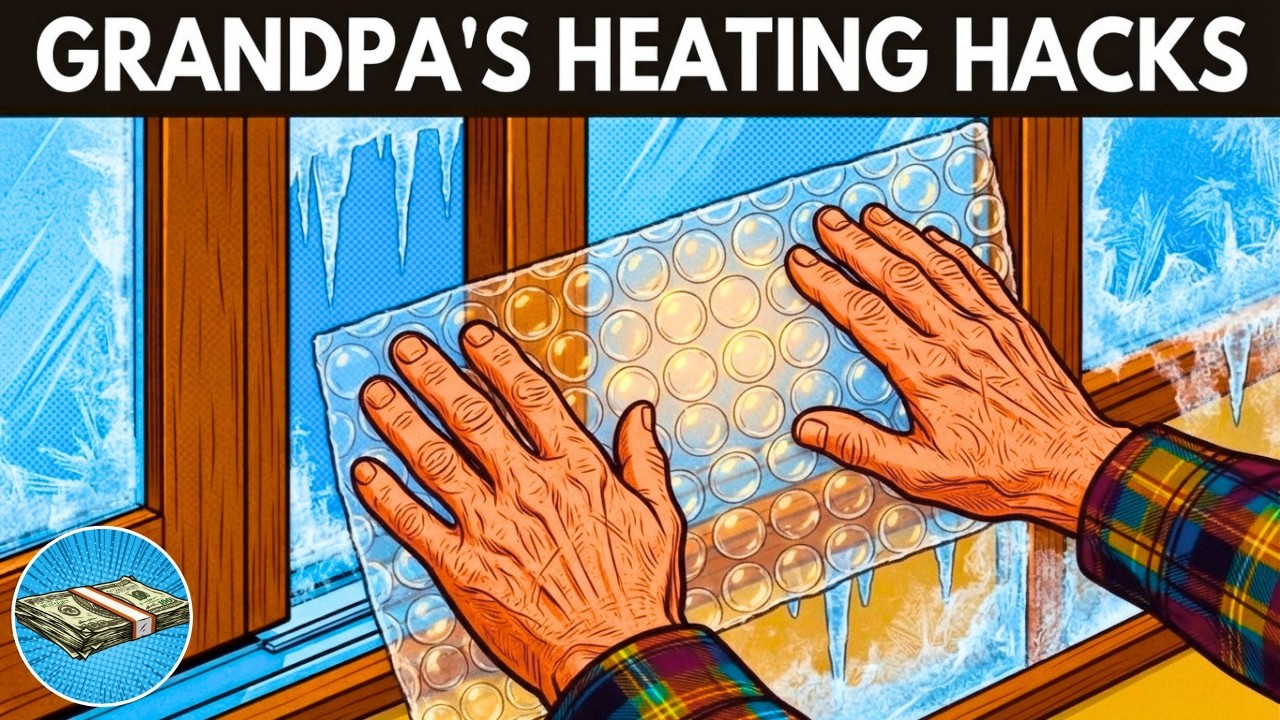
The most effective approach begins with the largest losses. Windows are among the biggest thieves of warmth. Single-pane glass loses heat faster than a room can produce it, but a simple trick drastically improves its performance. Spraying water on the glass and pressing large bubble wrap against it, bubble side down, creates thousands of tiny air pockets that act as insulation while still allowing light through.
This technique can improve a single-pane window’s insulation value by up to fifty percent. For an even tighter seal, clear plastic film applied to the inside of windows, then shrunk with a hairdryer, creates a pocket of dead air that mimics double glazing. Still air is one of nature’s best insulators, and stopping convection currents from forming against the cold glass makes a measurable difference. Thick curtains with thermal backing, found cheaply at thrift stores, reduce heat loss by up to twenty-five percent when hung close to the window and extending below the sill.
Doors and obscure cracks are the next battlefield. Cold air loves to slip under doors, and even a tiny gap can let in staggering amounts of freezing air. A pool noodle cut to match the door’s width, stuffed inside an old sock and placed against the bottom, creates an airtight seal for about two dollars. The same flexible foam noodles can be wedged under baseboards, around window air conditioners, and anywhere else cold air infiltrates.
Weatherstripping around doors and windows wears down over time, developing compression damage and gaps that pull warm air out through continuous infiltration paths. Replacing worn sections with fresh adhesive-backed stripping creates a proper seal. Less obvious are the tiny cracks around window and door frames that a person can only feel by running a hand slowly along the edges. Squeezing a thin bead of clear caulk into every gap eliminates micro cracks that create convection currents.
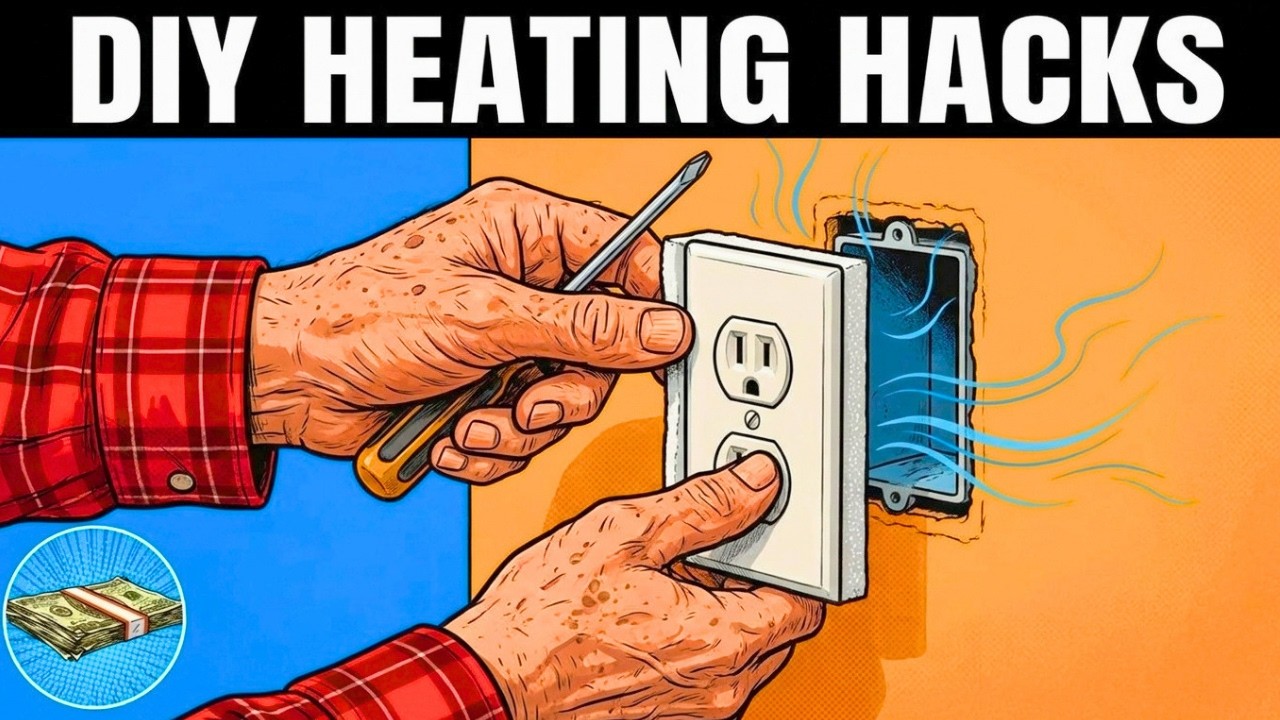
Outlet covers on exterior walls are hidden holes straight through the insulation; installing foam gaskets behind the plates seals dozens of these leaks throughout the house. Walls themselves act as giant heat sinks, pulling warmth out of a room through thermal bridging. Carpet stores often give away remnants and samples, which can be hung on the coldest exterior walls like tapestries. The carpet’s fibers trap air, creating a barrier between the warm room and the cold wall.
Newspaper taped onto basement walls or unfinished spaces works on the same principle; thousands of tiny air pockets in the paper’s fiber structure, layered with overlapping edges, trap air between sheets and stop the wall from stealing heat. Cold floors drain body heat through conduction, making a person feel chilly even when the air temperature is comfortable. Layering rugs or carpet remnants on concrete or hardwood traps air and insulates feet from the cold surface below. Heating sources themselves are often working against their own purpose.
Radiators placed against exterior walls literally heat the outside of the house. Cutting cardboard slightly smaller than the radiator, covering it with aluminum foil shiny side out, and sliding it behind the unit reflects radiant heat back into the room. Radiant heat travels in straight lines, and reflective surfaces bounce it right back where it belongs. The same principle applies with a larger-scale reflector: cutting open a cardboard box, lining it with foil, and positioning it behind space heaters or heating vents directs more warmth into the room and can increase effective heating output by thirty to fifty percent.
Mirrors placed strategically on walls opposite heating sources redirect heat waves back into living spaces, doubling the effective output of existing sources without generating a single extra BTU. Fireplaces are one of the greatest hidden disasters in a home. An unused fireplace is essentially an open hole to the outside, and even closed dampers often leak significantly due to warping or debris buildup. A chimney balloon, inflated to completely seal the flue opening, stops massive amounts of warm air from escaping upward.
It remains easy to remove if the fireplace is ever needed again. Pipes are another overlooked culprit. Exposed hot water pipes lose heat as water travels from the water heater to faucets and radiators. Foam pipe insulation, which slits open and snaps around the pipes, keeps water hotter during transport and reduces the load on the heating system.
Closing the vents in unused rooms forces heated air into the spaces where people actually spend time, but no more than twenty percent of vents should be closed to avoid pressure problems. Ceiling fans, when reversed to run clockwise at low speed in winter, push warm air that rises to the ceiling back down into the living space, preventing stratification and distributing heat evenly. Simple habits and clothing choices carry surprising weight. Cooking heat should never be wasted; leaving the oven door open after use lets residual warmth heat the kitchen, and hot cooking water can be saved for washing dishes instead of going down the drain.
Layering clothing strategically traps body heat in multiple dead air spaces. Thermal underwear as a base, fleece or wool as an insulating middle layer, and a wind-resistant outer layer even indoors lets a person stay comfortable at room temperatures five to eight degrees lower. Thick socks and slippers placed in every room prevent bare feet on cold floors, and this alone allows most people to lower the thermostat by three to five degrees. Every degree lower saves roughly eight percent on heating costs.
The grandfather’s secret weapon, the technique he relied on most during the Depression, was strategic hot water placement. Filling containers with hot water large pots, mason jars, even milk jugs and positioning them around rooms where people spent time turned simple containers into slow-release radiators. Water stores massive amounts of thermal energy and releases it over hours. Placed near seating areas or under desks, the radiant heat warms a person directly, allowing the main thermostat to be turned significantly lower while maintaining comfort.
Refreshing the water morning and evening provided continuous warmth all day. Taken together, these twenty-five methods form a complete blueprint for cutting heating costs almost to zero. They are not expensive gadgets or renovations; nearly every solution costs less than five dollars, and many cost nothing at all using materials already in the home. These are financial survival skills developed in the hardest economic conditions of the twentieth century, and they work just as effectively today.
The author’s own experience of turning a $340 monthly bill into a $37 one is the proof. The grandfather survived the Depression by understanding that staying warm never required a massive heating bill, only the knowledge of where heat goes to die and the discipline to stop every escape route.